
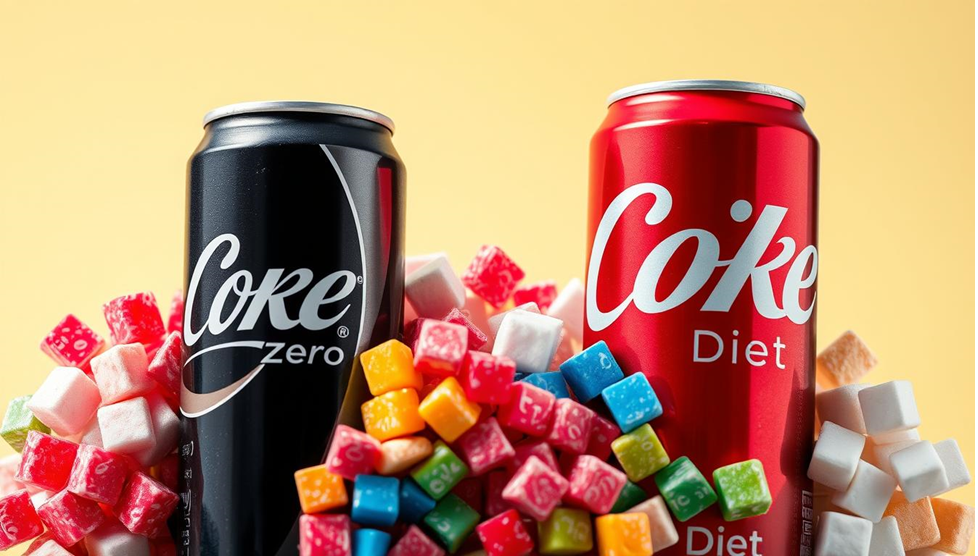
Coke Zero vs Diet Coke: Key Differences
Coke Zero and Diet Coke are top picks for those who want sugar-free, calorie-free sodas. They share some traits but differ in taste, ingredients, and who they're for. Knowing these differences helps you choose the right zero-sugar drink.
Coke Zero tries to taste like regular Coca-Cola, aiming for a similar flavor<>. Diet Coke, on the other hand, has a lighter taste thanks to unique flavor mixes<>. Both use artificial sweeteners, but Coke Zero also has potassium citrate and acesulfame potassium<>.
Key Takeaways
- Coke Zero tastes more like the original Coca-Cola, while Diet Coke is lighter and more delicate.
- Coke Zero has two artificial sweeteners (aspartame and acesulfame potassium), while Diet Coke uses only aspartame.
- Both have 0 calories, 0 total fat, and 0 grams of total sugars, but their nutritional profiles are slightly different<>.
- Choosing between Coke Zero and Diet Coke often depends on personal taste, as there are no big nutritional differences<>.
- For those trying to avoid artificial sweeteners, flavored waters, kombucha, or sparkling water might be better options<>.
A Brief History of Coca-Cola's Sugar-Free Evolution
The journey of Coca-Cola's sugar-free offerings started with Diet Coke in 1983. This low-calorie cola was a big step into the calorie-free sodas market. It met the growing need for healthier drinks<>.
In 2006, Coca-Cola introduced Coke Zero for young adult males. It was a no-calorie cola that tasted like the original Coca-Cola<>.
The 2016 Rebranding to Coca-Cola Zero Sugar
In 2016, Coca-Cola changed Coke Zero to Coca-Cola Zero Sugar . They made it taste more like the classic Coca-Cola. This change was part of a plan to make their low- and no-calorie options easier to find<><>.
The Birth of Diet Coke in 1983
Diet Coke was introduced in 1983 and quickly became a hit. It was better than Coca-Cola's old diet cola, Tab, in sales<>. The brand's first slogan was ""Just for the Taste of It,"" focusing on its great taste<>.
Diet Coke's bold can and innovative marketing made it stand out. Its first TV commercial was filmed at Radio City Music Hall<>.
Over the years, Diet Coke has introduced many flavors. These include Vanilla, Cherry, Lemon, Lime, Raspberry, and more. This keeps the brand exciting for different people<>.
The launch of Coca-Cola Zero Sugar in 2005 and its updates in 2016 and 2021 show Coca-Cola's dedication to sugar-free options. These changes aim to give a taste similar to the original Coca-Cola. They meet the growing demand for drinks with no calories<><><>.
What Is the Difference Between Coke Zero and Diet Coke
The main difference between Coke Zero and Diet Coke is their taste and sweeteners<>. Coke Zero tastes more like regular Coca-Cola. Diet Coke has a lighter, crisper taste. Both use artificial sweeteners, but Coke Zero has aspartame and acesulfame potassium (Ace-K), while Diet Coke mainly uses aspartame<>.
|----------------------------|---------------|---------------| | Nutritional Comparison | Coke Zero | Diet Coke | | Calories | 0 | 0 | | Total Fat | 0g | 0g | | Sodium | 40mg | 40mg | | Total Carbohydrates | 0g | 0g | | Total Sugars | 0g | 0g | | Protein | 0g | 0g | | Potassium | 60mg | N/A | | Caffeine | 34mg | 46mg |
Coke Zero has no added sugars because it uses artificial sweeteners<>. Diet Coke also has no added sugars and uses artificial sweeteners<>. Coke Zero has less caffeine than Diet Coke, but both are safe for adults<>.
The sweeteners in Coke Zero and Diet Coke, like aspartame and Ace-K, are safe according to the FDA<>. But, some people might get headaches or other side effects<>. Plant-based sweeteners like stevia and monk fruit are natural sugar-free options<>.
Choosing between Coke Zero and Diet Coke depends on what you like and how much you drink<><><>. Both can be a fun treat, but they shouldn't be part of a healthy diet<><>.
Comparing Ingredients: A Detailed Breakdown
Looking at Coke Zero and Diet Coke, we find some key differences in their ingredients. Both have carbonated water, caramel color, phosphoric acid, and caffeine. But each has its own special ingredients.
Key Sweeteners Used in Both Drinks
Aspartame is the main sweetener in both Coke Zero and Diet Coke<>. Coke Zero also uses acesulfame potassium, not found in Diet Coke<>. Both should be avoided by those with PKU due to phenylalanine.
Unique Components in Each Formula
Coke Zero has potassium citrate, not in Diet Coke<>. Diet Coke, on the other hand, has citric acid, missing in Coke Zero<>. Coke Zero Sugar, now known as Coke Zero, has no calories or sugar<>.
Understanding Artificial Sweeteners
Coke Zero Sugar uses aspartame and acesulfame K for sweetness<>. The FDA says it's safe up to 15 mg/kg/day of body weight. But a 2017 study found a link to dementia and stroke<>.
Choosing between Coke Zero and Diet Coke depends on personal taste and health. Drinking them in moderation is likely safe, especially for weight management<>.
Nutritional Profile Analysis
Nutritional facts show that Coke Zero and Diet Coke are very similar. They both have zero calories, sugar, fat, and carbs in a 12-ounce serving<>. They also have the same amount of sodium, 40 mg per can<>.
The main difference is in their sweeteners. Coke Zero uses aspartame and acesulfame potassium . Diet Coke only has aspartame <>. These sweeteners are much sweeter than sugar, making both drinks taste sweet without calories<>.
Diet Coke has more caffeine than Coke Zero, with 46 mg versus 34 mg per can<>. Both offer caffeine-free options for those who want less caffeine.
|-----------------------|---------------------------------|---------------| | Nutritional Fact | Coke Zero | Diet Coke | | Calories | 0 | 0 | | Sugar | 0 g | 0 g | | Fat | 0 g | 0 g | | Carbohydrates | 0 g | 0 g | | Protein | 0 g | 0 g | | Sodium | 40 mg | 40 mg | | Potassium | 60 mg | N/A | | Artificial Sweeteners | Aspartame, Acesulfame Potassium | Aspartame | | Caffeine | 34 mg | 46 mg |
Both Coke Zero and Diet Coke are calorie-free alternatives to regular Coca-Cola. But, they have some differences in their nutritional profiles and ingredient compositions . People who are concerned about artificial sweeteners or caffeine sensitivity should think about these differences when deciding between them<><>.
Taste Profile and Flavor Variations
Coke Zero and Diet Coke have different tastes that people like or dislike. Coke Zero tastes more like regular Coca-Cola, with a fuller flavor<>. Diet Coke, on the other hand, has a lighter taste that's unique<>. Some people can't tell the difference, while others prefer one over the other<>.
Both Coke Zero and Diet Coke come in various flavors. Coke Zero has cherry, cherry vanilla, orange vanilla, and vanilla flavors<>. Diet Coke has ginger lime and feisty cherry flavors, among others<>. These options let people try different tastes within these brands.
Regular Formula Taste Comparison
Coca-Cola's health manager says Coke Zero Sugar tastes like the classic Coca-Cola. Diet Coke has a lighter taste due to its flavor blend<>. In taste tests, people often prefer Coke Zero's smoother and sweeter taste over Diet Coke<>.
Available Flavor Options
Coke Zero has flavors like cherry, cherry vanilla, orange vanilla, and vanilla<>. Diet Coke has ginger lime and feisty cherry flavors, adding to its variety<>.
|-----------------------|-----------------------| | Coke Zero Flavors | Diet Coke Flavors | | Cherry | Ginger Lime | | Cherry Vanilla | Feisty Cherry | | Orange Vanilla | - | | Vanilla | - |
Many people talk about the taste differences between Coke Zero and Diet Coke. Coke Zero tries to mimic the original Coca-Cola taste, while Diet Coke has a unique, lighter flavor<>. This has helped each brand find its own fan base<>.
Caffeine Content and Energy Impact
When comparing coke zero vs diet coke , caffeine is key. Both are calorie-free sodas , but Coke Zero has 34mg in a 12-ounce can. Diet Coke, on the other hand, packs 46mg<>.
It's good to know that both are safe, with caffeine below the daily limit for adults<>. You'd need to drink over six cans of Coke or four of Diet Coke to hit 200mg of caffeine<>.
For those who can't handle caffeine, there are caffeine-free versions of both<>. But, too much caffeine can cause problems like nausea and trouble sleeping<>.
|----------------------|-----------------------------| | Beverage | Caffeine Content (12oz) | | Coke Zero | 34mg | | Diet Coke | 46mg | | Coffee (brewed) | 95mg | | Tea (black) | 47mg | | Monster Energy Drink | 160mg |
Even though coke zero vs diet coke differ in caffeine, they're both low compared to coffee and energy drinks<>. Your choice depends on how you feel about caffeine<>.
Marketing Strategies and Target Demographics
In the world of sugar-free sodas, Coca-Cola's coca-cola zero sugar and diet coke stand out. They have unique market positions thanks to targeted marketing and understanding their audiences<>.
Diet Coke's Classic Appeal
Diet Coke, launched in the 1980s, has a strong following among health-aware consumers and women<>. Its ads highlight its ability to offer a classic Coke taste without sugar. This appeals to those looking for a guilt-free treat<>.
Coke Zero's Modern Positioning
Coca-cola zero sugar , introduced in 2006, aims at a wider audience, especially younger people and men. It promises a taste similar to the original Coca-Cola. This makes it a modern, sugar-free choice that doesn't skimp on flavor<><>.
Coca-Cola's marketing for coca-cola zero sugar and diet coke has changed over time. It keeps up with what consumers want and market trends<>. The company uses various strategies, like mass and niche marketing, to connect with different groups<>.
Coca-Cola's dedication to knowing and meeting consumer needs has been key to their success. They use market research, listen to feedback, and innovate to stay relevant in the zero sugar vs diet sodas market<><>.
Health Considerations and Safety
Coke Zero and Diet Coke are calorie-free sodas with FDA-approved artificial sweeteners. Yet, some studies hint at health risks from these artificial sweeteners in soda <><><>.
Drinking more than 21 calorie-free sodas a week might nearly double the risk of being overweight or obese over 8 years<>. Also, drinking over 7 glasses of diet soda weekly could double the risk of kidney disease<>.
Aspartame, found in both Coke Zero and Diet Coke, might cause headaches in some<>. Acesulfame potassium, another sweetener in Coke Zero, has been linked to cancer risk in some studies<>.
The health effects of these sweeteners are still unclear, and more research is needed<>. It's wise to drink Coke Zero and Diet Coke in moderation<><>.
People with phenylketonuria (PKU) should avoid Coke Zero and Diet Coke. This is because they contain phenylalanine, which is harmful for those with PKU.
""Consuming more than 21 artificially sweetened beverages per week nearly doubles the risk of overweight and obesity over an 8-year period.""<>
In summary, while Coke Zero and Diet Coke are calorie-free sodas, caution is advised due to artificial sweeteners and other ingredients. It's important to drink them in moderation and be aware of health conditions when considering them as part of a balanced diet.
Popular Alternatives to Both Beverages
Looking to cut down on artificial sweeteners? There are many great options besides Coke Zero and Diet Coke. Flavored waters, kombucha, and probiotic sodas are all sugar-free and refreshing. They also come without the bad stuff found in diet sodas<>. Plus, kombucha and probiotic sodas might even help your gut health. And, stevia-sweetened drinks offer a natural choice over artificial sweeteners.
Natural Sugar-Free Options
Flavored sparkling waters from brands like La Croix and Spindrift are a great choice. They're calorie-free and sugar-free, making them a better option than diet sodas<>. Kombucha, a fermented tea, is also popular for those who want to avoid artificial additives. Probiotic sodas, with their live cultures, add a fizzy twist while boosting gut health.
Healthier Carbonated Alternatives
Craving the fizz of Coke Zero and Diet Coke? Try stevia-sweetened sodas or sparkling water with real fruit or herbs. Stevia is a plant-based sweetener that's calorie-free and sugar-free. It's a safer choice than artificial sweeteners. And, sparkling waters with natural flavors offer a fun, bubbly drink without the soda's downsides.
FAQ
What is the difference between Coke Zero and Diet Coke?
Coke Zero and Diet Coke taste different. Coke Zero tastes more like regular Coca-Cola. Diet Coke has a lighter taste. They both use artificial sweeteners but in different ways.
What are the key ingredients in Coke Zero and Diet Coke?
Both drinks have carbonated water, caramel color, and caffeine. Coke Zero has potassium citrate and acesulfame potassium. Diet Coke has citric acid and mostly aspartame.
How do the nutritional profiles of Coke Zero and Diet Coke compare?
Both have zero calories, sugar, fat, and carbs. A 12-ounce serving has 40mg of sodium. Coke Zero has 60mg of potassium, but Diet Coke doesn't list it.
How do Coke Zero and Diet Coke differ in taste?
Coke Zero tastes like regular Coca-Cola. Diet Coke has a lighter taste. People have different preferences, with some not noticing the difference.
What are the available flavor options for Coke Zero and Diet Coke?
Coke Zero has cherry, cherry vanilla, orange vanilla, and vanilla flavors. Diet Coke offers ginger lime and feisty cherry.
How do the caffeine levels in Coke Zero and Diet Coke compare?
Coke Zero has 34mg of caffeine per 12-ounce serving. Diet Coke has 46mg. Both are safe for adults.
What are the target demographics for Coke Zero and Diet Coke?
Diet Coke appeals to health-conscious consumers, especially women. Coke Zero targets a broader audience, focusing on men and the young.
Are there any health considerations or safety concerns with Coke Zero and Diet Coke?
Both use FDA-approved sweeteners. Some studies link artificial sweeteners to health issues, but evidence is mixed. Aspartame might cause headaches in some. People with PKU should avoid them.
What are some alternatives to Coke Zero and Diet Coke?
Try flavored waters, kombucha, probiotic sodas, stevia-sweetened sodas, and sparkling water. These offer fizzy drinks with fewer artificial ingredients and possible health benefits.