
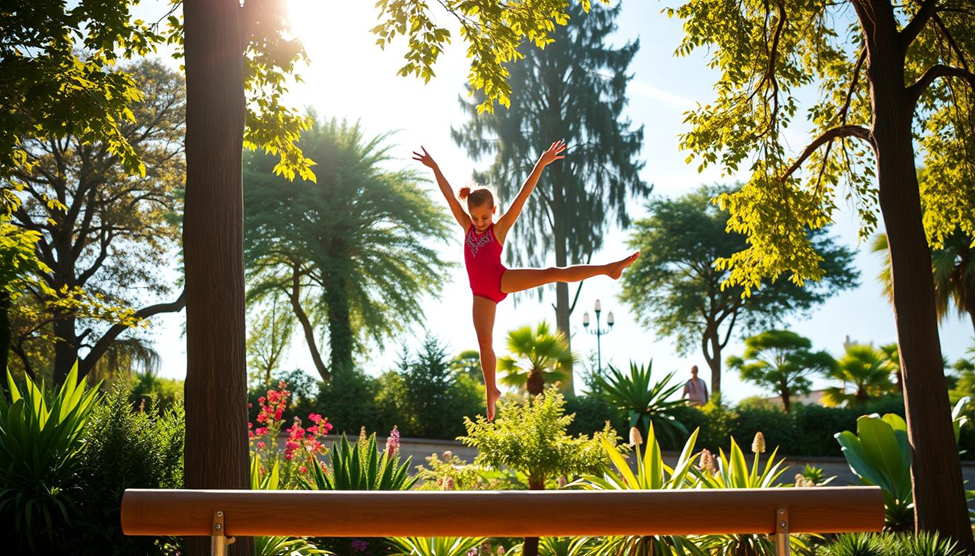
Does Gymnastics Stunt Your Growth - Truth Revealed
Many people wonder if gymnastics can stunt your growth. There are lots of myths and misconceptions about this. But, the science shows a more complex story.
Elite gymnasts, especially in Women's Artistic gymnastics, are often shorter than others. At the Tokyo 2020 Olympics, medal winners averaged just 5ft 1in<>. But, gymnastics might not be the only reason for their height.
Studies show gymnasts often have a delayed bone age<>. This means their bones grow slower than their age. The hard training and physical demands during their growth years might cause this.
But, gymnasts usually catch up in height after they stop intense training<>. This shows gymnastics' effect on growth might not last forever. People can still grow and develop normally after they stop training hard.
Key Takeaways
- Gymnastics training can temporarily delay bone growth and skeletal development in young athletes.
- Elite gymnasts, particularly in women's artistic gymnastics, tend to be shorter on average compared to the general population.
- The impact of gymnastics on growth is not permanent, and gymnasts often catch up to their expected height after retiring from intensive training.
- Genetics and body type play a significant role in determining a gymnast's height and physical characteristics.
- Strict height requirements or restrictions do not exist in gymnastics, allowing individuals of any height to participate in the sport.
Understanding the Height Misconception in Gymnastics
Many think gymnastics stunts growth, but science hasn't proven it<>. Simone Biles, a USA gymnast, is 4'8"", much shorter than average<>. Research shows shorter arms and legs are better for gymnastics moves<>. A small study found smaller gymnasts do well in moves that involve twists and rotations<>.
Common Myths About Gymnasts and Height
One myth is that gymnastics training affects adult height or growth spurts. But a 2013 study from the University of Texas at Austin found no impact on adult height<>. Even though gymnasts might grow less during their active years, they catch up after retiring<>. They have shorter legs and sitting heights while active, but grow taller after retiring<>.
Scientific Research vs Popular Beliefs
Studies show gymnastics doesn't stunt growth permanently<>. Being shorter in gymnastics might actually help in the sport<>.
Impact of Training Age on Growth
The best age to start gymnastics is between two and eight years old<>. Most elite gymnasts start training at two, with peak flexibility at 8<>. Women gymnasts peak between 16 to 22, and men between 17 to 25<>. Elite gymnasts have a narrow window to qualify for the Olympics<>. Training might delay growth, but it doesn't affect adult height<>.
While gymnast height issues and intensive gymnastics are often tied, science shows being shorter is more beneficial in gymnastics<>. The myth that gymnastics stunts growth is not supported by studies<>.
The Science Behind Growth and Athletic Training
The link between gymnastics and growth is a subject of ongoing research. Gymnasts often show unique physical traits, like delayed bone age and changes in hormone levels, especially in female athletes<>. Yet, most gymnasts see their growth patterns return to normal after they stop competing<>.
Gymnastics training can limit growth and development<>. The intense physical demands of gymnastics boost bone growth. Gymnasts, especially young ones, have denser bones than non-athletes<>. This is because gymnastics can increase bone mineral density during critical growth periods<>.
|-----------------------------------------------------------------------------------|-------------| | Statistic | Value | | Articles meeting selection criteria for review | 24<> | | Bone mineral density and content values in gymnasts vs. untrained controls | Higher<> | | Bone turnover values in gymnasts vs. untrained controls | Similar<> | | Percentage of peak bone mass accrued in 5-year window around peak height velocity | Up to 40%<> |
However, intense training in gymnasts can also have drawbacks. It can lead to training stress and the need to keep fat levels low<>. DXA scans and pQCT measurements help check bone health. This is crucial because up to 60% of adult osteoporosis cases start in childhood<>.
Gymnastics training can also affect when puberty starts and how long it lasts<>. Young gymnasts might be shorter than their peers but have the right weight for their height<>. Studies show gymnasts mature later than non-athletes in terms of secondary sex characteristics and skeletal age<>.
The demands of gymnastics training have grown over time, becoming more intense and time-consuming<>. Elite US female gymnasts follow a rigorous training plan. They have two daily sessions of 2-4 hours each, 6 days a week, totaling 30-42 hours of training weekly<>. This intense schedule can delay growth and maturation in gymnasts.
""Intensive athletic activity in growing gymnasts imposes constraints like training stress and maintenance of low fat mass.""
Does Gymnastics Stunt Your Growth: Scientific Evidence
For years, people have wondered if gymnastics can stop you from growing. There's been a lot of back and forth on this topic. But, looking closely at the science gives us a clearer picture of how gymnastics affects growth.
Research Studies and Findings
A 2000 study in the Journal of Pediatrics found gymnasts were shorter than others<>. But, most gymnasts grew taller after they stopped competing<>. This shows gymnastics might not affect growth forever.
In 2002, a Greek study looked at 262 gymnasts aged 13-23. They found gymnasts grew slower, but caught up later<>. This supports the idea that gymnastics' impact on growth isn't permanent<>.
Growth Patterns in Elite Gymnasts
Elite gymnasts like Simone Biles are often shorter<>. The USA's Olympic Men's Gymnastics team also has athletes from 5'1"" to 5'6""<>. This makes us wonder if being shorter is an advantage in gymnastics.
Post-Retirement Growth Recovery
While some gymnasts might not grow as expected after retiring, the science says it's not forever<>. If gymnasts have growth problems, they should see a doctor<>.
In conclusion, gymnastics and growth are complex. While gymnasts might grow slower, the long-term effects are not as bad. Many gymnasts regain their expected height after retiring<><>.
Physical Demands of Gymnastics Training
Gymnastics is a demanding sport that starts young. It can affect the growth of young gymnasts<>. Gymnasts at major championships train for about 30 hours a week<>. Some elite gymnasts from the former Soviet Union trained up to 36 hours a week by age 18<>.
The training includes warm-ups, stretching, strength exercises, and skill repetition<>. It also includes rest periods, dance, and choreography<>. The energy cost of gymnastics for youth varies, from light to hard<>.
The intense training can impact young gymnasts' growth<>. It may delay growth in some gymnasts. But, proper training and monitoring can help<>.
The impact of gymnastics on growth varies among gymnasts<>. A 9-12 year old female gymnast might gain 5-7 lbs a year<>. In the teen years, they might gain 15-40+ lbs and grow 3-3.5 inches a year<>. This means some gymnasts might be in the 90th percentile, while others are in the 10th percentile<>.
The effects of gymnastics training on growth are mixed. Understanding these impacts and using proper training and monitoring can help gymnasts stay healthy and succeed.
Height Statistics of Olympic Gymnasts
In women's artistic gymnastics, height is a big deal<>. Olympic gymnasts are about 5 feet 1 inch (155 cm) tall, much shorter than the average American woman<>. In fact, 78% of top gymnasts are just 3 inches (7.6 cm) above or below 5 feet<>.
Being shorter is not just a random fact<>. It helps gymnasts rotate better in the air and spin fast<>. The bigger you are, the harder it is to do these moves<>.
Comparison with Other Olympic Sports
But gymnasts are different from athletes in other sports<>. For example, swimming champions are about 5 inches (12.7 cm) taller than average<>. This shows how gymnastics has its own special needs and benefits.
|-----------------------------|--------------------| | Sport | Average Height | | Women's Artistic Gymnastics | 5'1"" (155 cm) | | Swimming | 5'9"" (175 cm) | | Basketball | 6'0"" (183 cm) |
Height is also important for male gymnasts<>. In 2009, only 1.6% of female and 9.6% of male gymnasts were elite, according to USA Gymnastics<>. This shows that both men and women gymnasts are generally shorter, and height plays a big role in their success.
""Shorter height in gymnasts is considered an advantage as it makes it easier to rotate in the air, spin at high speeds, and generate acrobatic moments.""
The Role of Genetics in Gymnast Body Types
Genetics greatly influence a gymnast's height and body type. Studies show gymnasts are often shorter by age four, hinting at a genetic predisposition<>. Dr. Robert M. Malina, a professor at the University of Texas at Austin, believes most gymnasts are short due to their parents' height, not over-training<>.
The height of a child is largely determined by their parents' genes, with 60-80% influence<>. Gymnasts may experience stunted growth due to intense training and lack of energy<>. Each athlete is different, with some being in the 80th percentile for height and others in the 25th<>.
Female gymnasts usually stand between 4 feet 9 inches and 5 feet 2 inches tall, weighing 85 to 115 pounds<>. They have a high muscle-to-fat ratio, which makes them lean and muscular<>. Their training focuses on building strength in the upper body, core, and legs<>.
Gymnastics routines are brief but demanding, promoting the growth of specific muscle fibers<>. They have narrow hips and broad shoulders for better balance and aerodynamics<>. Intensive training can delay puberty in female gymnasts due to low body fat and nutrition<>.
Intense training and poor nutrition can temporarily halt growth in female gymnasts<>. However, most gymnasts return to normal growth rates after stopping training<>.
After retiring from sports, athletes often experience body changes. Proper nutrition can help avoid significant weight shifts<>. Frequent weighing can lead to eating disorders and harm mental health<>. Only licensed professionals should monitor a child's growth, not nutritionists or trainers<>. Body shaming can cause long-term body image issues<>.
Impact of Intensive Training on Bone Development
Gymnastics is known for its tough training. This can affect the growing bodies of young athletes. The impact on bone development and growth is a big concern<>.
Delayed Bone Age in Young Gymnasts
Research shows gymnasts often have a delayed bone age. A study at the 2002 European Championships found a 1-2 year delay in bone age<>. This is because gymnastics is high-impact and puts a lot of stress on growing bones.
Long-term Effects on Skeletal Growth
Even with a delay in bone age, gymnastics doesn't seem to harm skeletal growth in the long run<>. Most gymnasts catch up in bone development after they stop competing. They usually reach their full height as adults<>. This means gymnastics can actually help bones grow stronger, even if it starts slow.
The effects of gymnastics on bone development vary. It depends on the athlete's age, how intense and long the training is, and their genes<>. Keeping an eye on growth and bone health is key for young gymnasts' well-being.
Intensive gymnastics training can be tough on growing bones. But, the sport is also great for bone health and strength<>. With careful monitoring and balanced training, young gymnasts can do well and reach their full potential without harming their bodies<><><>.
Nutrition and Growth in Gymnastic Athletes
Good nutrition is key for gymnasts to grow and develop. Some research says that bad nutrition, not just hard training, might make gymnasts shorter<>. Top gymnasts eat 60-70% protein, with the rest from carbs and fats<>. Sadly, eating disorders have been a big problem in women's gymnastics, affecting their growth.
A 2013 study found gymnastics training doesn't affect gymnasts' heights as adults or puberty growth spurts<>. But, intense gymnastics training can slow down bone growth in young gymnasts, making their bones up to two years younger than normal<>.
Elite gymnasts train 25 to 40 hours a week<>. A 2003 study on Rhythmic gymnasts showed hard exercise can delay menstruation, leading to amenorrhea as the body adjusts to the training<>. While gymnastics might seem to stunt growth, gymnasts usually catch up after retiring<>.
In gymnastics, being shorter helps with balance and easier moves<>. There are no height limits in gymnastics, and tall gymnasts like Alexei Nemov and Vitaly Scherbo have succeeded<>. Gymnasts often have narrow hips, which help with flexibility and balance<>. Some gymnasts feel pressured to stay thin, showing the sport values function over looks.
|---------------------------------------------------------------------------------------------------------------------------------------------------------------------------------------------|------------| | Statistic | Source | | A small study published in the journal Sports Biomechanics suggested that smaller gymnasts were better equipped for moves involving forward and backward whole-body rotations and twisting. | <> | | Elite gymnasts tend to have an average height of around 5ft 1in, as observed in the Women's Artistic gymnastics competition at the Tokyo 2020 Olympics. | <> |
""Some gymnasts have reported pressure from coaches to maintain a certain weight or body type, emphasizing the importance of biomechanical advantages rather than aesthetic or appearance-related factors.""
The Biomechanical Advantages of Being Short in Gymnastics
Being short can actually help gymnasts a lot. A lower center of gravity makes them more stable and balanced. This is key for landing safely and doing balance skills well<>.
Shorter limbs and height also help gymnasts flip and rotate easier. This is because they have a smaller moment of inertia. These traits help them perform better in gymnastics, which is why the sport often favors shorter athletes.
Center of Gravity and Performance
A lower center of gravity gives gymnasts more stability and control. Shorter gymnasts can balance better and do complex skills with more precision and confidence<>. This advantage helps them move through gymnastics equipment with better technique and poise.
Rotation and Flipping Mechanics
Being able to rotate and flip is crucial in gymnastics, and being short helps a lot<>. Shorter gymnasts have a lower moment of inertia, making it easier to start, control, and finish rotation-based skills. This makes it easier for them to do airborne skills like saltos and twists, compared to taller gymnasts.
FAQ
Does gymnastics stunt your growth?
The effect of gymnastics on growth is not simple. Some studies suggest elite gymnastics might slow growth. Yet, most gymnasts grow taller after they stop competing.
Is there evidence that gymnastics affects a person's height?
Research on gymnastics and height is mixed. Some gymnasts show delayed bone age and shorter legs. But, most grow taller after they retire.
How does intensive gymnastics training affect growth and development?
Intensive gymnastics can affect bone growth. The constant stress on growth plates can delay bone maturation. Yet, with the right training and care, these effects can be lessened.
Do most gymnasts end up shorter than their peers?
No, most gymnasts are not much shorter than others. The average height of Olympic gymnasts is 5'1"". But, genetics also play a big role in height.
How does nutrition impact growth in gymnastic athletes?
Good nutrition is key for gymnasts' growth. Some say poor nutrition, not just exercise, can make gymnasts shorter. Elite gymnasts eat a lot of protein and some carbs and fats.
What are the biomechanical advantages of being shorter in gymnastics?
Being shorter helps gymnasts in many ways. It lowers their center of gravity for better balance. It also makes flipping and rotation easier. These benefits help gymnasts perform better.