
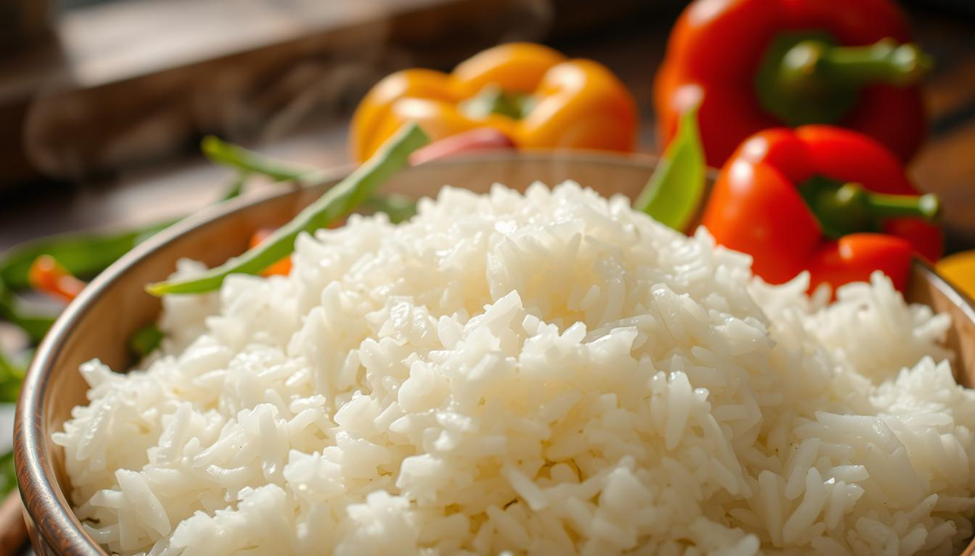
Does Rice Make You Gain Weight: The Truth About Carbs
Rice is a staple for over half of the world's people, with 120,000 types<>. It's packed with carbs, proteins, and minerals. One cup of cooked brown rice has 218 calories, 46g carbs, and 3.5g fiber<>. But, the idea that rice makes you gain weight is wrong. No food, including rice, is the only cause of weight gain. It's about eating more calories than you burn.
Eating rice in a balanced diet can be good for you<>. It's all about eating the right amount and choosing better types like brown or wild rice. They have more nutrients than white rice. Knowing how carbs work and how to eat rice can help you enjoy it without gaining weight.
Key Takeaways
- Rice is a nutrient-dense food that can be part of a healthy, balanced diet when consumed in moderation.
- No single food, including rice, directly causes weight gain - excess calories from any source can lead to weight gain.
- Choosing healthier rice varieties like brown or wild rice can provide more beneficial nutrients compared to refined white rice.
- Portion control and incorporating rice into a balanced meal plan are key to preventing weight gain.
- Moderation and balance are the foundations for a sustainable and healthy approach to rice consumption.
Understanding Rice as a Global Staple Food
Rice is a key part of diets around the world. In Asia, people eat about 300 pounds of rice each year. In the United Arab Emirates, it's even more, at around 450 pounds<>. In contrast, Americans consume about 27 pounds of rice annually<>.
This huge popularity comes from rice's low cost, easy access, and versatility. It's a staple in many cultures globally<>.
Cultural Significance and Consumption Patterns
Rice is deeply rooted in many cultures, tied to traditions and celebrations. In Thailand, jasmine rice is famous for its aroma. In India, basmati rice is prized for its fragrance and texture<>. Each type of rice has its own taste, texture, and health benefits<>.
These cultural ties have shaped how rice is eaten and used in daily life. It's a key part of being a global staple food.
The Role of Rice in Modern Diets
In today's diets, rice is vital for its carbs. The 2020-2025 Dietary Guidelines for Americans say carbs should make up 40% to 65% of our calories<>. White rice is common, but whole-grain rice like brown rice is better for health. It has more fiber and a lower glycemic index<>.
As the world's population grows, so does the need for rice. Understanding rice's role in cultures and its health benefits is key<>. By looking into rice, we learn about food, culture, and health<>.
Does Rice Make You Gain Weight: Separating Fact from Fiction
The idea that rice makes you gain weight is not true. Rice can be part of a healthy diet, even for those trying to lose weight<>. White rice has about 200 calories per cup and 45 grams of carbs<>. But, eating too much of it can lead to obesity<>.
Brown rice, on the other hand, is better. It has less carbs, more fiber, and more nutrients than white rice<>. Switching to brown rice can help with weight control and lower diabetes risk<>.
What really matters is how active you are and what you eat overall<>. People in cities tend to be more overweight than those in rural areas<>. It's all about eating the right amount and choosing healthy foods with rice.
""A 2019 study found low to very low evidence that any specific food group causes weight gain.""
Rice doesn't directly cause weight gain. It can be part of a balanced diet if you control your portions and eat well. Both white and brown rice can be good for weight management if eaten wisely.
Nutritional Composition of Different Rice Types
Not all rice is the same when it comes to nutrition. Brown rice is full of fiber, while wild rice is packed with nutrients. Each type has its own health perks<>.
Macronutrients in Rice
White and brown rice have similar calories, carbs, protein, and fat. But brown rice has more fiber, with 1.6g per 100g. White rice has almost none<>.
Vitamins and Minerals Content
Rice types differ in nutrients. Brown rice is a manganese powerhouse, with 42% of the Daily Value. White rice and enriched white rice have only 16%<>. Brown rice also has more vitamins and minerals than white rice.
Caloric Content Comparison
Wild rice has the fewest calories, with 166 per cooked cup. Brown rice has 218, and white rice has 242<>. This calorie difference can help with weight control.
|---------------|--------------------------------|----------------------------|-------------------------------| | Rice Type | Calories (per cup, cooked) | Fiber (grams per 100g) | Manganese (% Daily Value) | | White Rice | 242 | Less than 1g | 16% | | Brown Rice | 218 | 4g | 42% | | Wild Rice | 166 | 3g | N/A |
Different rice types have unique nutritional profiles. This knowledge helps you choose the best rice for your health and weight goals<><>.
White Rice vs. Brown Rice: Impact on Weight Management
The choice between white rice and brown rice can affect weight management . Brown rice is often seen as the healthier option. Recent studies back this up<>.
A 2022 study looked at 13 trials. It found that brown rice helps with weight loss compared to white rice<>. Brown rice has more fiber, which can make you feel full longer. It also supports a healthy digestive system<>.
Brown rice also has compounds that improve insulin resistance and glucose tolerance. These benefits help with weight management <>.
White rice, on the other hand, has a higher glycemic index. This leads to quick blood sugar spikes<>. This can cause weight gain and affect blood sugar levels. So, brown rice is better for weight management<>.
|-----------------------------|----------------|----------------| | Nutritional Comparison | White Rice | Brown Rice | | Calories (per cup) | 205<> | 218<> | | Carbohydrates (per cup) | 44.5g<> | 45.8g<> | | Net Carbs (per cup) | 44g<> | 42g<> | | Fiber (per cup) | 0.6g<> | 3.5g<> | | Glycemic Index | 89<> | 50<> |
The calorie and carb differences between white and brown rice are small. But, brown rice has more fiber and a lower glycemic index. This makes it better for weight management<>.
Eating brown rice with protein and fiber-rich foods can help control blood sugar. It also supports weight control<>.
The Glycemic Index of Rice and Weight Control
The glycemic index of rice is key for weight management. Rice's glycemic index is in the middle, with white rice higher than brown<>. White rice can cause blood sugar spikes, leading to more insulin, which might contribute to weight gain<>.
Blood Sugar Response
The glycemic index of rice shows its effect on blood sugar. White rice has a higher index, while brown rice, including basmati and jasmine, has a lower one<>. Eating rice with veggies and lean proteins can help keep blood sugar stable.
Insulin and Weight Management
Insulin is vital for managing blood sugar and weight. High-glycemic foods like white rice cause blood sugar to rise quickly, leading to more insulin<>. This can lead to weight gain. Brown rice, on the other hand, is less likely to cause insulin spikes, aiding in weight maintenance.
A 2022 review found that brown rice helps with weight loss compared to white rice, thanks to its fiber<>. Parboiled rice is also full of resistant starches and nutrients, making it good for weight control<>.
""The Plate Method suggests filling half of your plate with vegetables, a quarter with lean protein, and a quarter with a whole grain like brown rice to balance meals.""
In summary, the glycemic index of rice is crucial for blood sugar and weight control. Choosing lower-glycemic rice like brown and pairing it with other healthy foods supports health and weight goals.
Special Rice Varieties and Their Health Benefits
White rice is common, but special rice varieties offer health perks<>. These rices are gaining fans who want to eat better and feel better.
Black rice is packed with antioxidants that may help with blood pressure and inflammation<>. Parboiled rice gets steamed to keep more nutrients and is good for your gut<>. Brown basmati rice is high in fiber and has a low glycemic index, great for diabetics<>.
Other special rices include jasmine rice, which smells great and is a bit healthier in its brown form<>. Wild rice, actually a grass, is full of fiber, protein, and antioxidants<><>.
|------------------|-----------------------------------------------------------------------------------------------------------------------| | Rice Variety | Nutritional Highlights | | Black Rice | High in anthocyanins, powerful antioxidants with anti-inflammatory properties<><>. | | Parboiled Rice | Undergoes steam treatment, increasing nutrient retention and creating resistant starches beneficial for gut health<>. | | Basmati Rice | Rich in fiber and has a lower glycemic index, making it more diabetes-friendly<>. | | Jasmine Rice | Available in both white and brown varieties, with the brown offering more nutritional benefits<>. | | Wild Rice | Boasts impressive levels of fiber, protein, and antioxidants<><>. |
Adding these special rices to your meals can boost your health in many ways<><>. They're a tasty way to support your wellbeing.
Portion Control and Rice Consumption
When you're watching your weight, controlling rice portions is key. The Plate Method suggests filling half your plate with veggies, a quarter with lean protein, and the last quarter with brown rice<>. This method helps keep meals balanced and controls rice intake. For adults, a serving of cooked rice is usually 1/2 to 1 cup, based on your calorie needs and activity<>.
Recommended Serving Sizes
100 grams of long-grain white rice has 130 calories, 0.28 grams of fat, 2.69 grams of protein, and 28.2 grams of carbs<>. Long-grain brown rice has 123 calories, 1.6 grams of fat, 2.74 grams of protein, and 25.6 grams of carbs<>. Parboiled rice, being low-GI, is good for those with type 2 diabetes. It has 123 calories, 0.37 grams of fat, 2.91 grams of protein, and 26 grams of carbs<>.
The Plate Method for Balance
The Plate Method advises filling half your plate with veggies, a quarter with lean protein, and the last quarter with brown rice<>. Eating rice with high-fiber veggies can slow digestion and keep blood sugar stable<>. It's important to eat rice in moderation and keep calorie intake low to avoid weight gain<>.
It's recommended to have 1/2 to 1 cup of cooked rice per meal to manage portions and calories<>. Pairing white rice with fiber-rich foods helps keep blood sugar levels healthy<>.
Incorporating Rice into a Weight Loss Diet
Rice can be a great part of a weight loss diet if eaten wisely. Opt for brown rice to get more fiber and nutrients<>. Mix rice with lots of veggies and lean proteins for meals that are filling and help you lose weight<>.
Use rice as a base for dishes like stir-fries or Buddha bowls . Try different types like quinoa, barley, and bulgur wheat to add variety and nutrients<>. These grains are full of fiber, protein, and other nutrients that help with weight management<>.
It's important to control how much rice you eat. A good portion is about 1/2 a cup (cooked) , with around 100 to 120 calories<>. Eat mindfully and use the plate method to balance your meals. This way, you can enjoy rice while losing weight<>.
Exotic rice types like brown, black, and red rice are good for weight loss. They have more fiber and a lower glycemic index than white rice<><>. Adding these to your diet can help control blood sugar, reduce inflammation, and improve health<><>.
Successful weight loss comes from eating less and exercising more. Rice can be part of this, offering complex carbs, fiber, and nutrients for your weight loss journey<><><>.
""Incorporating whole grains like rice into a balanced diet can be a key factor in sustainable weight loss and overall health.""
Healthy Cooking Methods and Meal Combinations
Adding rice to your diet can be healthy if you cook it right. Try simmering rice in vegetable broth<> or steaming it with herbs and spices. This method boosts flavor and nutrients in your meal.
Mixing rice with colorful veggies is great for fiber, vitamins, and antioxidants<>. Try baked salmon with brown rice and broccoli, or a stir-fry with white rice. Adding lean proteins like chicken, fish, or tofu makes meals more balanced and supports muscle growth<><>.
Letting cooked rice cool before eating can help too. It increases resistant starch, which can make you feel full and help with weight control<>. Look to global cuisines for healthy, tasty rice dishes. They can help you meet your health goals, whether you're after low-calorie options or just want to cooking rice healthily , rice and vegetable combinations , or low-calorie rice dishes.
FAQ
Does rice make you gain weight?
No, rice itself doesn't make you gain weight. It's the extra calories from rice that can lead to weight gain. Eating rice in moderation can be part of a healthy diet.
How many types of rice are there?
There are over 120,000 types of rice worldwide. Rice is a staple for over half of the world's people.
What are the nutrition facts for different rice varieties?
Brown rice has more fiber, protein, and nutrients like magnesium and B vitamins than white rice. Wild rice has 166 calories and 3g fiber per cup. Brown rice has 218 calories and 4g fiber, while white rice has 242 calories and almost no fiber.
Is brown rice healthier than white rice for weight management?
Yes, brown rice is healthier for weight management. A 2022 review showed brown rice helps with weight loss. It has more fiber and bioactive compounds that improve insulin resistance and gut health.
How does the glycemic index of rice affect weight gain?
White rice has a higher glycemic index than brown rice. This can cause faster blood sugar spikes. Pairing rice with low-GI foods can help balance blood sugar levels.
What are the health benefits of specialty rice varieties?
Black rice is rich in antioxidants that may lower blood pressure and inflammation. Parboiled rice is steam-treated, retaining more nutrients. Brown basmati rice is high in fiber and has a lower glycemic index.
What is the recommended serving size of rice?
For most adults, a serving of cooked rice is 1/2 to 1 cup. The Plate Method suggests half your plate for vegetables, a quarter for lean protein, and the last quarter for whole grains like brown rice.
How can rice be incorporated into a weight loss diet?
Rice can be part of a weight loss diet when eaten mindfully. Choose whole grain varieties like brown rice for more fiber and nutrients. Pair rice with vegetables and lean proteins for balanced meals. Use rice as a base for dishes like stir-fries or Buddha bowls.