
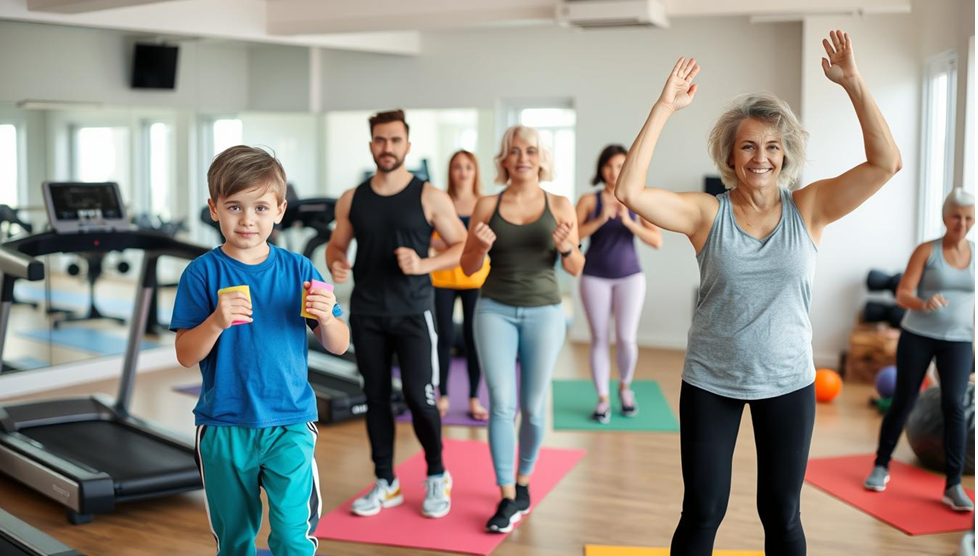
Gym Age Requirements: How Old to Start Working Out
Key Takeaways
- Most gyms require members to be at least 16 years old to use the facilities unsupervised.
- Teenagers aged 14-15 may be allowed to work out with parental consent and restricted access to equipment.
- Children under 14 are typically not permitted to use gym equipment due to safety concerns.
- Exercise during teenage years can improve physical development and coordination.
- Proper workout clothing is essential for comfort and performance across all age groups.
Introduction to Gym Age Requirements
Getting into the world of gym memberships can be tough, especially for kids. If you're a parent or a teenager wanting to join a gym, knowing the age rules is key. It's important to understand the guidelines for minors in gyms.
Benefits of Physical Activity for Youth
Being active is great for young people. It boosts mental health, brain function, and physical health. Research shows that exercise helps with heart health, stronger bones, and better mood and focus in kids and teens.
Importance of Safe and Supervised Exercise
It's vital for kids to exercise safely and with supervision. Learning the right way to do exercises is important to avoid injuries, especially in strength training. Gyms for kids often have staff trained to teach them safely and effectively.
|---------------|---------------------------------------------------------------|---------------------------------------------------------| | Gym Chain | Minimum Age Requirement | Additional Details | | JD Gym | 16 years old | | | Pure Gym | 16 years old | Children aged 14 to 16 must be accompanied by a parent. | | The Gym Group | 16 years old | Children under 18 may require supervision. | | David Lloyd | 10+ years old for programs, 15+ years old for free gym access | | | Snap Fitness | 16 years old | | | Pump Gym | 18 years old | 16-year-olds allowed with adult supervision. |
Knowing the age rules and supervision guidelines helps everyone. It makes sure gym visits are safe and fun for kids and teens.
Minimum Age Limits for Gym Memberships
In the United States, gym membership age requirements differ from gym to gym. There's no single federal law setting a minimum age. Yet, most gyms have their own rules to keep everyone safe, especially the young.
Typical Age Restrictions in the United States
The typical minimum age to join a gym in the U.S. is 16. This rule is mainly because gyms worry about the safety of younger people. They think younger individuals might not be ready to use gym equipment safely on their own.
- Some gyms let teenagers aged 14-15 work out with their parents' permission. They might not have access to all the equipment, though.
- Children under 14 are usually not allowed in gyms because of safety reasons.
- There's no upper age limit for gym memberships. Gyms want to welcome people of all ages.
Remember, youth gym access policies can change from gym to gym. Always check the gym's rules before signing up a young family member.
""Exercise can benefit teenagers by improving physical development, mental health, academic performance, and habits for life.""
Factors Influencing Gym Age Policies
When deciding when people can start using gym facilities, several important factors come into play. These factors help keep younger gym-goers safe and address legal concerns for gyms. They ensure everyone has a good experience at the gym.
Individual Gym Policies and Rules
In the U.S., there's no one rule for the minimum age to use gyms. But, many gyms have their own rules. Some gyms let teens as young as 13 or 14 work out with a parent's okay. Others might not let anyone under 16, worried about safety and proper use of equipment.
Parental Consent and Supervision Guidelines
Getting parents involved is key in setting gym age rules. Many gyms ask for a parent's written permission before letting minors join. Some gyms even require a parent to be there for teens under 15 or 16, to make sure they're safe and using equipment right.
Some gyms also have special programs for kids and teens. These programs have certified teachers and follow strict rules to keep everyone safe and active.
|---------------------------------------------|-------------------------------------------------------------------------------------------------------------------------------------------------------------------------------------------------------------| | Factors That Determine Gym Age Policies | Examples | | Individual Gym Rules | ? Minimum age for unsupervised access (e.g., 16 years old) ? Parental consent requirements for minors ? Supervised youth fitness programs with age-appropriate guidelines | | Parental Involvement | ? Written consent from parents/guardians for minor gym membership ? Requirement for parental supervision for teenagers under a certain age ? Availability of family-friendly gym memberships and facilities | | Safety Considerations | ? Proper form and technique for younger gym-goers ? Potential for injury with certain equipment or activities ? Liability concerns for the gym establishment |
Knowing these factors helps families and individuals choose the right gym. It ensures a safe and enjoyable fitness experience for everyone, especially the younger ones.
how old do you have to be to go to the gym
Finding out the minimum age to join a gym can be confusing. This is because different gyms have different rules. But, there are some basic guidelines to follow.
In the United States, most gyms require members to be at least 16 years old to use the facilities unsupervised . Some gyms let 14-15 year olds work out, but only with a parent's okay. They also limit access to certain equipment or areas. Children under 14 are typically not allowed to use gym equipment due to safety concerns.
It's worth noting that there is no upper age limit for gym membership. Gyms welcome people of all ages, from young adults to seniors. Regular exercise is good for everyone, no matter their age.
- Young adults (20-39 years old) can build and maintain muscle mass, improve cardiovascular health, reduce stress, and manage their weight.
- Middle-aged adults (40-59 years old) can maintain muscle mass and bone density, improve balance and flexibility, reduce the risk of chronic diseases, and boost energy levels and mood.
- Seniors (60+ years old) can improve quality of life by maintaining independence and mobility, reducing the risk of falls, enhancing cognitive function, and managing chronic conditions.
It's a good idea to check with individual gyms or fitness centers about their age policies. This way, you can make sure everyone has a safe and fun time at the gym.
Exercise during the teenage years can lead to improved physical development, enhanced mental health, better academic performance, and the establishment of healthy habits for life.
Safe Strength Training for Kids and Teens
When it comes to strength training for kids and teens, safety is key. Experts say kids as young as 7 or 8 can start weight lifting safely. They must learn the right form and keep control during exercises.
Recommended Exercises and Equipment
For safe strength training, the instructor-to-child ratio should be 1 to 10. Beginners should do 1 set of 8 to 15 reps of 6 to 8 exercises. These exercises should target major muscle groups and last 20 to 30 minutes, 2 or 3 times a week. It's important to master proper technique before adding more weight or resistance.
Teens can use free weights, weight machines, resistance bands, and their body weight for exercises. But, programs focused on maximal lifts, powerlifting, and bodybuilding are not good for young people. They can cause serious injuries.
When starting, it's best to begin with bodyweight exercises. Then, move to using weights while keeping the right technique and training with supervision.
To go along with strength training, kids should do at least 1 hour of daily physical activity. This includes aerobic exercises like walking, running, and swimming, plus stretching.
""Strength training helps build stronger muscles, increase lean body mass, burn more calories, strengthen bones, and improve mental health.""
Establishing a Youth Fitness Routine
Creating a fitness routine for teens and building healthy exercise habits for children is key. Regular exercise boosts muscle strength and reduces injury risks. It also improves heart health in young people.
Experts say school-age kids should do muscle-strengthening exercises three times a week. Even kids as young as 7 or 8 can start with light weights and proper form. Make sure they rest at least one full day between workouts for major muscle groups.
Parents and caregivers should team up with fitness experts to create a routine that fits each child's needs. It's important to include warm-ups and cool-downs to prevent injuries and keep everyone healthy.
|--------------------------------------------------------|-----------------------------------------------| | Recommended Exercises for Youth Fitness | Benefits | | Bodyweight exercises (pushups, squats, lunges) | Improve muscle strength and coordination | | Resistance training with light weights | Build bone density and promote healthy growth | | Cardiovascular activities (running, swimming, cycling) | Enhance heart health and endurance | | Flexibility exercises (stretching, yoga) | Increase mobility and reduce injury risk |
By setting up a fitness routine, parents and caregivers help kids and teens. They gain the benefits of regular physical activity. This includes better physical health, mental well-being, and a strong foundation for healthy habits for life.
""Fitness for children should focus on fun, variety, and safety. By working with professionals, parents can create a balanced program that meets the unique needs of each child."" - Pediatric Fitness Specialist
Preparing Kids for the Gym Environment
When kids and teens start exploring fitness, it's key to get them ready for the gym. Teaching preparing teens for the gym and introducing children to fitness facilities at the right time is vital. It helps them have a positive, safe, and rewarding experience.
Proper Warm-up and Cool-down Techniques
Warm-up and cool-down routines are crucial for youth in any physical activity, like gym workouts. Experts say each session should start with 5-10 minutes of light aerobic activity. This could be walking or jogging in place to get muscles ready and heart rate up.
After working out, a 10-15 minute cool-down with light aerobic activity and gentle stretching is also key. It helps with recovery, lowers injury risk, and promotes proper gym etiquette for minors.
- Start with 5-10 minutes of light aerobic warm-up
- Focus on gradually increasing heart rate and preparing muscles
- Conclude with 10-15 minutes of light aerobic activity and gentle stretching
- Cool-down helps reduce risk of injury and aids in recovery
By teaching the importance of warm-up and cool-down for youth, young gym-goers can develop healthy exercise habits. They can also safely enjoy their fitness journey.
|---------------------|------------------------------------------------| | Age Group | Recommended Warm-up and Cool-down Duration | | Children (under 14) | 5-10 minutes warm-up, 10-15 minutes cool-down | | Teens (14-18) | 5-10 minutes warm-up, 10-15 minutes cool-down |
Benefits of Early Gym Participation
Starting to work out at a young age brings many benefits. It can improve physical health and mental well-being. It also helps build confidence.
Physical Health Improvements
Teenagers who exercise regularly get stronger muscles and bones. They also have better heart health and manage their weight better. This sets a good foundation for a healthy life.
Strength training with experienced trainers is safe and effective. It helps prevent injuries and ensures proper form during workouts.
Mental Health and Confidence Boosting
Going to the gym early can also boost mental health and confidence. Exercise helps reduce depression and anxiety. It also improves mood and focus.
Through physical activity, teens can feel more confident and positive about their bodies. This positivity can affect other areas of their lives too.
FAQ
What is the typical minimum age to start working out at the gym?
The first source says kids can start gym workouts at 12-16 years old. But, the exact age limit changes based on the gym. Kids under 18 need a parent's okay to join, and some gyms need adult supervision.
What are the benefits of physical activity for young people?
The second source talks about how exercise helps kids. It boosts their mood, improves health, and makes them feel better overall. But, it's key to make sure kids exercise safely and with supervision.
What is the typical age restriction for gym access in the UK?
The second source mentions that the UK doesn't have a strict age limit for gyms. Yet, most gyms let people 16 and up join. This is because younger kids might not be ready for some gym equipment. Still, some gyms offer classes for teens with parental permission.
How do individual gym policies affect age requirements?
The second source points out that gym rules vary. Some gyms let teens join with a parent's okay, while others only allow 16-year-olds. There are also classes for younger kids to ensure they work out safely.
What is the typical minimum age to start working out at the gym in the United States?
The first source says kids can start gym workouts at 12-16 years old. But, the exact age limit depends on the gym. Kids under 18 need a parent's permission, and some gyms require adult supervision.
What is the proper way for children and teens to engage in strength training?
The third source talks about the right way for kids to do strength training. It suggests using light weights and controlled movements. Kids should use their body weight or resistance bands, not heavy weights. It's also important to have a qualified coach or trainer for supervision.
What are the benefits of strength training and regular physical activity for children and teenagers?
The third source lists many benefits of exercise for kids. It improves muscle strength, reduces injury risk, and boosts bone and heart health. It's crucial to create a safe fitness plan for each child, with proper warm-ups and cool-downs.
What is the importance of proper warm-up and cool-down techniques for young people engaging in fitness activities?
The third source highlights the need for proper warm-ups and cool-downs for kids. It suggests starting with 5-10 minutes of light activity to get ready. Then, end with 10-15 minutes of gentle stretching to help recover. This ensures kids can safely enjoy their workouts.
Source Links
- How Old Do You Have to Be to Go to the Gym? - https://www.pursuefitness.com/blogs/news/how-old-do-you-have-to-be-to-go-to-the-gym?srsltid=AfmBOorK-MlWv6aI0TvlHdE1bnIX-yVoaOxDbX0sTSji5jETx8gt5Euk
- Gyms That Allow Kids and Tips for Your Little One to Get Started Exercising | Livestrong.com - https://www.livestrong.com/article/354726-gyms-that-allow-kids/
- What's The Right Age For Going To The Gym? (Latest 2024 Guidance) - https://www.thefitnessgrp.co.uk/right-age-for-going-to-the-gym/
- Can kids work out at the gym? Experts reveal age limits, benefits --- and potential drawbacks - https://www.yahoo.com/lifestyle/can-kids-go-to-the-gym-what-age-160254049.html
- What Age Can You Start Going To The Gym?: Age Limit--Canada - https://www.alltimefitness.ca/what-age-can-you-start-going-to-the-gym/
- How Old Do You Have to Be to Go to the Gym? - https://www.pursuefitness.com/blogs/news/how-old-do-you-have-to-be-to-go-to-the-gym?srsltid=AfmBOoqlT6ycOCCNUI3d4ZHuNhomvDKFOI5pXQ-qc1STFEvCGR3zpwVj
- Member Policies | 24 Hour Fitness - https://www.24hourfitness.com/company/policies/member_policies
- How Young is "Too Young" to Start Training? - https://www.ncbi.nlm.nih.gov/pmc/articles/PMC3793204/
- Factors That Influence Participation in Physical Activity in School-Aged Children and Adolescents: A Systematic Review from the Social Ecological Model Perspective - https://www.ncbi.nlm.nih.gov/pmc/articles/PMC8003258/
- How Old Do You Have to Be to Go to the Gym? - https://www.pursuefitness.com/blogs/news/how-old-do-you-have-to-be-to-go-to-the-gym?srsltid=AfmBOooBs8b2kuDivdvGkhUqUvWvAkfl3q7aYUgQyXJKTpyS5M97BqF3
- What Age Can You Go To The Gym In Canada? - https://raisetbar.com/what-age-can-you-go-to-the-gym-in-canada/
- Gym Rules - Bailey's Health & Fitness - https://www.baileysgym.com/gym-rules/
- Is strength training safe for kids and teens? - https://health.choc.org/is-strength-training-safe-for-kids-and-teens/
- Strength Training (for Teens) - https://kidshealth.org/en/teens/strength-training.html
- Strength Training in Children and Adolescents: Raising the Bar for Young Athletes? - https://www.ncbi.nlm.nih.gov/pmc/articles/PMC3445252/
- Strength training for kids - https://www.mayoclinic.org/healthy-lifestyle/tween-and-teen-health/in-depth/strength-training/art-20047758
- How old do you have to be to go to the gym? | Gym Gear - https://gymgear.com/how-old-do-you-have-to-be-to-go-to-the-gym/
- How Old Do You Have to Be to Go to the Gym? - https://www.wikihow.com/How-Old-Do-You-Have-to-Be-to-Go-to-the-Gym
- Should Kids Be In The Gym? - https://www.stack.com/a/should-kids-be-in-the-gym/
- What's the Right Age for Your Child to Join Gym? - https://www.kidwise.in/27144/whats-the-right-age-for-your-child-to-join-gym/
- What is the Right Age for Going to the Gym? - Meridian Fitness - https://www.meridian-fitness.co.uk/what-is-the-right-age-for-going-to-the-gym/
- How Old Do You Have to Be to Go to the Gym? - https://www.pursuefitness.com/blogs/news/how-old-do-you-have-to-be-to-go-to-the-gym?srsltid=AfmBOoobkGZzSixLqJ9FqclGTXyo5QShmtTjnVk1UgGVNP_HgEvK7587
"