
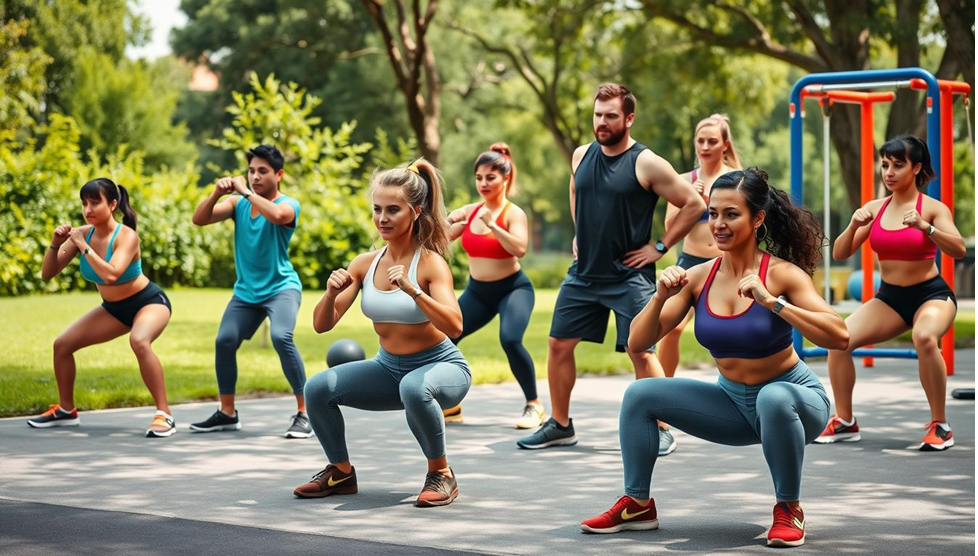
How Many Squats Should I Do a Day? Find Out Here
Key Takeaways
- Most people can do 30 to 40 bodyweight squats a day with proper form.
- For muscle building, aim for 2-3 sets of 6-10 squat reps, 2 times per week.
- To increase lean mass, do 4-8 squat reps, 2 times per week.
- Allow 1-2 days of rest between intense leg training sessions.
- Squats engage multiple muscle groups for total body benefits.
The Benefits of Regular Squats
Adding squats to your workout routine can greatly improve your health and fitness. They help build a stronger gluteus maximus and lower injury risk. Squats also strengthen your joints, making your body more functional.
Builds Stronger Gluteus Maximus
Squats are great for strengthening the gluteus maximus, the biggest muscle in your buttocks. This muscle is key for running speed and power. A 2018 study showed squats activate back muscles more than planks do.
Reduces Running Injury Risk
Regular squats also boost lower body muscles, which can lower injury risk in runners. The American Council on Exercise notes that strengthening tendons and bones through squats can help prevent injuries.
Strengthens Knee and Ankle Joints
Squats also make your knee and ankle joints stronger, reducing injury risk. Harvard Medical School says a 155-pound person can burn 223 calories in 30 minutes doing squats.
|---------------------------------|-------------------------------------------------------------------------------------------------------------------|----------------------------------------------------------------------------------------------------------------------| | Benefit | Description | Research Findings | | Stronger Gluteus Maximus | Squats are excellent for developing the largest muscle in the buttocks, which is crucial for running performance. | A 2018 study found back squats resulted in greater activation of supporting back muscles compared to planks. | | Reduced Running Injury Risk | Strengthening the lower body muscles through squats can lower the risk of injury in runners. | The American Council on Exercise suggests squats can strengthen tendons, ligaments, and bones to reduce injury risk. | | Stronger Knee and Ankle Joints | Squats help strengthen the lower joints, potentially decreasing the likelihood of stress-related injuries. | Harvard Medical School reports that squats can burn 223 calories in 30 minutes for a 155-pound person. |
How to Perform Bodyweight Squats Correctly
Proper Squat Form and Technique
Learning the basic bodyweight squat is key before moving on to harder versions. Begin by standing with your feet shoulder-width apart and arms by your sides. Engage your core and bend at the hips, pushing your butt back as you go down.
Keep your back straight and your knees from rolling inward. Lower down until your thighs are almost touching the ground. Then, pause for a second.
Push back up through your heels to finish one rep. Return to standing to start again.
Beginner's Guide to Basic Squats
For beginners, start with a lighter weight and focus on getting the form right. Aim for 15-20 squats a day. As you get better, you can do more.
It's important to keep your core and shoulders tight. This helps you stay in the right position. Also, squeeze your glutes to stop your knees from rolling in.
- Stand with your feet shoulder-width apart, toes slightly turned out.
- Engage your core and push your hips back as you bend your knees to lower your body.
- Keep your chest up and your back straight throughout the movement.
- Descend until your thighs are parallel to the floor, then pause for a moment.
- Push through your heels to return to the starting position, completing one rep.
When you're starting, focus on proper squat form more than the number of reps. Getting the basic squat right is the first step. It will help you with more advanced bodyweight squat technique and how to do squats safely.
Challenging Squat Variations
Once you've mastered the basic bodyweight squat, it's time to level up with more challenging squat variations. These exercises target different muscle groups. They also improve your strength, power, and stability.
Jump Squats
Jump squats are a dynamic exercise that engages your fast-twitch muscle fibers. This leads to improved explosive power. To perform a jump squat, simply add a small jump at the top of the squat movement.
This variation requires excellent form and control. Start with just your bodyweight before progressing to holding a weight, such as a dumbbell or barbell, for added resistance.
Split Squats
Split squats , also known as Bulgarian split squats, are a unilateral exercise. They isolate one leg at a time. This helps improve balance, stability, and imbalances between your legs.
To do a split squat, place one foot behind you on a bench or step. Then lower your body straight down, keeping your torso upright and your front knee in line with your ankle.
Goblet Squats
The goblet squat is a great variation that challenges your core and engages your upper body muscles. Hold a dumbbell or kettlebell vertically in front of your chest, then perform a regular squat.
The weight in the front forces you to maintain a more upright torso. This engages your abdominal muscles to stabilize the movement.
|---------------------|------------------------------------|-----------------------------------------| | Squat Variation | Primary Muscle Groups Targeted | Benefits | | Jump Squats | Quadriceps, Glutes, Hamstrings | Improved Explosive Power | | Split Squats | Quadriceps, Glutes, Hamstrings | Enhanced Balance and Stability | | Goblet Squats | Quadriceps, Glutes, Core | Stronger Core and Upper Body Engagement |
Incorporating these challenging squat variations into your routine can help you break through plateaus. It builds lower body strength and takes your fitness to new heights. Remember to start with proper form and gradually increase the difficulty as you become more comfortable with the movements.
How Many Squats Should You Do Per Day?
The number of squats you should do daily varies based on your age, weight, fitness level, and goals. For beginners, a good start is 2-3 sets of 15 squats every other day.
As you get stronger, you can do more sets and reps. Some aim for 100 squats a day for 30 days. But, it's important to listen to your body and not overdo it to avoid injury.
""Proper form, intensity, variation, and balanced frequency are key to unlocking the true potential of squats for overall fitness benefits.""
Intermediate folks might aim for 4-6 sets of 6-12 reps to build muscle. Those looking for overall fitness and a firmer butt might do 3-4 sets of 15-20 reps. It's best to squat 2-3 times a week to give your muscles time to recover.
Changing up your squat routine is crucial to avoid plateaus. Try different types like jump squats , split squats, and goblet squats to work different muscles and keep your workouts interesting.
So, the optimal daily squats for you depend on your fitness goals and current level. Start with a number you can handle, focus on form, and gradually increase the challenge as you get stronger.
The Importance of Squat Frequency and Volume
Building strength and muscle through squatting depends a lot on how often and how much you do it. Studies show that how much you train matters more than how often. For better squat or deadlifts, training 2-4 times a week is key, focusing on the right weights and reps.
New trainees should aim for once or twice a week for general strength. But, more experienced lifters can do more. A good routine might include a heavy day, a moderate day, a light day, and a day for variations.
Think about your recovery, start with safe weights, and plan your time well. Also, mix up your routine to target your weaknesses. Finding the right balance in squat frequency and volume helps you grow stronger and avoid injuries.
|------------------------|-------------------------------------------------------------------------------------------------------------------------------------------------------------------------------------------------------------------------------------------------------------------------------------| | Key Findings | Details | | Volume-Matched Studies | ? 8 studies published from 2012 to 2017 ? 16 studies published after the initial 8, with 7 using 1RM as the strength measure | | Meta-Analysis | ? Grgic et al. (2018) found higher training frequencies were associated with larger strength gains, with an effect size of 0.265 (CI=0.08-0.45), indicating a significant difference (p=0.0088) | | Frequency Comparisons | ? 13 studies with 328 subjects, ranging from 1 to 5 times per week ? Average study duration of 8 weeks, involving untrained and trained individuals ? Data trended towards higher training frequencies correlating with greater strength gains, particularly in trained individuals |
Understanding squat frequency and squat volume is crucial. It helps you create an optimal squat routine. This routine will boost your strength and muscle while keeping you safe from overtraining and injury.
how many squats should i do a day
The number of squats you should do daily depends on your fitness level and goals. Beginners can start with 2-3 sets of 10-15 squats every other day. As you get stronger, you can do more sets and reps, and try harder squat variations.
Intermediate folks should aim for 4-6 sets of 6-12 squats daily. For better fitness and a bigger butt, do 3-4 sets of 15-20 squats each day.
It's key to listen to your body and rest enough. Avoid overtraining to prevent injuries and get the most from squats. Doing squats 2-3 times a week is best, and changing your routine helps avoid plateaus.
|-------------------|------------------------------| | Fitness Level | Recommended Daily Squats | | Beginner | 2-3 sets of 10-15 squats | | Intermediate | 4-6 sets of 6-12 squats | | Advanced | 3-4 sets of 15-20 squats |
Your squats should be hard but not too hard to avoid injury. The optimal daily squat target is one that fits your fitness goals and allows for recovery.
""Squats are one of the most effective exercises for building strength and shaping the lower body. By finding the right daily squat target, you can maximize the benefits and see incredible results.""
Squat Workout Plan for Beginners
Starting a squat workout plan as a beginner is exciting and can change your life. It's key to warm up right and cool down well to avoid injuries and get the most from your squats.
Warm-up and Cool-down Routine
A good warm-up is the first step to a great beginner squat routine. Start with 5-10 minutes of light cardio like jogging in place or jumping jacks. This gets your blood flowing and muscles ready.
Then, do dynamic stretches for the hips, glutes, and quads. These stretches prepare your muscles for squatting.
After your workout, cool down with static stretches for your hamstrings and quads. This helps with muscle soreness and recovery. It makes you stronger for your next workout.
|-----------------------------------------------------------------------------|----------------------------------------------------------------------------------------------| | Warm-up Exercises | Cool-down Stretches | | ? Jumping Jacks ? High Knees ? Bodyweight Squats ? Hip Circles ? Leg Swings | ? Quadriceps Stretch ? Hamstring Stretch ? Calf Stretch ? Hip Flexor Stretch ? Glute Stretch |
Adding a good warm-up and cool-down to your squat workout plan helps you build strength. It also lowers injury risk and helps you reach your fitness goals.
Squats for Different Fitness Goals
Squats are great for many fitness goals. They help build muscle, increase strength, and boost running performance. You can change the load, reps, and squat type to meet your goals.
For muscle growth, use heavy weights and fewer reps. A 2018 study showed back squats work the back muscles more than planks. This makes them perfect for strength.
To get better at running, focus on bodyweight and jump squats. A 2016 study found jump squats improve sprint time and explosive strength. Doing them 3 times a week for 8 weeks helps a lot.
Try different squat types like overhead and goblet squats. They challenge different muscles and add to squat benefits. As you get stronger, increase reps or add weight to keep improving.
Squats are good for balance, mobility, and strength. Tailor your squat routine to reach your fitness goals. This way, you get the most out of squats.
|------------------------------|---------------------|-------------------------------| | Fitness Goal | Squat Variation | Recommended Reps and Sets | | Muscle Building | Back Squats | 3-5 sets of 6-8 reps | | Improved Running Performance | Jump Squats | 3 sets of 10-12 reps | | Functional Fitness | Goblet Squats | 2-3 sets of 12-15 reps |
Think about your fitness level and what you like when setting up your squat routine. It's key to keep proper form and slowly increase the challenge. This helps avoid injuries and gets the most from squats.
Common Squat Mistakes to Avoid
Doing squats right is key to getting the most out of them and staying safe. Many people make mistakes that can hurt their progress and safety. Let's look at some common squat errors to avoid.
- Rounding the Back: Keeping your back straight is vital for working the right muscles and avoiding back pain.
- Letting the Knees Cave Inward: Keeping your knees in line with your toes helps use your glutes and keeps you stable.
- Not Going Low Enough: Squatting low enough, with your thighs parallel to the ground, uses the full range of motion and gets you the most benefits.
- Using Too Much Weight Too Soon: Start with light weights and gradually add more. Focus on keeping squat form right to avoid squat injuries and build strength safely.
Being aware of these squat mistakes and focusing on proper squat form will make your squats more effective and safe. Enjoy a better workout experience.
""The key to a successful squat is maintaining a strong, upright posture throughout the movement. This helps ensure you're targeting the right muscles and minimizing your risk of injury.""
Conclusion
Adding squats to your workout can boost your leg strength and tone your body. It also helps improve your running and lowers injury risk. There's no single right number of squats daily. But, adjusting your routine to fit your fitness level and goals can help you see the best results.
Always keep the right form and slowly add more challenge. Make sure to rest well to avoid injuries and reach your fitness goals. Begin with 10-15 reps for 2-4 rounds. As you get better, aim for 4-5 workouts a week.
Changing up your squat routine and tracking your progress can lead to ongoing muscle growth. This will improve your fitness over time.
By following the squat benefits and guidelines, you can enhance your workout. Embrace the challenge, listen to your body, and enjoy the journey. You'll become stronger and more resilient.
FAQ
How many squats should I do a day?
The right number of squats varies based on your fitness, weight, and goals. Beginners should start with 2-3 sets of 15 reps every other day. As you get stronger, you can increase the number.
What are the benefits of regular squats?
Squats work your glutes, quads, and hamstrings, and also engage your core. They help prevent running injuries and strengthen your knees and ankles.
How do I perform bodyweight squats correctly?
Stand with feet shoulder-width apart for bodyweight squats. Engage your core and hinge at the hips. Lower down until your thighs are parallel to the floor. Pause, then push back up through your heels.
What are some challenging squat variations?
Try jump squats, split squats, and goblet squats for a challenge. These variations target different muscles and boost your workout.
How often should I do squats?
Aim for 2-3 squat sessions per week. Choose the right number of sets and reps based on your fitness and goals. Don't overdo it to avoid injury.
What's the optimal daily squat target?
There's no one answer for everyone. The right number depends on your fitness and goals. Start with a manageable number and increase as you get stronger.
How should I warm up and cool down for squats?
Warm up with cardio and dynamic stretches before squatting. After, do static stretches for your hamstrings and quads to aid in recovery.
How can I tailor my squat routine to different fitness goals?
Adjust the load, rep range, and squat types to match your goals. Whether it's building muscle, improving running, or enhancing fitness, tailor your routine accordingly.
What are some common squat mistakes to avoid?
Avoid rounding your back, letting your knees cave, not going low enough, and using too much weight too soon. Focus on proper form to get the most benefits and avoid injuries.
Source Links
- How Many Squats You Should Be Able to Do Per Day - https://www.menshealth.com/fitness/a46976911/how-many-squats-a-day/
- A Beginner's Guide to Squats - https://www.healthline.com/health/fitness-exercise/how-many-squats-should-i-do-a-day
- How Many Squats Should You Do? Here's What Trainers Say - https://www.bustle.com/wellness/how-many-squats-should-you-do
- Benefits of Squats, Variations, and Muscles Worked - https://www.healthline.com/health/exercise-fitness/squats-benefits
- Health Benefits Of Performing Squats Daily - https://www.ndtv.com/health/health-benefits-of-performing-squats-daily-5773186
- Squat Benefits | 90+ Stats & Facts [Research Review] - https://runrepeat.com/benefits-of-squats
- How Many Squats a Day Should I Do to Get the Best Results? - https://joggo.run/blog/how-many-squats-a-day-should-i-do-to-get-the-best-results/
- Follow These Simple Steps to Master the Bodyweight Squat - https://www.menshealth.com/fitness/a39110810/how-to-do-bodyweight-squats/
- How Many Squats Should You Do? - https://eosfitness.com/blog/how-many-squats-should-i-do
- How To Squat & The Best Variations For Every Level - https://www.gymshark.com/blog/article/how-to-squat
- How Many Squats Should I Do A Day? Find Your Magic Number - https://www.dmoose.com/blogs/health-lifestyle/how-many-squats-day-will-give-you-peach-booty-look?srsltid=AfmBOoqatNm1J3QkwdE7Z0tn_wAW9mtv6YsTGFvI_s9_7B3-4Awz7C_P
- How Many Squats A Day Will Give You That Peach Booty Look? - https://betterme.world/articles/how-many-squats-a-day/
- How Many Squats Should I Do A Day? Find Your Magic Number - https://www.dmoose.com/blogs/health-lifestyle/how-many-squats-day-will-give-you-peach-booty-look?srsltid=AfmBOorCqNM13TOJhvGNcMrd-ECeU8fWjxI7MJxXMoA5edggN-LL_1Sk
- How Many Times Should You Squat and Deadlift Per Week? | BarBend - https://barbend.com/deadlift-squat-frequency/
- Training Frequency for Strength Development: What the Data Say - https://www.strongerbyscience.com/training-frequency/
- How Many Squats Should I Do A Day? Find Your Magic Number - https://www.dmoose.com/blogs/health-lifestyle/how-many-squats-day-will-give-you-peach-booty-look?srsltid=AfmBOooAs6CosXXYz7EHWqMTkZxL9gWc_aMnQMKU-Ojiu9Bizjo6i40E
- How Many Squats Should I Do A Day? - https://ethicalinc.com/2023/11/08/how-many-squats-should-i-do-a-day/
- Beginner Squat Program, 2 Days/Week - https://www.strengthlog.com/beginner-squat-program/
- This 30-Day Squat Challenge Will Totally Strengthen Your Butt - https://www.shape.com/fitness/workouts/butt-workouts/30-day-squat-challenge
- The Best Squats Workout Plan For Juicy Quads, Hamstrings, And Glutes - https://betterme.world/articles/squats-workout-plan/
- A Beginner's Guide to Squatting - https://www.healthline.com/health/fitness-exercise/proper-squat-form
- 15 Common Squat Mistakes You Make And How To Avoid Them - https://www.dmoose.com/blogs/training/15-common-squat-form-mistakes-you-need-to-avoid?srsltid=AfmBOooHmb-9aDj85FmeOo4MnS2iGO-Zn0MDu7GcsYeILNJlLlbwDG-5
- How Many Bodyweight Squats to Build Muscle Effectively? | The Wellness Adventurer - https://www.thewellnessadventurer.com/how-many-bodyweight-squats-to-build-muscle/
- How Many Squat Reps Should I Do? Volume Explained - Inspire US - https://www.inspireusafoundation.org/how-many-squat-reps-should-i-do/
- Can You Squat Every Day Safely? - https://torokhtiy.com/blogs/guides/can-you-squat-everyday
"