
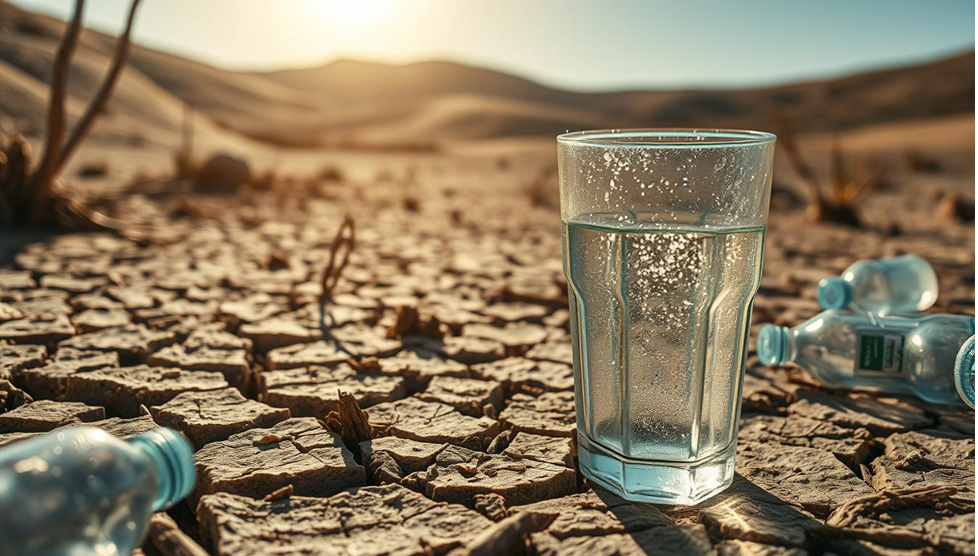
How Much Water a Day: Your Essential Hydration Guide
Water is key for our health, making up 50% to 70% of our body. It helps with waste removal, keeps our body temperature right, and protects our joints and tissues. The U.S. National Academies suggest men drink about 15.5 cups (3.7 liters) and women about 11.5 cups (2.7 liters) daily<>.
But, how much we need can change. It depends on our health, how active we are, and where we live.
Key Takeaways
- Water makes up 50-70% of our body weight and is essential for various bodily functions.
- The recommended daily fluid intake is 15.5 cups for men and 11.5 cups for women.
- Individual needs can vary based on health, activity level, and environment.
- Approximately 20% of daily fluid intake comes from food, with the remaining 80% from drinks<>.
- Staying hydrated can have numerous health benefits, including weight management and cognitive function.
Understanding Your Daily Water Requirements
Drinking enough water is key for good health. But, how much water you need can change a lot. This depends on many things<><><>.
Individual Factors Affecting Water Needs
Many things can affect how much water you need each day. Your age, gender, how active you are, where you live, and your health can all play a part<>.
Recommended Water Intake by Age and Gender
The Academy of Nutrition and Dietetics suggests men drink 100 ounces (12.5 cups) of water daily. Women should aim for 73 ounces (9 cups)<>. But, your exact needs might be different<>.
Special Considerations for Different Life Stages
Some life stages need more water. Pregnant women should drink about 13 cups of fluid each day. Breastfeeding moms need around 16 cups<>. Kids and teens need 6 to 8 cups, with younger ones needing less<>.
|---------------------|------------------------------------| | Demographic | Recommended Daily Fluid Intake | | Adult Men | 100 ounces (12.5 cups)<> | | Adult Women | 73 ounces (9 cups)<> | | Pregnant Women | 104 ounces (13 cups)<> | | Breastfeeding Women | 128 ounces (16 cups)<> | | Children and Teens | 48 to 64 ounces (6 to 8 cups)<> |
Remember, these are just general guidelines. Your water needs might be different. Talking to a healthcare professional can help figure out what's best for you<>.
""Staying hydrated is essential for maintaining optimal physical and mental performance, as well as overall health and well-being.""
The Science Behind Proper Hydration
Drinking enough water is key for our health and how our body works. Water helps build cells, aids digestion, and keeps our body temperature stable. It also helps our joints and supports our heart by keeping blood volume right and blood pressure in check.
Water helps our kidneys work better, getting rid of waste and preventing kidney stones. Even a little dehydration can hurt our brain, making it harder to focus, remember things, and feel good.
Our bodies are made up of about 60% water<>. We're often told to drink eight 8-ounce glasses of water a day. But losing just 2% of our body's water can make us feel dehydrated<>. Athletes can lose up to 6--10% of their body weight in sweat during intense workouts<>.
In 1945, experts said we should drink two and a half liters of fluid daily, mostly from food<>. A famous nutritionist suggested drinking at least six glasses of water a day without proof<>. The idea that we should drink eight glasses of eight ounces of water daily has become popular, about two liters<>.
At first, it was okay to use other drinks like caffeinated beverages, milk, juice, and even beer for hydration<>. But athletes are now told to add sodium to their water for longer, intense workouts in the heat<>.
""Drinking large amounts of water quickly may result in quick elimination through urine, as the body has a protective mechanism called the bolus response.""<>
But drinking too much water can lead to hyponatremia, a rare but serious condition<>. How much water we need varies based on our activity, weather, diet, and size<>.
Our body's main way to tell us we need water is through thirst<>. Athletes should start hydrating four hours before they exercise, drinking a certain amount of water based on their body weight to perform better<>.
The U.S National Academies of Sciences, Engineering, and Medicine say adults should drink 92-124 ounces of water daily in a temperate climate<>. To figure out how much water to drink during exercise, drink 24 ounces for each pound lost<>. Pregnant or breastfeeding women might need more water for hydration<>.
Sports drinks with electrolytes are good for intense exercise or hot weather<>. Waiting until we're thirsty can mean we're already dehydrated<>. Drinking too much water can cause an imbalance of electrolytes, leading to serious symptoms like nausea, confusion, headaches, and fatigue, and in extreme cases, it can be deadly<><><>.
How Much Water a Day: Breaking Down the Numbers
Drinking enough water is key for your health. But, how much you need can change based on many factors. The ""8 glasses of water per day"" rule is a good start, but it's not the same for everyone.
The 8 Glasses Rule: Myth or Reality?
The 8 glasses rule has been around for a long time. But, studies show it might not fit everyone<>. On average, women need about 91 ounces of water daily, and men need 34 ounces more<>. It's important to listen to your body and adjust your water intake.
Calculating Your Personal Water Needs
To figure out how much water you need, think about your weight, how active you are, and where you live<>. The ""adequate intake"" for adult men is 15.5 cups (125 ounces) daily, and for women, it's 11.5 cups (91 ounces)<>. But, these numbers can change based on your personal situation.
Adjusting Intake for Activity Levels
Your water needs can change with your activity level<>. For every 30 minutes of exercise or being in hot weather, drink an extra 8 ounces of water<>. A simple way to check if you're drinking enough is to look at your urine. If it's light yellow or clear, you're good. But, if it's dark yellow or amber, you need more water.
Finding the right amount of water for you depends on many things. These include your gender, age, how active you are, and your health. By paying attention to your body and adjusting your water intake, you can stay hydrated and enjoy the benefits of drinking enough water.
|---------------------------------------------|----------------------------------| | Hydration Recommendations | Amount | | Adequate water intake for adult men | 15.5 cups (125 ounces) per day<> | | Adequate water intake for adult women | 11.5 cups (91 ounces) per day<> | | Water intake during hot weather or exercise | 8 ounces every 15-20 minutes<> | | Average water content in adult male body | 59%<> | | Average water content in adult female body | 56%<> |
Essential Benefits of Staying Hydrated
Drinking enough water for health and hydration benefits is key for feeling good. It helps our bodies work right and keeps us healthy in mind and body.
Water is great for our hearts, helping control blood pressure and flow<>. It also helps our kidneys, cutting down on kidney stones and getting rid of waste<>. Not drinking enough water can cause headaches and make it hard to focus<>.
If you want to lose weight, hydration benefits can help. It boosts metabolism and makes you feel full<>. Plus, it keeps your skin looking good, making it soft and smooth<>.
For athletes and those who are active, water for health is a must. It helps keep your body cool, gets nutrients to muscles, and improves how you perform<>. Drinking enough water also stops heat sickness and helps you recover faster from workouts<>.
""Drinking enough water is one of the easiest and most effective ways to improve your overall health and well-being.""
By focusing on hydration benefits , you can get many physical and mental perks. These benefits can greatly improve your life quality<><><>.
Signs Your Body Needs More Water
Keeping your body hydrated is key to staying healthy. Yet, many people find it hard to drink enough water each day. The body gives clear signs when it needs more fluids.
Physical Symptoms of Dehydration
Common signs of dehydration include feeling thirsty, having a dry mouth, and dark yellow urine<>. You might also feel tired, dizzy, and get muscle cramps<>. Dehydration can also make your skin look dull and cause wrinkles<>.
Checking your urine color is a simple way to see if you're hydrated. If it's pale straw-yellow, you're good. But dark yellow, orange, or brown means you need more water<>.
Mental Effects of Insufficient Water Intake
Not drinking enough water can affect your brain and mood<>. Studies show that dehydrated people do worse on mood and thinking tests<>. It can also make you crave sweets and feel less full<>.
Drinking enough water is important for your brain. Since it's mostly water, staying hydrated is key for brain health<>.
Warning Signs of Severe Dehydration
Severe dehydration can cause serious symptoms like confusion, a fast heartbeat, and even fainting<>. If not treated, it can be very dangerous<>. Watch for these signs and drink more water if needed.
|---------------------|--------------------------------|---------------------------------------| | Hydration Level | Urine Color | Symptoms | | Good Hydration | Pale straw-yellow | No dehydration symptoms | | Mild Dehydration | Honey, cloudy yellow, or amber | Thirst, dry mouth, fatigue, dizziness | | Severe Dehydration | Dark yellow, orange, or brown | Confusion, rapid heartbeat, fainting |
By noticing early signs of dehydration, you can stay hydrated. This helps keep you healthy and feeling your best<><><>.
Alternative Sources of Hydration
While water is the best for staying hydrated, other options can also help. Herbal teas, fruit-infused waters, and foods with lots of water are great for extra hydration<>. Fruits and veggies not only give water but also vitamins, minerals, and antioxidants that boost health<><>.
Watermelon, cucumbers, and lettuce are very wet, with 92%, 96%, and 96% water content<>. Celery, radishes, romaine lettuce, tomatoes, zucchini, and summer squash also have over 90% water<>. You can also try skim milk, broths, and soups for more fluid and nutrients<>.
Caffeinated and alcoholic drinks can make you dehydrated because they have diuretic effects. But, sports drinks are good for intense workouts. Just watch out for the extra calories and sugar in them<>.
Using a mix of hydration sources is key to staying hydrated and healthy<><><>.
|--------------|-------------------|----------------------------------------------------------------------------------------------------------| | Food | Water Content | Nutritional Benefits | | Watermelon | 92% | Low in calories, rich in vitamins A and C, and a good source of antioxidants<>. | | Strawberries | 91% | Fiber-rich, packed with vitamins, minerals, and antioxidants<>. | | Cantaloupe | 90% | Provides 120% of daily vitamin A needs in a 1-cup serving<>. | | Peaches | 89% | Nutrient-dense, offering vitamins, minerals, and antioxidants<>. | | Oranges | 88% | Rich in vitamin C, potassium, antioxidants, and fiber that promotes fullness and reduces inflammation<>. | | Skim Milk | 91% | Provides essential vitamins and minerals, beneficial for hydration and rehydration after exercise<>. |
Using a variety of hydration sources , including water, helps meet daily fluid needs and supports health<><><>.
Water Consumption During Exercise and Physical Activity
Drinking enough water is key for good exercise performance and health. Our bodies are made up of almost 60% water. But, how much water we have can change based on our age, gender, and body type<>. It's important to stay hydrated during workouts to perform well and avoid health problems.
Pre-workout Hydration Guidelines
Start drinking water 4 hours before you exercise to get hydrated. Aim for 5 to 7 milliliters of water per kilogram of your weight<>. Drink 500 milliliters of water or sports drink the night before a big event. Then, drink another 500 milliliters when you wake up. Finally, have 400 to 600 milliliters about 30 minutes before you start exercising<>.
Post-workout Hydration Strategies
Sweat rates can be different for everyone, from 0.5 to 2 liters per hour<>. After exercising, drink about 3 cups of water for every pound you lost<>. Weigh yourself before and after exercise to figure out how much water you need to drink<>.
Drink 12 to 16 ounces of fluids every 5 to 15 minutes while working out<>. Use a solution with 6% to 8% carbs and 300 to 600 milligrams of sodium per serving<>. In hot or humid weather, drink more often if you're doing intense or long workouts. But, if you're doing less intense exercises, drink less often<>.
""The color of urine can indicate hydration status; clear or almost clear urine signifies adequate hydration while dark or concentrated yellow urine indicates dehydration.""<>
By following these guidelines, athletes can stay hydrated and perform their best<>. Drinking enough water during and after exercise helps avoid dehydration's negative effects. These include poor coordination, focus, and overall performance<>.
Common Hydration Mistakes to Avoid
Staying hydrated is key for good health. Yet, even the healthiest people can make hydration mistakes. Waiting until you're thirsty to drink is one error<>. By then, your body is already dehydrated.
Not adjusting your water intake for exercise or hot weather is another mistake. These activities increase your fluid needs.
Drinking too much of sugary or caffeinated drinks is also a mistake. Coffee and tea can help with hydration<>. But, sports drinks can cause dehydration if you drink too much<>. It's important to drink them in moderation.
Another error is overhydration, which can lead to hyponatremia. This is when your blood's sodium levels get too low. It often happens in athletes who drink too much water without replacing electrolytes<>. Listen to your body and adjust your water intake accordingly.
- Aim for 16-20 ounces of water 1-2 hours before starting a run<>
- Consider sports drinks like Powerade ION4 for runs longer than one hour to replace electrolytes<>
- Drink at least 16 ounces of water or a recovery beverage within 30 minutes of finishing a run<>
By avoiding these hydration mistakes and adjusting your water intake, you can keep your body hydrated. This helps you feel your best and perform well.
|--------------------------------------------------|----------------------------------------------------------|-----------------------------------------------------| | Hydration Mistake | Explanation | Impact | | Waiting until you're thirsty to drink | Thirst is a late sign of dehydration | Can lead to mild dehydration<> | | Not adjusting intake for exercise or hot weather | Fluid needs increase with activity and temperature | Increased risk of dehydration<> | | Relying on sugary or caffeinated beverages | Sugary drinks and caffeine can contribute to dehydration | Potential for dehydration and other health issues<> | | Overhydration during endurance activities | Drinking too much water without electrolyte balance | Can lead to hyponatremia, a dangerous condition<> |
By understanding and avoiding these common hydration errors and water intake mistakes, you can keep your body hydrated. This ensures it functions at its best.
Seasonal Adjustments to Water Intake
Keeping up with seasonal hydration is key, as our weather-based water needs change with the seasons. In summer, our bodies lose a lot of water through sweat, so we need to drink more<>. In winter, the dry air from heating can also make us lose water, so we need to drink more then too<>.
People living in high places need to drink even more water. This is because they breathe faster and pee more, making it harder to stay hydrated<>.
- In hot weather, increase water intake to replace fluids lost through sweat.
- During winter, indoor heating can lead to higher water loss through respiration, requiring adjustments.
- High altitudes may increase fluid needs due to faster breathing and increased urination.
By paying attention to these changes and adjusting your water intake accordingly, you can keep your body hydrated all year<>.
|-------------|--------------------------------------------------------------------------------------------------------------------| | Program | Watering Recommendations | | A | Water the lawn 3 times for 4 minutes each, with start times at least one hour apart<>. | | B | Water high-water-use plants for 30 to 90 minutes on assigned days, depending on emitter type, plant variety, and " |