
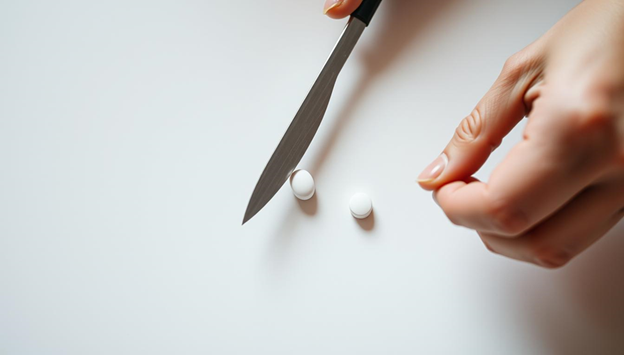
How to Cut Pills: A Comprehensive Guide
Learning to cut pills is crucial, as medication costs keep rising. Pill splitting can help save money on prescriptions. The FDA warns against splitting pills unless the drug's label says it's okay. It's important to check if a pill can be split and use a pill splitter. Our guide will show you how to cut pills
wisely.
As medication costs grow, people seek ways to save. Pill splitting is one strategy, with 35% of doctors prescribing higher doses for cost savings. But, it's vital to follow the dose and use a pill splitter for accurate dosing.
Key Takeaways
- Always check if a pill is safe to split before cutting it.
- Use a pill splitter to ensure accurate dosage and effectiveness.
- Follow the prescribed dose carefully to avoid any potential risks.
- Pill splitting can be a convenient way to save money on prescriptions.
- It's essential to understand the importance of proper storage and handling of split pills.
- Consult with a healthcare professional before splitting your medications.
By following these tips, you can cut pills safely and effectively. Our guide will help you make smart choices about your medication needs, including how to cut pills
Understanding the Importance of Cutting Pills
Cutting pills can help those who need smaller doses or have trouble swallowing big pills. Almost 25% of pills are split. This can save money and make pills easier to take. But, there are risks like uneven cuts or damage from air, heat, or moisture.
When done right, safely dividing pills can be helpful and save money. The FDA says some pills are okay to split, but only in the patient guide. Patients can cut costs by up to 80% with the right guidance. Always use a pill splitter to get even cuts.
Reasons for Cutting Pills
Patients cut pills for many reasons. Some need dose changes, which is about 30% of prescriptions. Others have trouble swallowing big pills, affecting over 40% of people. Cutting pills can make them easier to take and cheaper.
Potential Risks Involved
While cutting pills has benefits, there are risks. Splitting extended-release pills can release all the dose at once, causing harm. Only split pills with a visible score line. Knowing these risks helps patients safely use pill cutting methods and splitting medicine tablets.
Choosing the Right Equipment
For precise pill cutting
, having the right tools is key. It ensures safety and accuracy. This is vital for splitting medication doses correctly.
A pill splitter or cutter is best for this task. These tools safely and accurately split pills. This is important for saving money, as a double-strength pill costs the same as a single-strength one.
Pill Splitters vs. Knives
Pill splitters are better than knives for cutting pills. Knives can be hard to control and may not cut cleanly. This can lead to wrong doses. Pill splitters are made for this job and help get the dose right.
Using a Cutting Board
A cutting board is handy for cutting pills. It gives a clean, stable place for cutting. This helps avoid accidents and keeps things clean, which is important for safe pill cutting.
The Best Techniques for Cutting Pills
There are many ways to cut pills. It's important to learn how to do it safely and right. This ensures you get the right amount of medicine. Cutting pills can also save money, like with generic sertraline costing about $11.50 for 30 tablets.
Some pills, like those for blood pressure and depression, are okay to split. A pill splitter is a good tool for this. It makes sure you cut pills safely and accurately. If a pill has a score line, it's even safer to split, with about 70% being okay to cut.
Using a knife is another option, but you have to be careful. It's easy to make cuts that are not even. Breaking pills by hand is also possible, but it might not be as precise as using a tool.
It's vital to follow the dose your doctor gives you. United Healthcare's "Half Tablet Program" shows that splitting pills can lower copays. Cutting pills just before taking them helps with even dosing and keeps the medicine working well. By learning these methods, you can take your medicine safely and effectively.
Some important tips for cutting pills include: * Use a pill splitter for precise cuts * Cut pills with a score line for safety * Stay away from knives or sharp objects that can cause uneven cuts * If all else fails, break pills by hand with caution By following these tips and using the right tools, you can cut your pills safely and effectively. This is key to mastering pill splitting techniques
and getting the most out of your medication.
Safety Tips for Cutting Pills
It's vital to follow safe pill cutting methods
to prevent accidents and contamination. Splitting pills can help save money on prescriptions. But, it needs careful attention and detail. The FDA says specific labeling is needed for split-approved tablets. Tablets not labeled as such may not be safe after splitting.
Always handle sharp tools with care and keep the area clean when cutting pills. Use a clean surface and watch the process to ensure safety and right dosing. Important safety tips include:
- Using a tablet splitter for accurate splits
- Avoid splitting un-scored tablets for even dosing
- Keeping split tablets dry to prevent damage
By following these tips and using the right methods, you can safely split your pills. This ensures you get the right dose and avoids accidents or contamination.
|------------------------------------|----------------| | Tip | Importance | | Handle sharp instruments with care | High | | Avoid contamination | High | | Use a clean and stable surface | Medium |
When Not to Cut Pills
Knowing when not to cut pills is crucial for their safety and effectiveness. Cutting pills in half or medication dosage splitting can be helpful in some cases. But, always check with your pharmacist first.
Some pills, like delayed-release or long-lasting ones, should not be cut. This can mess up their release mechanism and lead to too much or too little medicine. Also, pills with hard outer coatings or those that release medicine slowly should not be split. This can change how the body absorbs the medicine and could be dangerous.
Most capsules are meant to be swallowed whole. Only a few can be opened and sprinkled on food, with the pharmacist's guidance. To safely split pills, cut one at a time. Make sure to take both halves before cutting another.
When deciding if you should cut pills, consider a few things: * The type of pill and how it releases medicine * The risks of cutting or splitting the pill * Always talk to your pharmacist before cutting or splitting pills * Follow specific guidelines for precise pill cutting and medication dosage splitting to keep it safe and effective.
Cutting Pills for Children
When cutting pills for kids, think about the right dose and if they can swallow it. shows 73% of parents don't know how to safely throw away harmful waste. This makes it important to handle and give out medicine carefully. A pill splitter or cutter can help kids who find big pills hard to swallow.
It's key to split pills the right way to get the right dose. A study suggests using a special device to cut pills accurately. Also, don't split pills that release medicine slowly because they might not work right. With the right tools and tips, giving medicine to kids can be easier and less stressful.
Here are some tips for cutting pills for children:
- Use a pill splitter or a pill cutter to ensure accurate dosage
- Follow the manufacturer's instructions for splitting tablets
- Avoid splitting extended-release or time-release medications
- Use a commercially available tablet-cutting device for accurate dosage
By following these tips and using the right tools, parents can make sure their kids get the right amount of medicine. Always talk to a pharmacist or doctor if you're unsure about cutting pills for kids.
|---------------------------|-------------------------------------------------------| | Medication Type | Splitting Instructions | | Immediate-release tablets | Can be split using a pill splitter or pill cutter | | Extended-release tablets | Should not be split due to risk of ineffective dosing |
Cutting Pills for Pets
When it comes to cutting pills for pets, we must be careful. Pills or capsules are common for pets, and the right dose is key. This avoids harm and makes sure the medicine works well. Many pet owners find it hard to give medicine, which is why there are guides like "How to give your cat a pill in 20 easy steps".
Always talk to a vet before cutting pills for your pet. They can show you the best pill cutting methods and help you get the right dose. Using a pill splitter or pill cutter makes it easier and safer to split pills. Another source also says to check with your vet before cutting pills.
- Using the correct pill cutting methods to ensure accurate dosage
- Consulting with a veterinarian to determine the best approach for your pet's specific medication
- Ensuring that you are safely dividing pills to avoid any potential risks or complications
By following these tips and using the right tools, like apill splitter orpill cutter , you can make sure your pet gets the right medicine. This way, you can split medicine tablets safely and correctly.
Storing Cut Pills Properly
After precise pill cutting or cutting pills in half, it's key to store them right. This keeps them potent and effective. The third source says to keep cut pills in a cool, dry spot, away from sunlight and moisture.
Storing cut pills right is crucial. Use a clean, dry container. Keep them out of reach of kids and pets. Also, avoid extreme temperatures.
About 80% of pills are meant to be swallowed whole. Only a few are for splitting or changing.
Some important tips for storing cut pills include:
- Use a pill box or container with separate parts to keep pills organized and easy to find
- Label the container with the medication name, dosage, and expiration date
- Store the container in a cool, dry place, like a cupboard or drawer
By following these tips, you can keep your cut pills safe and effective. Remember, up to 60% of people might take their pills wrong because they don't know how to handle split pills. So, always check with a pharmacist or healthcare expert for advice on storing and taking cut pills.
Understanding Dosage and Effectiveness
When you cut pills, it's key to know how it changes the dosage and how well the medicine works. Using the right pill splitting techniques is important. This ensures the medicine is split right, which keeps it working well. A study showed that a special device can split pills more accurately than other methods.
To get the dosage right, you need the right tools and to follow medication cutting tips . A pill splitter or cutter helps avoid mistakes. This way, you make sure you're taking the right amount of medicine. As says, getting the medicine right is about five things: the right patient, drug, time, dose, and way.
Knowing how to measure pills accurately is very important. By using the right methods and tools, you can make sure you're taking the right amount of medicine. This is key for the medicine to work well. As and point out, proper use and accurate measurement are vital to avoid risks and make sure the medicine works.
Pill Identification and Verification
Identifying pills correctly is key to safely dividing them. Look at the pill's imprint, color, and shape. The RxList Pill Identifier Tool helps by using different fields to find medications. Also, the Poison Control Pill Identifier lets you search by imprint code, shape, and color.
To confirm a pill's identity, patients can use online databases like RxList Drug Database. It offers detailed info on many medications. This helps patients know about side effects and uses. The FDA can also identify a pill if you email them a picture. Taking these steps ensures patients are taking the right medication and splitting pills correctly.
Important factors for identifying pills include:
- Imprint code
- Color
- Shape
- Size
These details help patients tell different medications apart and use the right pill cutting methods
.
By following these steps and using the right tools, patients can safely split their pills. This is crucial when splitting medicine tablets
, as wrong identification can cause serious problems.
Getting Expert Advice
While cutting pills can be helpful, it's important to be careful and get advice from experts. The FDA says only certain pills should be split, so always check with a doctor or pharmacist first. Some pills, like those with hard coatings or time-release formulas, can be tricky to split safely.
Talking to your pharmacist or doctor is a great way to get advice onprecise pill cutting
andmedication dosage splitting
. They can guide you on safe and effective ways to split pills for your needs. They might also suggest where to find more information, helping you avoid problems. Working with your healthcare team ensures you're splitting pills safely and effectively.
FAQ
Why would someone want to cut their pills?
Cutting pills can save money on prescriptions. It also helps those who need smaller doses or have trouble swallowing big pills.
What are the potential risks involved in cutting pills?
Cutting pills can lead to uneven splits. This can expose the medication to air, heat, or moisture, affecting its potency.
What is the difference between using a pill splitter and a knife for cutting pills?
Pill splitters are safer and more precise than knives. Knives can cause uneven splits and accidents.
What are the best techniques for cutting pills?
The best methods include using a pill splitter, a knife, or breaking by hand. Each has its own pros and cons. Always follow the prescribed dose carefully.
What safety tips should be followed when cutting pills?
Handle sharp tools with care. Avoid contamination and use a clean, stable surface for cutting.
What types of pills should not be cut?
Delayed-release or long-lasting pills should not be cut. Always check with your pharmacist before cutting any pills.
How do I cut pills for children?
Cutting pills for kids needs special care. They might have trouble swallowing big pills or need smaller doses. Make it a positive experience and use a pill splitter or cutter.
How do I cut pills for pets?
Cutting pills for pets requires careful consideration. Animal medications are sensitive to dosage and administration. Consult a vet and use a pill splitter or cutter for accurate dosing.
How should I store cut pills?
Proper storage of cut pills is key to keeping them potent. Store them in a cool, dry place, away from sunlight and moisture.
How does cutting pills affect the dosage and effectiveness of the medication?
Cutting pills can alter the dosage and effectiveness. It's crucial to understand how cutting impacts dosage and the importance of accurate measurement.
How do I properly identify and verify the pill I'm cutting?
Proper identification and verification of pills are essential. Check for imprints and use online databases to confirm the pill's identity.
Where can I get expert advice on cutting pills?
Cutting pills is complex. Seek advice from healthcare professionals and use resources for more information. This ensures safe and effective cutting.
Source Links
- How to Cut Pills: 10 Steps (with Pictures) - wikiHow - https://www.wikihow.com/Cut-Pills
- Splitting Pills: Is It Ever OK? - https://health.clevelandclinic.org/cutting-pills-in-half
- Understanding the Risks and Benefits of Pill Splitting - https://www.buzzrx.com/blog/pill-splitting
- Pill Cutter Splitter by Pill Mill - Metal Blades that will never Dull - Grip Handle helps to Cut Small or Large Pills with Ease - Light and Durable Tablet Divider - https://www.amazon.ca/Pill-Cutter-Splitter-Mill-Medicine/dp/B07JCSJ2F3
- Pill Splitting Dos and Don'ts - https://www.huffpost.com/entry/pill-splitting-dos-and-do_b_8804192
- Pill Splitting? Do it Safely - https://www.wellrx.com/news/pill-splitting-do-it-safely/
- How to Cut Pills Easily & Accurately for Your Cat: Vet-Verified Tips - Catster - https://www.catster.com/cat-health-care/how-to-cut-pills-easily-and-accurately/
- Tablet Splitting - https://www.fda.gov/drugs/buying-using-medicine-safely/tablet-splitting
- A Knife Is Not a Pill Cutter (And Other Home Medication Safety Tips) | Published in PATIENT SAFETY - https://patientsafetyj.com/article/88516-a-knife-is-not-a-pill-cutter-and-other-home-medication-safety-tips
- The Risks of Patient Pill Splitting: A Case Report and Review - https://pmc.ncbi.nlm.nih.gov/articles/PMC10710749/
- The do's and don'ts of splitting pills or chewable tablets | Express Scripts - https://www.express-scripts.com/pharmacy/blog/splitting-pills
- Safe handling of hazardous medicines at home: Giving cut tablets - https://www.aboutkidshealth.ca/safe-handling-of-hazardous-medicines-at-home-giving-cut-tablets
- The Do's and Don'ts of Tablet-Splitting - https://www.safemedication.com/pharmacist-insights/2021/04/26/the-dos-and-donts-of-tablet-splitting
- SUMMARY OF EVIDENCE - Pill Splitting: A Review of Clinical Effectiveness, Cost-Effectiveness, and Guidelines - https://www.ncbi.nlm.nih.gov/books/NBK304658/
- Tips for Giving Medicine to Your Pet | Texas Pets - https://www.tvmf.org/articles/tips-for-giving-medication-to-your-pet/
- 6 tips for giving your dog a pill - https://betterpet.com/how-to-give-your-dog-a-pill/
- Here's How and Why to Safely Split Your Pills | Banner Health - https://www.bannerhealth.com/healthcareblog/teach-me/why-you-might-want-to-split-your-pills
- PDF - https://www.rpharms.com/Portals/0/RPS document library/Open access/Support/toolkit/pharmaceuticalissuesdosageforms-(2).pdf
- Administration of Medication: Taking Drugs the Right Way - https://www.healthline.com/health/administration-of-medication
- Pill Identifier (Pill Finder Wizard) - Pill Identification Tool Using Drug Pictures, Color, Shape, Number, or Imprint - https://www.rxlist.com/pill-identification-tool/article.htm
- How to Identify Unknown Pills - https://www.verywellhealth.com/how-to-identify-drugs-pills-tablets-or-capsules-2615055
- Tips to Save Money on Prescription Drugs - https://www.webmd.com/drug-medication/guide-to-pill-splitting