
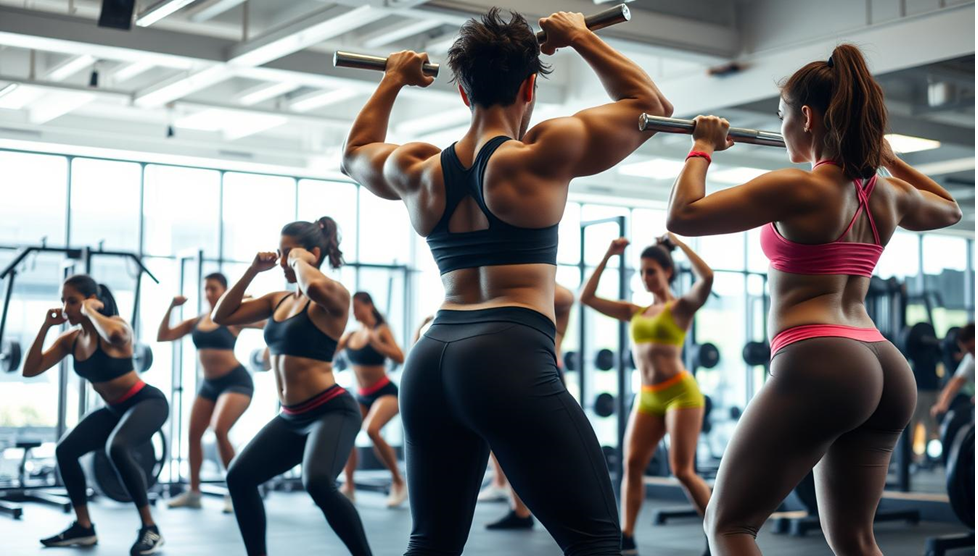
How to Grow Glutes: Best Exercises for a Bigger Booty
The glutes are the biggest muscle group in our body. They include the gluteus maximus , gluteus medius , and gluteus minimus <>. These muscles are key for simple actions like walking and running. By doing specific exercises, you can make your glutes bigger and more toned.
This article will show you the best ways to strengthen your glutes. You'll learn exercises and techniques to get a more confident and empowered look.
Key Takeaways
- The glutes are comprised of three main muscles: gluteus maximus , gluteus medius , and gluteus minimus.
- Exercises like squats , lunges, glute bridges , jumping squats , and walking lunges can help strengthen and tone the glute muscles <>.
- Recommendations suggest doing glute exercises at least 2 days per week<>.
- Clamshell and donkey kick exercises specifically target the deep glute muscles <>.
- Incorporating weights into glute exercises can lead to more effective results in muscle growth<>.
Understanding Glute Anatomy and Function
The glute muscles , including the gluteus maximus , gluteus medius , and gluteus minimus, are key for movement and stability. They work together for everyday tasks and athletic feats.
Gluteus Maximus
The gluteus maximus is the biggest muscle in our body. It mainly extends the hip joint<>. This muscle is crucial for quick movements like sprinting and jumping, important for athletes<>.
A 2018 study linked the gluteus maximus-to-quadriceps ratio to athlete speed. A bigger ratio means faster athletes<>.
The gluteus maximus's movement varies due to different insertion points<>. It can also shrink after hip surgery, as shown in a 2018 study<>.
Gluteus Medius
The gluteus medius is above the gluteus maximus. It helps lift the leg and rotate the thighbones<>. It's key for thigh stability when standing on one foot<>.
Gluteus Minimus
The gluteus minimus is the smallest glute muscle, below the gluteus medius<>. It helps stabilize the thigh when standing on one foot<>.
There are also deep rotator muscles that rotate the thighbones<>.
The glute muscles are vital for hip extension, abduction, and rotation<>. Knowing how they work is key for training and injury prevention.
""The glutes are among the most important muscles to train for athletes due to their role in explosive movements and athletic performance.""
Benefits of Strong Glute Muscles
Strong glute muscles bring many benefits, like better athletic performance and injury prevention <>. The Gluteus Maximus, Medius, and Minimus muscles are key in keeping the pelvis and lower body stable<>. They help spread out the load, easing pressure on the lower back and legs<>.
They also help reduce back and knee pain by keeping the pelvis stable<>. This prevents too much force on the knee and ankle<>.
Glute strength boosts power and performance in exercises<>. Strong glutes mean faster sprints, higher jumps, and stronger lifts<>. This is great for running, jumping, and lifting heavy things<>.
They also improve balance and posture, lowering the risk of falls and injuries<>. This is especially good for older adults<>.
Weak glutes can lead to lower body injuries, making glute strengthening crucial<>. Stronger glutes help with everyday tasks like walking, running, and squatting<>. They also make your legs look toned by adding muscle and reducing fat<>.
Glute exercises also boost metabolic health, mental well-being, and overall life quality<>. They improve glucose metabolism, insulin sensitivity, and lipid profiles, lowering disease risk<>. Plus, reaching fitness goals through glute workouts can lift your mood and confidence, helping with depression and anxiety<>.
Glute muscles are essential for healthy movement and injury prevention during activities<>. Regular glute exercises keep and build muscle strength, promoting health and well-being<>. Exercises like squats , split squats, and Romanian deadlifts improve flexibility, balance, and muscle activation, benefiting everyone, not just athletes<>.
For those with low back or hip arthritis, glute-strengthening exercises in physical therapy can greatly improve pain and strength<>. Studies show the benefits of glute muscle activation during rehabilitation and the role of muscle strength in bone health and joint conditions<>.
|--------------------------------------|----------------------------------------------------------------------------------------------------------------------------------------------------------------------| | Benefit | Description | | Improved Athletic Performance | Stronger glutes contribute to faster sprinting, higher jumping, and more powerful lifts, enhancing overall exercise and athletic abilities. | | Enhanced Injury Prevention | Glute strength supports healthy movement and stability, reducing the risk of lower body injuries during physical activities. | | Better Posture and Balance | Strong glutes improve balance and posture, decreasing the likelihood of falls and related injuries, especially for older adults. | | Reduced Joint and Back Pain | Gluteal muscles help distribute loads evenly, alleviating strain on the lower back, knees, and hips, potentially reducing associated pain. | | Improved Metabolic and Mental Health | Glute-strengthening exercises can enhance glucose metabolism, insulin sensitivity, and overall well-being, reducing the risk of chronic diseases and improving mood. |
How to Grow Glutes: Essential Training Principles
To build strong, shapely glutes, you need to be dedicated and follow key training principles. These include increasing weight, doing exercises regularly, and focusing on the muscles you're working.
Progressive Overload
Increasing the weight or reps over time is crucial for muscle growth<>. Aim for six to twelve reps with heavy weights for the best results<>. This method keeps your glutes challenged and helps them grow.
Training Frequency
Work your glutes at least once a week to make them bigger and stronger<>. Exercises that really work your glutes show high muscle activation<>. Sticking to this schedule is important for glute growth.
Mind-Muscle Connection
Having a strong connection between your mind and muscles is vital for glute development<>. Focus on exercises that require concentration, like single-leg movements. This helps you feel your glutes working better.
By following these training principles, you're on the right path to strong, shapely glutes. Remember, being consistent and patient is crucial. With the right approach, you'll see the results you want.
Best Compound Exercises for Glute Growth
Compound exercises are key for building strong glutes. They work multiple muscles and joints at once. This lets you lift heavier weights and grow your muscles more<>. The top exercises for glutes are the barbell back squat, front squat, Bulgarian split squat, and deadlift<>.
The barbell back squat targets the gluteus maximus, the biggest muscle in your body<>. It not only strengthens your glutes but also works your quads, hamstrings, and core. This makes for a great lower body workout<>.
The deadlift is another great exercise for glutes<>. It puts the most tension on your glutes at certain points. This makes it perfect for growing your glutes<>. Plus, it works many other muscles, like your back, shoulders, and core, for a full-body workout<>.
Compound exercises like the barbell hip thrust are also great for glutes<>. They focus on the gluteus maximus. This complements exercises that stretch your glutes, like the deadlift<>.
By doing different compound glute exercises , you target all parts of your glutes. This ensures they grow evenly and strongly<>. A balanced glute workout not only makes your backside look better but also boosts your lower body strength and power<>.
Consistency is crucial for bigger, stronger glutes. Stick to a solid workout plan, keep increasing the weight, and focus on the connection between your mind and muscles for the best results<>.
Isolation Exercises for Targeted Glute Development
Compound exercises like squats and deadlifts work many muscles at once. But, isolation exercises focus on the glutes alone. They are great for strengthening the gluteus maximus, medius, and minimus muscles<><>.
Glute Bridges
The glute bridge is a top choice for working the gluteus maximus. You lie on your back, bend your knees, and lift your hips up. Single-leg glute bridges target each glute and boost stability<>.
Hip Thrusts
Hip thrusts are a standout for glute training. They focus more on the glutes than other leg muscles<>. Adding resistance bands makes it even tougher<>.
Cable Kickbacks
Cable kickbacks isolate the glutes, especially the maximus and medius. By using a cable and kicking back, you strengthen these muscles<>.
Adding these glute exercises to your routine helps avoid muscle imbalances and supports recovery. They also make your lower body workouts more complete<>. Focus on proper form and keep pushing yourself to see results.
Building stronger glutes takes time and effort. Stay consistent and patient. A balanced workout plan and correct technique are essential for the best results.
Proper Form and Technique Guidelines
Proper form is key for effective glute training<>. Whether doing hip thrusts , squats, or kickbacks, focus on technique over weight. This helps engage muscles better and lowers injury risk<>.
For hip thrusts , pay attention to foot placement and keep your chin tucked. Use a full range of motion<>. In squats, aim for the right depth and keep your knees in line to target glutes<>. Kickbacks require a neutral spine and focus on glute contraction<>.
A good glute training program includes hip extension, abduction, and external rotation exercises. Use proper technique for these<>. Squats, lunges, and deadlifts are great for glutes, but remember the mind-muscle connection for best results<>.
By focusing on glute exercise form and technique , you'll get the most out of your glute exercise tips . This will help you build stronger, more attractive glutes<>.
|--------------|--------------------------------------------------------------| | Exercise | Key Technique Cues | | Hip Thrust | Feet shoulder-width apart, chin tucked, full range of motion | | Squat | Proper depth, knees tracking over toes | | Kickback | Neutral spine, focus on glute contraction |
""Proper form is the foundation for building strong, aesthetically pleasing glutes. Never sacrifice technique for heavier weights.""
By following these glute exercise form and proper technique guidelines, you'll unlock your glute muscles' full potential. You'll achieve the results you want<><><>.
Creating an Effective Glute Workout Routine
Building a good glute workout routine is key for muscle growth. Mix compound and isolation exercises to target glutes from different angles<>.
Sets and Reps Recommendations
For best glute growth, use 8-12 reps per set<>. This range helps muscles grow. Also, 12-15 reps boost endurance and glute development<>. For heavy lifts, 4-8 reps activate more fibers and stimulate growth<>.
Rest Periods
Rest glutes for 48-72 hours between workouts for recovery<>. This time lets muscles repair and grow.
Weekly Training Split
Train glutes 2-3 times a week for growth<>. Include a leg day to boost strength and target glutes<>.
|---------------------------|-----------------------------------------------| | Movement Pattern | Example Exercises | | Hip Extension/Hip Hinging | Deadlifts, Hip Thrusts, Glute Bridges | | Thrust/Bridging | Elevated Hip Thrusts, Barbell Hip Thrusts | | Knee Dominant | Squats, Lunges, Step-ups | | Abduction | Lateral Band Walks, Clamshells, Fire Hydrants |
Include one exercise from each pattern in your routine<>. This covers glutes from all angles and movements<>.
Consistency and progressive overload are key for glute growth. Stick to your routine, increase weight, and recover well<>.
Nutrition for Glute Growth
Proper nutrition is key for growing your glutes. Aim for 1.6-2.2 grams of protein per kilogram of body weight daily<>. Eat lean proteins like chicken, turkey, fish, eggs, tofu, and legumes<>.
For muscle building, eat 500-1,000 calories more than you need each day<>. Sweet potatoes, quinoa, oats, and whole-grain bread are great for energy and recovery<>. Add healthy fats from avocados, nuts, seeds, olive oil, and fatty fish to help hormones and reduce inflammation<>.
Drink plenty of water and think about creatine supplements for better performance and recovery<>. Also, eat lots of fruits and veggies for overall health and muscle function<>. A balanced diet will help you achieve your dream glutes.
FAQ
What are the main muscles that make up the glutes?
The glutes have three main muscles. These are the gluteus maximus, gluteus medius, and gluteus minimus.
What are the benefits of having strong glute muscles?
Strong glutes are great for many things. They help you move better, stand straighter, and avoid back and knee pain. They also make you stronger in your lower body, helping you run faster and jump higher.
What are the key principles for growing the glute muscles?
To grow your glutes, focus on a few key things. First, keep increasing the weight or reps over time. Train your glutes 2-3 times a week. Also, make sure to connect your mind with your muscles.
It's important to do exercises that work both the top and bottom of your glutes. This will help you get a balanced shape.
What are some effective compound exercises for glute growth?
Compound exercises are great for growing your glutes. Try barbell hip thrusts, back squats, and front squats. Bulgarian split squats and deadlifts are also good.
These exercises work many muscles at once. They let you lift heavier weights, which helps you get stronger and build more muscle.
What are some good isolation exercises for targeted glute development?
Isolation exercises target your glutes more directly. Glute bridges, hip thrusts, and cable kickbacks are good examples. They help you connect your mind with your muscles better.
Use these exercises to warm up your glutes before doing bigger lifts. Or do them as a workout finisher.
What are some tips for proper form and technique in glute exercises?
Good form is key for working your glutes right. When doing hip thrusts, pay attention to your foot placement and keep your chin tucked. Make sure to use your full range of motion.
In squats, focus on getting down low and keeping your knees in line. For kickbacks, keep your back straight and concentrate on squeezing your glutes. Always choose proper form over heavy weights to avoid injury and get the most out of your workout.
How should I structure a glute-focused workout routine?
Plan your glute workouts with 2-3 sessions a week. Mix compound and isolation exercises. For muscle growth, aim for 8-12 reps per set with 60-80% of your 1RM.
Do heavy compound lifts for 5 sets of 5 reps. Then, finish with high-rep exercises. Give your glutes 48-72 hours to recover between workouts. Keep increasing the weight to keep challenging your muscles.
What are the nutrition requirements for glute growth?
Eating right is crucial for growing your glutes. Make sure you get enough protein (1.6-2.2g per kg of body weight) to help your muscles recover and grow. Eat a bit more calories than you burn to support muscle building.
Include complex carbs for energy and healthy fats for hormone production. Drink plenty of water and consider taking creatine to boost your performance and recovery.