
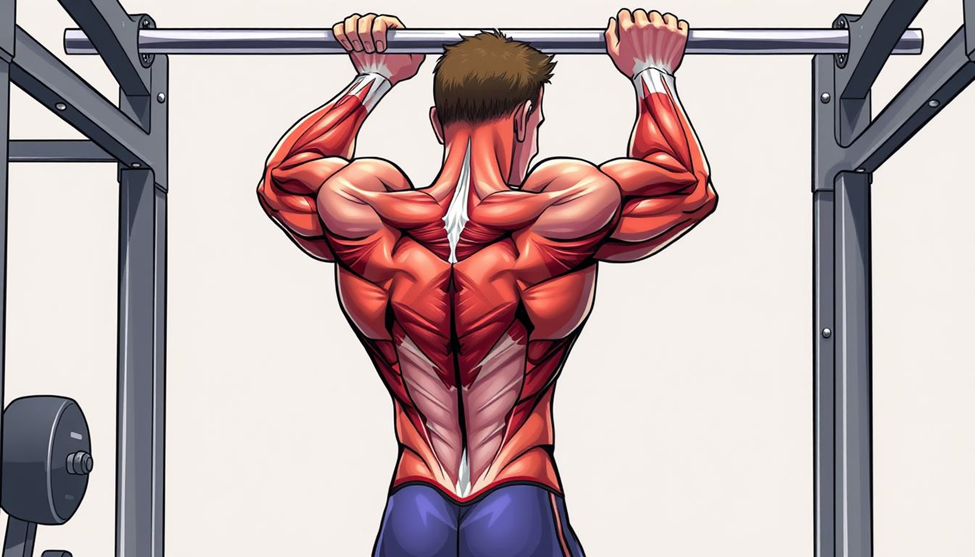
Pull Ups: Muscles Worked and Benefits
Key Takeaways
- Pull ups effectively engage multiple muscle groups, primarily the back, shoulders, and arms.
- They enhance strength and improve overall fitness levels.
- The average person may struggle with performing more than two pull ups at a time.
- Understanding variations can help target specific muscle groups effectively.
- Minimal equipment makes pull ups a versatile exercise option.
Introduction to Pull Ups
The pull up is a top exercise for building upper body strength. It involves hanging from a bar with palms facing away and pulling up until your chin clears the bar. This exercise does more than just build strength; it also improves coordination and control in your body. It's key to understand how this exercise works to see its role in muscle growth.
Understanding the Pull Up Exercise
Pull ups focus on the latissimus dorsi and biceps as main movers. Other muscles like the rhomboids, trapezius, pectoralis major, and posterior deltoids help support the movement. The erector spinae, triceps, and upper arm muscles also play a part in stability and strength<>.
The Importance of Pull Ups in Strength Training
Pull ups work almost every muscle from the hips up, making them a great strength training tool. Getting the form right is key to getting the most out of the exercise. This exercise is great for sports like swimming and climbing, and it boosts grip strength and overall fitness<>. For beginners, starting with assisted pull ups or chin ups can help build strength and confidence<>.
https://youtube.com/watch?v=--nDE3XO1GY
What Muscles Do Pull Ups Work
Knowing which muscles work during pull ups is key for better strength training. Pull ups are great for building upper body strength. They work on several muscle groups at once.
Primary Muscles Targeted During a Pull Up
The main muscles working are the latissimus dorsi (lats). These muscles are key for pull ups. The trapezius and rhomboids help strengthen the back. The biceps help lift the body up. Plus, the core muscles like the obliques and abdominals keep you stable and in good posture<><>.
Secondary Muscles Engaged in the Movement
Many other muscles also get worked during pull ups. The pectoralis major (pecs) help keep the shoulders stable. The terres major and forearm muscles help grip the bar. Working these muscles makes the exercise more effective for upper body strength and function<><>.
Importance of Muscle Engagement for Strength
Using all these muscles together boosts strength and improves grip strength. This can make everyday tasks and sports better. Pull ups are a bodyweight exercise that requires a lot of strength. Knowing which muscles are used helps improve fitness and performance.
Benefits of Pull Ups for Muscle Growth
Pull ups are more than just a strength booster. They work on many muscles at once, making them a top choice for building upper body strength.
Enhancing Upper Body Strength
Pull ups are great for the muscles in your upper body, like the latissimus dorsi and trapezius. Regular pull ups can help grow muscles and improve how your joints move. This can make you look and stand taller<>. Plus, doing pull ups right can lower injury risks and make the workout more effective<>.
Building Relative Strength
Doing pull ups often makes you stronger compared to your size. This is especially true for athletes, like gymnasts, who use these exercises to do better in sports. A 2010 study found that pull ups and strength training can help with depression and boost brain function<>.
Improving Grip Strength and Overall Fitness
Pull ups also boost grip strength, which is key for sports like rock climbing and tennis<>. They make you fitter by working many upper body muscles. Pulling up doesn't just build arm and back strength. It also helps your heart health, showing how versatile this exercise is<>.
Pull Up Variations and Their Unique Benefits
Pull ups come in many forms, helping people of all levels. They boost strength and flexibility. Everyone, from beginners to pros, can find a challenge that suits them.
Assisted Pull Ups for Beginners
Assisted pull ups are great for those starting out. The Bent-Knee Inverted Row is a good first step. It's done with your knees bent and in a horizontal position, making it harder.
It's suggested to do four sets of 10 to 15 reps<>. Using resistance bands in band-assisted pull ups adds safety and helps you get better. Aim for four sets of reps just short of failure<>. This way, beginners can start pull ups safely and enjoy the benefits.
Advanced Variations for Experienced Lifters
For those who've been lifting for a while, there are more challenging pull up types. Weighted pull-ups add extra resistance, so start with light weights and increase them as you get stronger<>. Archer pull-ups test strength and coordination by pulling to one side and extending one arm.
They can be done in alternating sets or just one arm at a time<>. L-sit pull-ups are great for a full-body workout. You lift your legs into an 'L' shape while pulling up, engaging your whole body<>. These variations offer a wide range of challenges, making pull up workouts more effective.
Conclusion
Pull ups are a key exercise for the upper body. They work many muscles at once, boosting fitness and muscle growth. The main muscles worked are the latissimus dorsi, trapezius, and rhomboids. These muscles are vital for doing pull ups well.
Pull ups do more than just build upper body strength. They also improve grip strength and stability in the whole body. This makes them a must-have for anyone wanting to get fitter.
There are many ways to do pull ups to make workouts more effective. This helps people of all fitness levels. Doing pull ups regularly helps grow muscles and improves sports performance. So, pull ups are key for any strength training plan aiming for full-body fitness.
This exercise has many benefits, like better strength and endurance, and looking better. By knowing which muscles are worked and the various techniques, people can make the most of pull ups. This can greatly improve their fitness results as part of a well-rounded exercise plan<><><>.
FAQ
What muscles do pull ups work?
Pull ups work the latissimus dorsi, trapezius, rhomboids, and infraspinatus. They also engage the biceps brachii, brachialis, and forearms.
Why are pull ups important for muscle growth?
Pull ups are key for muscle growth. They work many upper body muscles, boosting strength and fitness.
What are the benefits of incorporating pull ups into a workout routine?
Pull ups increase upper body strength and improve grip strength. They also enhance body coordination, making them vital for strength training.
How can beginners safely perform pull ups?
Beginners can start with assisted pull ups using machines or resistance bands. This helps build strength safely while learning the exercise.
What advanced pull up variations are available for experienced lifters?
For experienced lifters, there are variations like weighted pull ups or one-handed pull ups. These add challenges that work different muscle groups.
How do pull ups improve grip strength?
Pull ups boost grip strength by requiring a firm hold on the bar. This helps in other physical activities too.
What is the significance of body coordination in pull ups?
Body coordination is key in pull ups for better control. It helps with strength and stability in various activities.
Source Links
- The Muscles You're Actually Working When You Do a Pullup - https://www.menshealth.com/fitness/a45140260/muscles-worked-in-pull-ups/
- Pull-ups - These muscles are all trained - https://www.pullup-dip.com/blogs/training-camp/pull-ups-muscles-worked
- What Muscles Do Pull-Ups Work? | Garage Gym Reviews - https://www.garagegymreviews.com/what-muscles-do-pull-ups-work
- How to Do Pull-ups - https://www.webmd.com/fitness-exercise/how-to-do-pull-ups
- How to Do Pull-Ups: Muscles Worked & Proper Form - https://www.strengthlog.com/pull-up/
- Which muscles do pull-ups work? - https://www.livescience.com/which-muscles-do-pull-ups-work
- Which Muscles Do Pull-Ups Work? Plus, the Benefits of Strengthening Them - https://www.shape.com/what-muscles-do-pull-ups-work-8681608
- Pull Ups vs Chin Ups: What's The Difference? What Muscles Are Worked? - https://www.aworkoutroutine.com/pull-ups-vs-chin-ups/
- 10 Benefits of Pullups That Will Make You Do It Every Day - https://manmatters.com/blog/benefits-of-pull-ups/
- Doing Pull-Ups Everyday -- All Pros & Cons - https://www.pullup-dip.com/blogs/training-camp/pull-ups-everyday
- 7 Benefits of Pullups, Plus Beginner and Advanced Options - https://www.healthline.com/health/exercise-fitness/benefit-of-pull-up
- The Best Pull-Up Variations for All Experience Levels | BarBend - https://barbend.com/pull-up-variations/
- Pull-ups for pros - 10 more advanced pull-up variations - https://www.pullup-dip.com/blogs/training-camp/10-pull-up-variations
- What Muscles Does Pull Ups Target - https://fitbeastclub.com/blogs/home-gym-blog/what-muscles-does-pull-ups-target
- Best Benefits of Pull Ups | BOXROX - https://www.boxrox.com/best-benefits-of-pull-ups/
- What Muscles Do Pull Ups Work? | BOXROX - https://www.boxrox.com/what-muscles-do-pull-ups-work/