
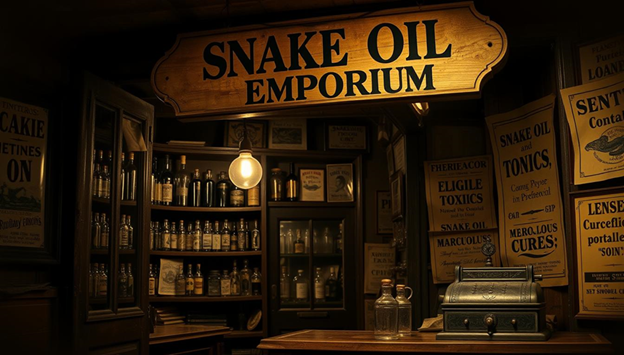
Snake Oil: The Surprising Truth You Need to Know
What comes to mind when you hear the term snake oil? For many, it's a word synonymous with scams and empty promises. But the truth behind this infamous product is far more fascinating than its modern reputation suggests.
Originally, snake oil was a legitimate remedy in traditional Chinese medicine, used for centuries to treat pain and inflammation. Its journey to the American West in the 19th century marked a turning point. Crowds flocked to vendors promising miraculous cures, but not all products lived up to the hype. Over time, the term became a symbol of deception, thanks to widespread misbranding and legal crackdowns^1^.
Today, snake oil is often dismissed as a relic of the past. Yet, its story offers valuable insights into the evolution of medicine and the power of belief. This article dives into its surprising history, separating fact from fiction and exploring its hidden truths.
Key Takeaways
- Snake oil originated in traditional Chinese medicine as a remedy for pain and inflammation.
- Its introduction to the American West in the 19th century led to widespread popularity and misuse.
- Misbranding and legal actions in the early 20th century tarnished its reputation.
- The term "snake oil" became synonymous with fraudulent medicine.
- Modern perspectives reveal a complex history beyond its infamous reputation.
History and Origins of Snake Oil
Long before it became a symbol of fraud, snake oil had genuine medicinal roots. Its story begins in traditional Chinese medicine, where it was used for centuries to treat pain and inflammation. Derived from the Chinese water snake , this remedy was highly effective due to its rich omega-3 fatty acid content^2^.
In the 19th century, Chinese immigrants brought this remedy to the United States. Workers on the Transcontinental Railroad adopted it to ease joint pain and muscle soreness. Its popularity grew, and it soon earned a reputation as a cure-all^2^.
Traditional Chinese Medicine and Chinese Water Snake Origins
The original product was made from the oil of the Chinese water snake , which was known for its anti-inflammatory properties. Studies later confirmed its effectiveness, showing it contained high levels of eicosapentaenoic acid (EPA), a vital omega-3 fatty acid^3^.
Clark Stanley's Role as the Rattlesnake King
In the late 1800s, Clark Stanley , known as the "Rattlesnake King," brought snake oil to the American public. His dramatic demonstrations at the 1893 Columbian Exposition captivated audiences. He claimed his Stanley Snake Oil Liniment could cure everything from rheumatism to sciatica^2^.
However, an analysis in 1915 revealed that Stanley's product contained mostly beef fat and mineral oil, with no actual snake oil. This misbranding led to his downfall and a $20 fine, equivalent to about $430 today^3^.
Despite the controversies, the history of snake oil reveals a fascinating blend of tradition, innovation, and deception. Its journey from ancient remedy to modern myth continues to captivate and educate.
The Real Benefits and Modern Uses of Snake Oil
Modern science reveals the hidden benefits of this ancient remedy. While its reputation has been tarnished by misbranding, the genuine product derived from the Chinese water snake offers real health advantages. Its rich omega-3 fatty acid content makes it a powerful anti-inflammatory agent^4^.
Omega-3 Fatty Acids and Anti-inflammatory Properties
The oil from the Chinese water snake is packed with eicosapentaenoic acid (EPA), a vital omega-3 fatty acid. This compound is known to reduce inflammation, lower blood pressure, and improve cognitive function^4^. Studies confirm its effectiveness in treating conditions like arthritis and bursitis^5^.
In contrast, later versions of the product, such as those sold by Clark Stanley, contained ineffective ingredients like beef fat and mineral oil . These lacked the essential fatty acids found in the genuine remedy^5^.
Modern Applications in Health and Wellness
Today, omega-3s are widely recognized for their health benefits. They are used in pain management therapies, skincare products, and even cognitive enhancement supplements^4^. Modern liniments often incorporate these fatty acids to provide relief from joint pain and muscle soreness.
However, not all products claiming miraculous outcomes are effective. Only those with science-backed ingredients, like authentic snake oil, offer real health benefits^4^.
|-------------------------|-----------------------------------|------------------------------| | Ingredient | Effectiveness | Source | | Chinese Water Snake Oil | High (Rich in Omega-3s) | Traditional Chinese Medicine | | Beef Fat | Low (Lacks Essential Fatty Acids) | Misbranded Products | | Mineral Oil | None (Inert Substance) | Misbranded Products |
Debunking Myths: What Snake Oil Really Is
The evolution of snake oil reveals a complex history of belief, deception, and science. Once a legitimate remedy, it became a symbol of fraud in the modern era. This section explores the truth behind the myths, separating fact from fiction.
The Misbranding and Legal Controversies
In the early 20th century, federal investigations uncovered the lack of genuine snake content in products like Clark Stanley's liniment. His formula contained only 1% fatty oil, with the rest being mineral oil, turpentine, and camphor^6^. This misbranding led to his $20 fine in 1917, equivalent to about $578 today^6^.
The Pure Food and Drug Act of 1906 marked a turning point, cracking down on deceptive practices. This law exposed many fraudulent claims, including those made by the infamous snake oil salesman^6^.
Genuine Ingredients vs. Imitation Products
Authentic remedies derived from the water snake were rich in omega-3 fatty acids, particularly eicosapentaenoic acid (EPA). These compounds offered real anti-inflammatory benefits^7^. In contrast, imitation products often used cheaper alternatives like beef fat and mineral oil, which lacked effectiveness^6^.
Modern research confirms the value of genuine ingredients. However, the term "snake oil" has become synonymous with fraudulent products, extending beyond health remedies to include a wide range of deceptive goods^6^.
|-----------------|-------------------------------|----------------------| | Ingredient | Effectiveness | Source | | Water Snake Oil | High (Rich in Omega-3s) | Traditional Medicine | | Mineral Oil | None (Inert Substance) | Misbranded Products | | Turpentine | Low (Irritant, Not Medicinal) | Misbranded Products |
The legacy of the snake oil salesman lives on in popular culture, a reminder of the fine line between belief and deception. By understanding the history and science behind these products, we can better navigate modern claims and avoid falling for empty promises.
The Legacy of the Snake Oil Salesmen
The story of snake oil salesmen is deeply woven into the fabric of American history. From its origins as a traditional remedy to its infamous reputation, their influence has shaped both medicine and culture.
Historical Impact on American Medicine and Culture
Clark Stanley, known as the Rattlesnake King , played a pivotal role in popularizing the idea of a "cure-all" product. His dramatic demonstrations at the 1893 Columbian Exposition captivated audiences, but his product contained no actual snake oil^8^. This misrepresentation marked the beginning of a cultural shift in how Americans viewed medical treatments.
The Food and Drug Act of 1906 was a turning point in consumer protection. It exposed fraudulent claims and led to the downfall of figures like Stanley, who was fined $20 for misbranding^9^. This legislation reshaped the landscape of American medicine, emphasizing the need for transparency and accountability.
Early versions of the product, derived from the Chinese water snake, were effective in treating conditions like arthritis due to their high omega -3 content^8^. However, imitation products lacked these benefits, leading to widespread skepticism. The term "snake oil" became synonymous with deception, a legacy that persists today.
"The rise and fall of snake oil salesmen is a cautionary tale about the power of belief and the dangers of misinformation."
Modern wellness trends often echo the promises of early snake oil salesmen. While the search for genuine treatments continues, the term remains a warning against fraudulent health claims. By understanding this history, we can better navigate the complexities of modern medicine and consumer culture.
Conclusion
The journey of this remedy from ancient traditions to modern skepticism is a story of both science and deception. Originating as a legitimate treatment for arthritis and inflammation, it became a symbol of fraud due to misbranding and legal battles like the Pure Food and Drug Act ^10^.
Over time , the term evolved to represent empty promises, but modern research highlights its genuine benefits. The health advantages of authentic ingredients, such as omega-3 fatty acids, contrast sharply with the ineffective imitations that once flooded the market^11^.
The legacy of the oil salesman serves as a reminder to critically assess claims. By understanding this history, we can better navigate modern wellness trends and avoid falling for exaggerated promises.
FAQ
What is the origin of snake oil in traditional medicine?
It traces back to traditional Chinese practices, where Chinese water snake fat was used for its anti-inflammatory properties, especially to treat joint pain and arthritis.
Who was Clark Stanley, and why is he significant?
Known as the Rattlesnake King, he popularized the product in the U.S. during the 19th century, claiming it could cure various ailments, though his formula was later exposed as fraudulent.
Are there any real health benefits to snake oil?
Yes, authentic versions contain omega-3 fatty acids, which have anti-inflammatory effects. Modern research supports its use in managing conditions like arthritis.
What led to the term "snake oil salesman" becoming negative?
After the Pure Food and Drug Act of 1906, many products were exposed as fake, leading to the term symbolizing deceit and false claims in marketing.
How is snake oil used today?
It's found in some health supplements and topical treatments, often marketed for its omega-3 content and potential to reduce inflammation.
What's the difference between genuine and imitation products?
Authentic versions use actual snake fat, while imitations often contain mineral oil, beef fat, or other fillers with no proven benefits.
Did snake oil salesmen have a lasting impact on American culture?
Yes, they shaped public skepticism toward unverified health claims and influenced the development of consumer protection laws in the U.S.