
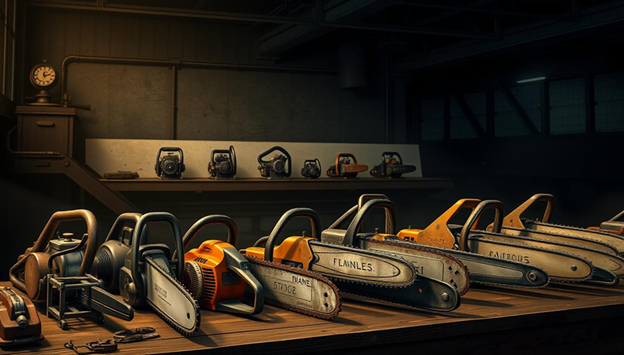
The Fascinating History of Chainsaws: Why They Were Invented
The history of chainsaws
is a long and interesting one. To understand their importance, we must know why they were created. The first chainsaw was made by Bernhard Heine in 1830 for surgery. It was used to cut through bone.
This early chainsaw was a big step forward in medicine. It made surgeries more efficient and precise. This is a key part of the chainsaw's history and why they were invented.
The chainsaw's invention started a new era in surgery. Its impact soon spread to other fields. By 1905, the chainsaw became a key tool in the timber industry.
As we explore the history of chainsaws
, we see how they changed over time. We learn why they were made. This is all part of the chainsaw's fascinating story.
Key Takeaways
- The first chainsaw was invented by Bernhard Heine in 1830 for surgical operations.
- The early version of the chainsaw was used for cutting through bone and was a significant innovation in the medical field.
- The invention of the chainsaw marked the beginning of a new era in surgical technology.
- The mechanized version of the chainsaw became popular in the timber industry by 1905.
- Understanding why were chainsaws invented
is crucial to appreciating their impact on various industries, including the history of chainsaws
. - The history of chainsaws is a fascinating story that spans centuries and is closely tied to the question of why were chainsaws invented
.
The Origins of Chainsaws: A Historical Overview
The history of chainsaws began in the 18th century. Two Scottish doctors, John Aitken and James Jeffray, created an early chainsaw. It was for medical use, like cutting through bone.
Their design was simple yet effective. It used a watch chain with teeth that moved with a hand-crank.
Over time, chainsaws evolved. Innovations like a hand crank and a rotating chain were added. The first chainsaw was documented in 1785 in "Principles Of Midwifery, Or Puerperal Medicine".
Bernhard Heine's Osteotome, from 1830, was used in surgeries for the 19th century.
Some key facts about chainsaws include:
- The first chainsaw was designed for medical use, like cutting through bone.
- The design was based on a watch chain with teeth that moved with a hand-crank.
- Chainsaws evolved with innovations like a hand crank and a rotating chain.
These changes led to the modern chainsaws we use today. They're found in forestry, construction, and landscaping. Learning about chainsaw history is interesting and shows how this tool has evolved.
Early Tools: The Predecessors to Modern Chainsaws
The history of chainsaws is deeply connected to early tools. These include handheld devices and mechanical sawing tools. The first saws were made by Germanic tribes around 5000 B.C. They were used for working on wood.
These early saws had limited capabilities. The introduction of mechanical sawing tools was a big step. It led to the development of the modern chainsaw.
Mechanical sawing tools made cutting more efficient and precise. The oldest hand saws date back to the Paleolithic Era, between 60,000 and 10,000 B.C. Ancient Egyptian saws, made of copper and bronze, were around 3000 B.C.
During the Iron Age, around 1500 B.C., saws were made from iron. They later transitioned to steel.
The development of new materials and technologies was key. The first chainsaw was invented in Scotland in 1780. It was made by surgeons John Aitken and James Jeffray for use in obstructed labor.
The original chainsaw had a chain with teeth between two wooden handles. It was operated with a hand crank. The history of chainsaws shows how these early tools led to the modern chainsaws we use today.
|----------------------|-------------------------------------------------| | Year | Event | | 5000 B.C. | First saws developed by Germanic tribes | | 60,000 - 10,000 B.C. | Olst hand saws originated | | 3000 B.C. | Ancient Egyptian saws made of copper and bronze | | 1780 | First chainsaw invented in Scotland |
Why Were Chainsaws Invented? The Driving Factors
Chainsaws were invented to make timber harvesting more efficient. They were created to be precise tools for forestry work. Early chainsaws were made to meet these needs, offering a better way to cut wood.
The main reasons for chainsaws were to boost timber harvesting efficiency and precision in forestry work. The first chainsaws were made to be more efficient and accurate for cutting wood.
Chainsaws were made to efficiently cut wood, making timber harvesting easier and faster. Their invention was a big leap forward in forestry, allowing for quicker and more accurate cuts.
- Increased efficiency in timber harvesting
- More precise cutting and reduced waste
- Improved safety and reduced risk of injury
These advantages have made chainsaws crucial in forestry. They are also used in construction and landscaping.
The Role of Chainsaws in Forestry and Logging
Chainsaws changed the logging industry for the better, making it safer and more efficient. They let loggers cut wood faster and more accurately, lowering accident risks. Before World War II, loggers used two-man chainsaws, needing two people to operate safely.
Chainsaws had a big impact on logging, marking a key moment in forestry tech history. The war increased the need for wood, leading to better chainsaws. The McCulloch Motors Corporation introduced the first one-man chainsaw in 1948.
The history of chainsaws is linked to logging's growth. Better chainsaws made loggers work much faster, up to 10 times faster than before. This boost in speed helped the industry harvest more wood and adopt new practices.
In summary, chainsaws are vital in forestry and logging. Their invention had a huge impact on the industry. As the industry keeps growing, chainsaws will likely stay a key tool for loggers and forestry experts.
Chainsaws in Construction: Expanding Their Use
Chainsaws are now used in construction, demolition, and renovation, not just in forestry. They help cut and shape wood for buildings. They're also great for tearing down old structures and renovating.
Chainsaws are key in construction for several reasons:
- Cutting and shaping wood for building projects
- Demolition and renovation of existing structures
- Pruning and trimming trees and shrubs
Chainsaws are vital in many industries, including construction and demolition.
Chainsaws are used in construction, demolition, and renovation, showing their wide range of uses. The history of chainsaws and their invention is closely linked to their use in different fields.
Chainsaws have changed how we build, tear down, and fix buildings. They're powerful and versatile, making them crucial in construction. The story of chainsaws' invention shows the creativity of their makers and their big impact on various industries.
|--------------|-----------------------------------------------------| | Industry | Use of Chainsaws | | Construction | Cutting and shaping wood, demolition and renovation | | Demolition | Breaking down existing structures | | Renovation | Pruning and trimming trees and shrubs |
The Impact of Chainsaws on Popular Culture
Chainsaws have become a big part of our culture, often seen as symbols of danger and suspense. They were made to make cutting down trees easier, but they've had a big impact. Chainsaws are now famous in horror and adventure movies, showing danger and suspense.
Chainsaws show up in movies, TV, and music, adding tension or fear. They were made to cut down trees faster, but their role in culture is huge. Their sound and look add suspense, making them a key part of our culture.
Some famous examples of chainsaws in culture include:
- Horror movies, where they're used for violence
- Adventure movies, adding tension
- Music, used in videos or live shows
Chainsaws have had a big impact on culture, showing up in many media. As chainsaw tech gets better, it will be exciting to see how they're used in culture.
|--------------|---------------------------------------------------------|------------------------------------------------------------------------------------------------------------------------------| | Year | Event | Impact on Popular Culture | | 1920s | Introduction of electric chainsaws | Increased efficiency in timber harvesting, leading to increased use in popular culture | | 1960s | Transition of chainsaws from industrial to personal use | Increased use in yard work, landscaping, and wood carving, leading to increased appearance in popular culture | | 21st century | Rise of battery-powered chainsaws | Increased focus on environmental sustainability, leading to increased use in popular culture as a symbol of eco-friendliness |
Safety Innovations: Addressing Risks and Hazards
The history of chainsaws shows many safety improvements. These changes help reduce the dangers of using chainsaws. Safety features like guards and protective gear are key in preventing accidents and injuries.
Early safety measures included guards and protective gear. Today, we also focus on proper training and keeping chainsaws in good condition. It's important to regularly check the oil level, file the chain, and sharpen the teeth.
Wearing the right gear is crucial. This includes goggles, gloves, ear protection, hard hats, chaps, and steel-toed boots. Eye injuries from chainsaws can be serious, so wearing protective eyewear is vital.
For eye safety, safety glasses and goggles must meet certain standards. Clear safety rules and regular training help chainsaw users follow these standards.
In summary, the history of chainsaws and the facts about their invention show the need for safety. By following safety guidelines and practices, users can avoid accidents and injuries. This ensures a safe and effective use of chainsaws.
The Future of Chainsaws: Technological Advancements
Chainsaws were made to make cutting down trees easier and more precise. Now, they're getting a tech boost with battery and eco-friendly models. These new chainsaws will likely be better for the environment and safer to use.
Lithium-ion batteries have made cordless chainsaws much better. They're now lighter and easier to carry. This makes them great for many jobs. Plus, they don't need fuel, which is good for working in hard-to-reach places.
Now, the question is how to make chainsaws even better for our changing world. Adding tech to chainsaws will make them more efficient. With green and automated options, the future of chainsaws is bright. They will keep getting better to meet our needs.
Conclusion: The Enduring Legacy of Chainsaws
The history of chainsaws shows our ability to innovate. They started as a medical tool in the 18th century. Now, they are key in forestry and logging, changing our world.
Looking ahead, chainsaws will keep shaping our landscapes and industries. New tech, like battery and eco-friendly models, shows their lasting impact. This is thanks to ongoing innovation.
Chainsaws have also left a mark on culture. They appear in horror movies and outdoor stories, becoming iconic. This shows their deep influence on our imagination.
We should admire the creativity behind chainsaws. From the first need for better timber cutting to today's tech advancements, their story is inspiring. It shows the lasting impact of human ingenuity.
In summary, chainsaws' legacy is a sign of human creativity and its power. As we use these machines, we're reminded of their incredible journey. It inspires us to keep innovating.
FAQ
When were chainsaws first invented?
Bernhard Heine, an orthopedic technician-turned-orthopedic surgeon, invented the first chainsaw in 1830. It was made for cutting through bone during surgeries.
What were the early origins of chainsaws?
Chainsaws started in the 18th century. Two Scottish doctors, John Aitken and James Jeffray, made a chainsaw prototype. It was for medical use, like cutting through bone.
How did the design of chainsaws evolve over time?
Chainsaw design changed over time. Bernhard Heine was a key figure in its development. Innovations like a hand crank and a rotating chain were added.
What were the driving factors behind the invention of chainsaws?
Chainsaws were invented for efficient timber harvesting and precise forestry work. Early chainsaws were designed to cut wood better and more safely.
How did chainsaws impact the forestry and logging industries?
Chainsaws changed the logging industry for the better. They made cutting wood safer and more efficient. This reduced accidents and boosted productivity.
What other industries have chainsaws been used in?
Chainsaws are used in construction, demolition, and renovation too. They help in cutting wood for buildings and in tearing down structures. This makes them a powerful tool in various industries.
How have chainsaws impacted popular culture?
Chainsaws have a big impact on popular culture. They often mean danger and suspense in movies and media. They're iconic in horror and adventure films, adding to the excitement.
How have safety innovations impacted the use of chainsaws?
Safety has always been a focus in chainsaw development. Early safety features included guards and protective gear. Today, proper training and maintenance are key to safe use.
What are some of the future trends for chainsaws?
Chainsaws are set to get even better with new tech. Expect battery-powered and eco-friendly models, along with automation and smart tech. These advancements will make chainsaws safer, more efficient, and better for the environment.
Source Links
- Fun Fact: Unfortunately, Chainsaws Were Invented for Childbirth - https://www.pharmacytimes.com/view/fun-fact-unfortunately-chainsaws-were-invented-for-childbirth
- The chain saw--a Scottish invention - PubMed - https://pubmed.ncbi.nlm.nih.gov/15209147/
- Why were chainsaws invented? - https://www.sciencefocus.com/science/why-was-the-chainsaw-invented
- The History of the Chainsaw - https://www.waldwissen.net/en/learning-and-teaching/forest-history/the-history-of-the-chainsaw
- Why were chainsaws invented? The incredible origin of this tool - https://interestingengineering.com/innovation/why-were-chainsaws-invented
- Why were chainsaws invented? It wasn't to cut wood - https://www.zmescience.com/feature-post/history-of-chainsaw-development-feature/
- Why Were Chainsaws Invented? - https://www.abcmoney.co.uk/2024/11/why-were-chainsaws-invented/
- A War, The Chainsaw And The 2nd Great Cutting Of The Northwest - https://www.opb.org/news/series/battleready/chainsaw-history-world-war-2-forests-lumber/
- A Lesson From Nature: Joe Cox and His Revolutionary Saw Chain - https://foresthistory.org/wp-content/uploads/2020/09/JoeCox_SawChain.pdf
- Chainsaw - https://en.wikipedia.org/wiki/Chainsaw
- Unearthing the Story: The Birth and Evolution of Chainsaws - https://blog.lecturehome.com/why-were-chainsaws-invented.php
- Unleashing the Power: The Evolution and Impact of Chainsaws - https://medium.com/@elearnproapp/unleashing-the-power-the-evolution-and-impact-of-chainsaws-26ba3502287c
- Why Were Chainsaws Invented | 0900 - https://www.alpeshcreation01.com/2024/01/why-were-chainsaws-invented.html
- The History of Chainsaws | Chainsaw Reviews - http://www.chainsawstoday.com/history-of-chainsaws/
- Chainsaw Eye Protection: An Essential Guide to Safety and Use - https://sitemate.com/resources/articles/safety/chainsaw-eye-protection/
- The Evolution of the Cordless Saw: From the Operating Room to the Forest--The History and Advancements of Cordless Saws - https://onevantool.com/blogs/news/the-evolution-of-the-cordless-saw-from-the-operating-room-to-the-forest?srsltid=AfmBOooJBn8DJz3xkikDdiNjXdb5UzBhEytrDHdgrjKRAqJvdu6s5YZk
- The Chainsaw: From Surgical Tool to Timber Industry Hero - https://www.linkedin.com/pulse/chainsaw-from-surgical-tool-timber-industry-hero-sanjay-k-mohindroo--9dsmc
- Why Were Chainsaws Invented? - https://forestry.com/guides/why-were-chainsaws-invented/