
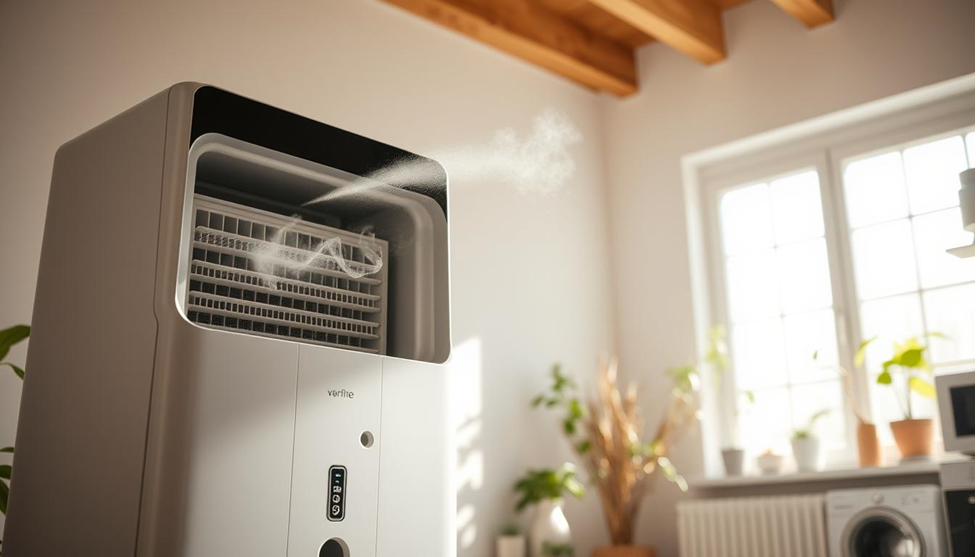
Understanding Dehumidifiers: What They Do
Key Takeaways
- Dehumidifiers keep humidity between 30-50% for comfort.
- Too much humidity can cause health problems like mold and allergens.
- Refrigerant-based dehumidifiers are common and work well.
- Desiccant models are good for cooler places.
- Looking after dehumidifiers saves energy.
What Does a Dehumidifier Do?
Dehumidifiers are key to keeping the air in your home dry. They help make your living space more comfortable. They also stop mold and allergens from growing. Knowing what does a dehumidifier do shows why it's important at home.
Overview of Dehumidification Process
Dehumidifiers pull in air and cool it until moisture turns into water. This water goes into a bucket or is drained out. Then, the air is sent back into the room, much drier. In a few days to a week, a dehumidifier can lower humidity to the right level<>.
Types of Dehumidifiers
There are mainly two kinds of dehumidifiers: refrigerant-based and desiccant. Refrigerant-based ones cool the air to take out moisture, like air conditioners<>. Desiccant dehumidifiers use special materials to absorb moisture, saving energy and best for cooler places.
Choosing the right dehumidifier size is crucial for your room's size. For example, a 10-pint model is good for rooms up to 500 square feet that are a bit damp. But, a 12-pint model is better for very damp areas of the same size<>.
https://youtube.com/watch?v=JeFnLyopSJA
Benefits of Using a Dehumidifier
Using a dehumidifier has many advantages for the home. One big plus is better air quality. High humidity can make dust mites and allergens worse, which can make asthma and allergies worse. Dehumidifiers lower humidity, helping to keep living spaces healthier<>.
It's best to keep humidity between 30 to 40 percent for comfort. This stops mold and dust mites from growing<>.
Improvement in Air Quality
Lower humidity means fewer allergens and irritants. This is great for people with asthma or allergies. It helps improve breathing and overall health<>.
Prevention of Mold and Mildew
Mold and mildew love damp places. They can harm health and damage property. A dehumidifier keeps humidity below 50 percent, stopping these fungi from growing<>.
This stops musty smells and air quality problems. Mold can cause allergies, like sneezing and headaches, showing why controlling humidity is key<>.
Enhancement of Comfort Levels
Too much humidity makes people feel tired and uncomfortable. Dehumidifiers remove the sticky feeling, making homes more comfortable<>.
Dehumidifier Functions and How They Work
It's important to understand how dehumidifiers work to control moisture effectively. This section explains the mechanics of refrigerant-based and desiccant dehumidifiers.
Mechanics of Refrigerant-Based Dehumidifiers
Refrigerant-based dehumidifiers are the most common type. They work like air conditioners, pulling in humid air and cooling it. This cools the air, causing moisture to condense in a drip pan.
The dry air then goes back into the room, keeping humidity at the right level. Keeping humidity between 30% and 60% helps stop mold and dust mites from growing<>. These units also have an automatic defrost system to prevent ice from blocking airflow<>.
Role of Desiccant Dehumidifiers
Desiccant dehumidifiers use special materials to grab moisture from the air. When these materials get full, they're heated to release the moisture. This makes the air dry, which is then sent back into the space.
These units work well even in cold weather, unlike refrigerant-based ones<>. Both types are key for controlling moisture in homes, offices, and other places. They help make indoor air healthier<>.
Importance of Dehumidifiers in Your Home
Keeping your home comfortable is key to your health. Dehumidifiers are vital for this, protecting your health and home in many ways. They help prevent moisture damage to wood and drywall, stopping mold growth and pests that harm air quality and your home's structure<><>.
Protecting Home Structure
Too much humidity means mold grows fast, causing big problems. Keeping humidity between 30% and 50% stops these issues. Drying the air gets rid of musty smells and makes your home healthier<><>. A dehumidifier keeps humidity in check, saving your home's strength and look.
Reducing Allergens and Pests
Too much moisture draws in allergens and pests like dust mites and mold spores. Dust mites love a humidity of 65%, so controlling it cuts down their numbers<>. Keeping your home at the right humidity level means fewer allergens and pests, making the air cleaner. This is especially good for people with breathing problems, as it helps ease allergy and asthma symptoms<><>.
Conclusion
Dehumidifiers play a key role in making our homes comfortable and healthy. They keep humidity levels in check, stopping mold from growing on walls and ceilings<>. They also protect our homes from moisture damage<>.
With dehumidifiers, dust builds up less, which is good for people with asthma or bronchitis<> and<>. They get rid of musty smells, making the air inside fresher<>. These devices also keep pests like spiders and cockroaches away by reducing humidity<>.
More families now see the value in having dehumidifiers. They know these devices are key to a safe and enjoyable home.
Dehumidifiers protect our electronics and belongings from moisture damage<>. They also make our heating and cooling systems work better, saving us money on energy bills<>. Adding a dehumidifier to your home can bring long-term comfort, health benefits, and a nicer place to live.
FAQ
What does a dehumidifier do?
A dehumidifier takes out extra moisture from the air. This keeps the humidity in your home at the right level, usually around 50%. It stops mold and mildew from growing, protects your home, and makes living there more comfortable.
What are the benefits of using a dehumidifier?
Using a dehumidifier improves air quality by cutting down on allergens and dust mites. It stops mold and mildew from growing. It also makes you feel more comfortable by getting rid of the sticky feeling from humidity. Plus, it keeps your home materials safe from moisture damage.
What types of dehumidifiers are available?
There are two main kinds of dehumidifiers: refrigerant-based and desiccant dehumidifiers. Refrigerant dehumidifiers cool the air to make moisture turn into liquid, which is then collected. Desiccant dehumidifiers use a special material to soak up moisture from the air and release dry air when heated.
How do dehumidifiers function?
Dehumidifiers work by pulling air over cooled coils, making moisture turn into liquid that's collected. Then, the dry air goes back into the room. Desiccant dehumidifiers use special materials to soak up moisture and release dry air when heated.
Why are dehumidifiers important for my home?
Dehumidifiers are key because they protect your home from moisture damage. They stop allergens and pests from growing. They also make the air cleaner and make your home more comfortable.
Can dehumidifiers help with allergies?
Yes, dehumidifiers can really help with allergies. They cut down on mold spores, dust mites, and other allergens that like high humidity.
How do I choose the right dehumidifier for my home?
When picking a dehumidifier, think about the size of the area you want to dry out, how humid it is, and if you want a refrigerant or desiccant model. Your home's needs will guide your choice.
How often should I run my dehumidifier?
Run your dehumidifier all the time in high humidity seasons or when your living spaces feel too damp. Check the humidity levels often to adjust how much you use it.
Source Links
- What do dehumidifiers do -- and are they worth it? | CHOICE - https://www.choice.com.au/home-and-living/cooling/dehumidifier/articles/what-does-a-dehumidifier-do
- How do dehumidifiers work? - https://www.livescience.com/how-do-dehumidifiers-work
- How Does a Dehumidifier Work? | Achoo! Blog - https://www.achooallergy.com/blog/learning/how-does-a-dehumidifier-work/?srsltid=AfmBOopEzIcJKCvEc4CWXJFda9VYCzg6Tm8anJodk7iq_0YPmufJchS0
- Frequently asked questions about dehumidifiers by Breathing Space - https://www.breathingspace.co.uk/dehumidifier-frequently-asked-questions-i62
- How Does a Dehumidifier Work? | Achoo! Blog - https://www.achooallergy.com/blog/learning/how-does-a-dehumidifier-work/?srsltid=AfmBOopYbrts7CuaJYm-6454HqLweRO-xl0R4iw3to-I7lJXok_XvVES
- What Does a Dehumidifier Do for Your Home? From Basement to Bathroom - https://molekule.com/blogs/all/what-does-a-dehumidifier-do-for-your-home-from-basement-to-bathroom?srsltid=AfmBOooXFJgwBpqUGAq7qflxPvWjhZwaebeSteEkR2X6Qj2tS6u_kwfk
- 10 Benefits to Using a Dehumidifier | Blue Ox Heating & Air | AC and Furnace Repair in Minneapolis, MN - https://goblueox.com/blog/10-benefits-to-using-a-dehumidifier/
- The 12 Top Dehumidifier Benefits - https://getcleared.com/blog/dehumidifier-benefits
- What Are Dehumidifiers, and What Do They Do? | Carrier - https://www.carrier.com/residential/en/us/products/indoor-air-quality/dehumidifiers/what-are-dehumidifiers-what-do-they-do/
- Dehumidifier - https://en.wikipedia.org/wiki/Dehumidifier
- 5 Reasons You May Need a Dehumidifier - North East Air Conditioning, Heating & Plumbing - https://www.northeastairconditioning.com/articles/5-reasons-you-may-need-a-dehumidifier/
- Dehumidifier Benefits, Side Effects, and When and How to Use Them - https://www.healthline.com/health/dehumidifier-benefits
- What Does a Dehumidifier Do for Your Home? From Basement to Bathroom - https://molekule.com/blogs/all/what-does-a-dehumidifier-do-for-your-home-from-basement-to-bathroom
- 11 Benefits of a Dehumidifier - https://www.senelux.co.uk/blogs/news/11-benefits-of-a-dehumidifier?srsltid=AfmBOop0x4h6wGTEgGXcWKrf8T6UY6_uc1tPL6ckoBvUPHetheCt7xrX
- Health benefits of dehumidifiers for homes - https://ionmax.com.au/blogs/resources/health-benefits-of-dehumidifiers-for-homes?srsltid=AfmBOooFpUqi0Dl2mQX_6kznNQT5vkx37mVN2IwqURL5MRezKuIcY0Dv