
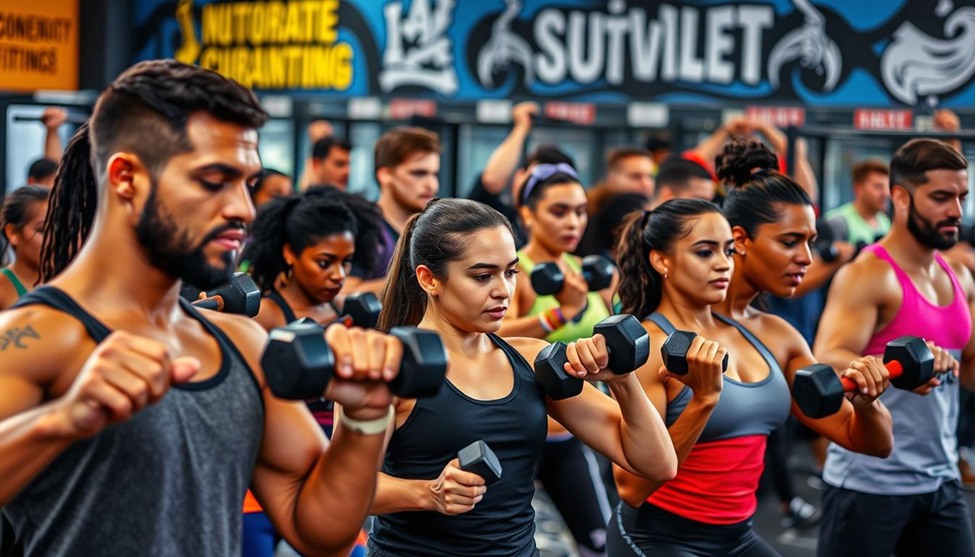
What Are Reps? Understanding Exercise Repetitions
Key Takeaways
- A rep is the complete movement of an exercise.
- Reps are essential for targeting muscle groups effectively.
- Beginner strength training typically involves 8-15 reps.
- Repetitions can be adjusted to meet various fitness goals.
- Understanding reps matters for building a successful workout routine.
Understanding the Basics of Reps and Sets
In fitness , reps and sets are key to planning good workouts. A repetition (rep) is one full move of an exercise. For instance, a push-up is one rep. Several reps make up a set , like ten push-ups together. Knowing these terms helps in making the most of strength training and fitness.
Definition of a Repetition
A repetition goes through three muscle actions: eccentric, isometric, and concentric. Focusing on these phases in strength training boosts muscle growth and strength. Beginners often start with 8-12 reps for building muscle or 1-6 for building strength. This knowledge helps in creating a workout plan that meets personal goals.
What Constitutes a Set?
Sets are groups of reps in a workout. To get the best results, you can use different set types, like supersets or pyramid sets. Experts suggest doing 25-45 reps per muscle group per week, spread over 2-3 sessions, for the best muscle growth and strength<>. Changing the number of reps keeps workouts interesting and helps in making progress<>.
The Importance of Reps in Strength Training
Choosing the right number of reps is key in strength training. Studies show that doing more sets leads to better muscle size and strength<>. Resting for 2-3 minutes between sets helps muscles recover for the next set<>. Keeping good form during exercises is important for progress and safety<>. Checking how many reps you can do before getting tired helps in reaching your strength goals.
https://youtube.com/watch?v=2KYhdcoFNP4
|-------------|----------------------|----------------------|-----------------------| | Goal | Recommended Reps | Recommended Sets | Rest Periods | | Strength | 1-6 | 3-5 | 3-5 minutes | | Hypertrophy | 8-12 | 3-4 | 1-2 minutes | | Endurance | 15+ | 2-3 | 30 seconds - 1 minute |
What Are Reps? The Role of Repetitions in Workouts
Repetitions , or reps, are key in how muscles work during workouts. Each rep helps with muscle movement , going through phases of stretching, holding, and shortening. These details can greatly improve muscle strength and endurance, helping people reach their fitness goals.
How Reps Affect Muscle Movement
Reps are vital for muscle function in weightlifting . Doing reps right helps more muscle fibers work together, which is crucial for getting stronger. For example, a common plan might be 3 sets of 5-10 reps to boost strength. But, if you have shoulder pain, doing more reps can help strengthen the muscles<>.
For those who struggle walking downhill, 5-10 reps across 3 sets can strengthen leg muscles. Resting for 60-120 seconds between exercises helps with recovery and doing your best. Starting with lighter weights and shorter rests makes it easier to get used to harder workouts<>.
Repetition Maximum and Its Significance
Knowing about Repetition Maximum (RM) is key for strength training. RM is the heaviest weight you can lift for a set number of reps, used to set workout intensity. Lifting plans often include 3 to 6 sets of exercises, aiming for 15-25 sets total. This approach might include three sets of exercises, helping work out all muscles<>.
High reps are 15 or more, while medium and low reps are 6 to 12 and 1 to 5, respectively. These rep types focus on different muscle aspects and goals. Tools like those from EoS Fitness help people reach strength and endurance goals<>.
Different Types of Repetition Goals
Understanding the various repetition goals in exercise is key to getting the best fitness results. Each fitness goal requires a unique approach to repetition training. Whether you want to grow muscles, increase strength, or boost endurance, you need to know the right strategies.
Reps for Muscle Growth: Hypertrophy Training
For muscle growth , or hypertrophy training , aim for 8-12 reps per set. This range helps balance the weight you lift and the time your muscles work. The American College of Sports Medicine suggests 8-10 reps with a moderate load for muscle growth<>. Studies show that doing multiple sets can help increase both strength and muscle size. Sticking with a consistent routine is important for reaching your fitness goals<>.
Reps for Strength Development
To build strength, do fewer reps, usually 1-6, with heavier weights. The National Strength and Conditioning Association (NSCA) recommends this method for effective muscle overload<>. Tracking how you improve over time can help you see your progress<>. Traditional strength training often involves 3-5 reps with heavy weights to boost raw power<>.
Reps for Endurance Improvement
For better endurance, aim for more reps, 15 or more per set. The American College of Sports Medicine suggests this to boost stamina<>. Endurance training uses lighter weights and focuses on movements to improve heart health and muscle tone<>. It's important to rest for 30 seconds to 1 minute between sets to keep up the intensity needed for good workouts<>.
|-----------------------------|----------------|-------------------------| | Training Goal | Reps Range | Load Recommendation | | Muscle Growth (Hypertrophy) | 8-12 | Moderate | | Strength Development | 1-6 | Heavy | | Endurance Improvement | 15+ | Light |
Creating an Effective Workout Routine with Reps
Creating a good workout plan means thinking about the right number of reps and sets, rest times, and how hard you're pushing yourself. These things are key to reaching your fitness goals and getting better at what you do.
Determining the Right Number of Reps and Sets
For building muscle, do 3-4 sets of 8-12 reps for each exercise<>. It's best to work out 2-4 times a week, for 30-45 minutes each<>. This helps build muscle and boosts your overall fitness.
Rest Periods Between Sets
How long you rest between sets matters a lot. For building strength, rest for 2-5 minutes<>. But if you're focusing on endurance, a quick 30-second rest might be better. Knowing what kind of workout you're doing helps you pick the right rest time.
Adjusting Intensity and Volume
It's important to keep making your workouts harder to keep seeing progress. This means using heavier weights while keeping your form right<>. Eating right, with a bit more or fewer calories depending on your goals, helps you build muscle or lose weight effectively<>.
Conclusion
Understanding reps and their role in fitness and strength training can boost your workout's effectiveness. It helps to know how reps affect muscle engagement. This knowledge lets you customize your routine for better results.
Research shows doing 2-3 sets can lead to more muscle growth than just one set<>. This highlights the importance of having a workout plan that matches your fitness goals.
Choosing the right number of reps , between 42 and 66 per session, is key for muscle growth<>. It's also important not to do too many reps. Studies reveal that changing how you train can greatly improve strength and muscle size, especially for women and beginners<>.
Knowing how your body responds to different exercises is crucial for long-term success. This knowledge helps you adjust your routine for better results.
Well-thought-out workout plans keep you engaged with fitness and improve your overall health. By adjusting the intensity and volume of your training, you can improve your physical and mental strength. This leads to personal bests and reaching your fitness goals<>.
FAQ
What are reps in exercise?
Reps, or repetitions , are single movements of an exercise. This includes actions like bicep curls or squats. They're key for focusing on certain muscles.
How is a set defined in strength training?
A set is a bunch of reps done one after another. For example, ten lunges make up one set. Sets and reps help plan workouts effectively.
Why are reps important for muscle engagement?
Reps are vital for how muscles work and react during exercises. Each rep goes through muscle cycles, affecting strength and performance.
What is Repetition Maximum (1RM)?
The Repetition Maximum (1RM) is the heaviest weight you can lift for one rep. It's a key measure for strength training programs.
How many reps should I do for muscle growth?
For muscle growth, aim for 8-12 reps per set. This helps stress the muscles for growth.
What are the recommended reps for strength development?
For strength, do 1-6 reps per set with heavy weights. This approach helps build strength.
How do I improve my muscular endurance?
Improve endurance by doing 15 or more reps with lighter weights. This boosts stamina.
How can I determine the right number of reps and sets for my workout routine?
Beginners should start with 2-3 sets of 8-12 reps. Adjust as you get fitter and reach your goals for better workouts.
Why are rest periods important between sets?
Resting between sets helps muscles recover and perform better. Aim for 30 seconds for endurance and 2-5 minutes for strength training.
How can I adjust the intensity and volume of my training?
Change your intensity and volume based on your fitness progress and limits. This keeps your fitness levels improving over time.
Source Links
- What Are Exercise Reps? - https://www.webmd.com/fitness-exercise/what-are-exercise-reps
- What are reps and sets? A Beginners Guide to Strength Training - Never Too Old to Lift - https://nevertoooldtolift.com/reps-and-sets/
- The Ultimate Guide To Reps And Sets In The Gym - https://www.onelifefitness.com/news/gym-reps-sets-ultimate-guide
- Your Comprehensive Guide to Reps and Sets - https://www.shape.com/fitness/workouts/strength-training/what-are-sets-reps
- The Hidden Importance of Reps and Sets - Arizona Orthopedic Physical Therapy - https://azopt.net/the-hidden-importance-of-reps-and-sets/
- Guide to Reps and Sets in Strength Training - https://eosfitness.com/blog/guide-to-reps-and-sets-in-strength-training/
- The Science Behind Repetition | ACAC Fitness & Wellness - https://acac.com/news-updates/the-science-behind-repetition/
- What Are Reps and How Can You Use Them to Improve Your Workout? - https://www.healthline.com/health/exercise-fitness/what-are-reps
- The Best Gym Workout Plan For Gaining Muscle - https://www.puregym.com/blog/the-best-gym-workout-plan-for-gaining-muscle/
- How To Build Your Own Workout Routine (Plans & Exercises) - https://www.nerdfitness.com/blog/how-to-build-your-own-workout-routine/
- How To Set Up A 7-Day Workout Schedule, According to Experts - https://www.forbes.com/health/fitness/workout-schedule/
- Picking Sets & Reps for Max Muscle Growth - Evidence Based Athlete - https://www.evidencebasedathlete.com/articles/sets-and-reps-for-max-muscle-growth/
- Loading Recommendations for Muscle Strength, Hypertrophy, and Local Endurance: A Re-Examination of the Repetition Continuum - https://www.ncbi.nlm.nih.gov/pmc/articles/PMC7927075/
- Conclusion of 20 rep squat program - https://www.crossfit858.com/2014/08/conclusion-of-20-rep-squat-program/