
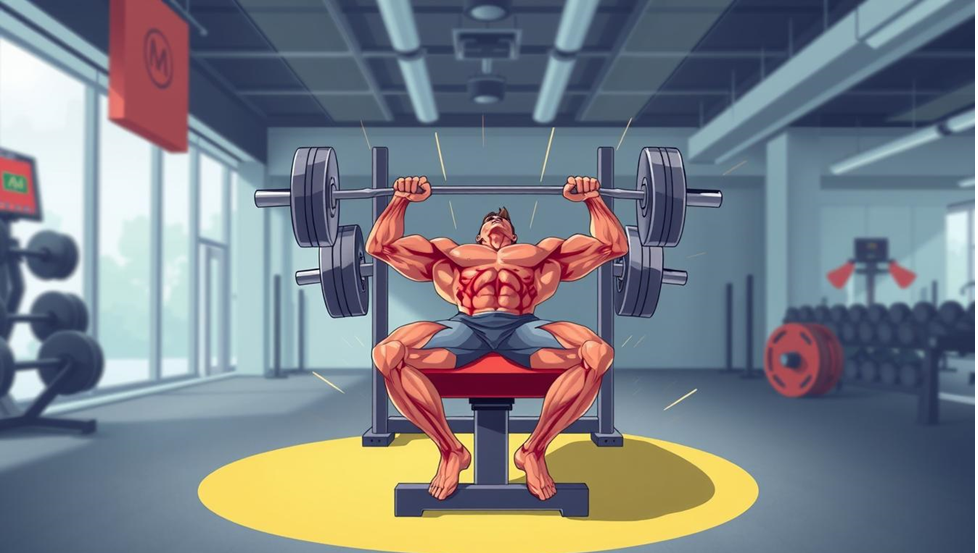
What Does Bench Press Work? Muscle Guide
Key Takeaways
- The bench press mainly works the pectoralis major, anterior deltoids, and triceps brachii muscles.
- Other muscles like the biceps brachii, serratus anterior, trapezius, rhomboids, and core stabilizers also get involved.
- It's important to do the bench press correctly to work the right muscles and stay safe.
- Variations like incline, decline, and dumbbell bench press can focus on different muscles.
- Doing the bench press 1-3 times a week can help strengthen and keep your upper body muscles in shape.
Introduction to Bench Press
Definition and Overview of Bench Press Exercise
The bench press is a key exercise for building upper body strength. It's done by lying on a flat bench and lifting a barbell or dumbbells up from the chest. This exercise works many muscles at once, making it popular in sports like powerlifting and football.
When you do a bench press right, you work your pectoralis major , anterior deltoid , and triceps brachii muscles. The biceps brachii and serratus anterior help too. This exercise boosts your upper body strength and power, important for sports and daily life.
""The bench press is a true test of upper body strength and power, challenging the chest, shoulders, and arms to work in unison to move a substantial amount of weight.""
This part gives a detailed look at the bench press definition and its importance in strength training. Knowing how the bench press works helps you understand its benefits and how to use it in your fitness routine.
Primary Muscles Worked in Bench Press
The bench press is a classic exercise that targets several major muscle groups. The main muscles worked are the chest muscles (pectoralis major) , shoulder muscles (anterior deltoids) , and triceps. These muscles work together to power the pressing motion and lift the weight.
The pectoralis major , the main chest muscle, is key in pushing the weight off your chest. It starts at the sternum, ribs, and clavicle and attaches to the upper arm bone. This muscle plays a crucial role in the bench press movement.
The triceps brachii, located on the back of the upper arm, also play a big role. These muscles extend the elbows and complete the pressing motion. They add power and strength to the bench press.
The anterior deltoids, or front shoulder muscles, work with the chest and triceps. They help lift the weight during the pressing action. This is through shoulder flexion.
Other muscles, like the serratus anterior and pectoralis minor, also support the bench press. They help with the pushing motion and support the shoulder girdle.
Knowing the primary muscle groups involved in the bench press is key. It helps target and develop these muscles. It also ensures proper form and technique, which is important for performance and safety.
Secondary Muscles Involved in Bench Press
The bench press works more than just the chest, shoulders, and triceps. It also engages the biceps brachii , serratus anterior , and forearm muscles. These muscles help stabilize the shoulder and maintain a strong grip.
The upper back muscles like the trapezius and rhomboids are also key. They help stabilize the shoulder blades during the lift. Knowing which muscles are involved helps us see the bench press's full-body benefits and spot any muscle imbalances.
Additional Muscle Groups Activated
But that's not all. The bench press also works the triceps brachii , anterior deltoids , and latissimus dorsi. These muscles are crucial for elbow extension, shoulder stability, and controlling the barbell's descent.
Understanding the many muscles involved in the bench press helps us appreciate its role in building upper-body strength. It's a key exercise for overall muscle development.
""The bench press is a compound exercise that targets multiple muscle groups, making it a highly effective exercise for building upper-body strength and size.""
what does bench press work
The bench press works many key muscles. It's great for building the upper body and increasing strength.
Primary Muscles Worked
The main muscles worked by the bench press are:
- Chest (Pectoralis Major): It's a top choice for building the chest. The pectoralis major muscles do most of the work.
- Shoulders (Anterior Deltoids): The anterior deltoids help a lot in the bench press. They assist in the pressing action.
- Triceps: The triceps are key in extending the elbows. They help finish the press.
Secondary Muscles Involved
The bench press also works other muscles, like:
- Biceps: The biceps help with stability and control, even if they're not the main movers.
- Serratus Anterior: This muscle helps keep the shoulder blades stable during the bench press.
- Upper Back Muscles: The trapezius and rhomboids help retract and depress the shoulder blades. This provides a stable base for the press.
- Forearms: Forearm muscles, like the wrist flexors and extensors, help grip the bar and keep the wrists stable.
Knowing how the bench press works muscles helps tailor your workout. It lets you focus on any imbalances and get the most out of this key exercise.
""The bench press is a true test of upper-body strength and a key exercise for building a powerful, well-rounded physique.""
Benefits of Incorporating Bench Press
Adding the bench press to your workout routine offers many benefits. It works the chest, shoulders, and triceps, helping build upper body strength and muscle.
The bench press targets the chest muscles well. It also works the core and back, which are key for keeping the body stable. This makes it a great exercise for improving strength and athletic performance.
Doing the bench press can also boost your metabolism. This leads to burning more calories and helping with weight management. It can also make your bones stronger, lowering the chance of fractures and osteoporosis.
There are mental and emotional benefits too. The bench press can release endorphins, which can lower stress and anxiety. It can also make you feel more confident and happy.
To get the most out of the bench press, focus on proper form and increase the weight slowly. This will help you get stronger, more powerful, and more durable. Adding the bench press to your routine can greatly benefit your body and mind.
Proper Bench Press Form and Technique
Doing the bench press right is key to getting the most out of it. It's a great exercise for your upper body, focusing on your chest, shoulders, and triceps. It's essential for building strength and muscle.
Step-by-Step Guide to Performing Bench Press Correctly
To do the bench press right, follow these steps:
- Set up the bench and adjust the bar height to be just above your chest when lying down.
- Lie on the bench with your eyes directly under the barbell. Plant your feet firmly on the floor, keeping your back flat and your shoulders retracted.
- Grip the barbell with a shoulder-width grip, wrapping your thumbs around the bar. Maintain a slight arch in your upper back and keep your wrists straight.
- Take a deep breath, then lower the bar in a controlled motion until it touches your mid-chest. Keep your elbows at a 45-70 degree angle from your body.
- Press the bar back up, fully extending your arms while exhaling. Ensure you lock out your elbows at the top of the movement.
- Pause briefly at the top, then lower the bar back down to the starting position, repeating for the desired number of reps.
Proper form is crucial for targeting the right muscle groups and avoiding common bench press pitfalls that can lead to injury. Maintain a tight, stable body position throughout the lift, and focus on controlled, smooth movements to get the most out of this essential exercise.
""Maintaining a slight arch in the upper back during the bench press can help make the exercise more comfortable on the shoulders and recruit more chest fibers.""
By following this guide and focusing on bench press form and technique, you'll be on your way to a bigger, stronger chest and upper body.
Bench Press Variations
The traditional flat bench press is a key exercise. But, there are many variations that target different muscles or meet specific goals. Trying these variations can make your workouts more interesting, prevent getting stuck, and ensure your upper body is well-developed.
The incline bench press focuses on the upper chest. By raising the bench's head end, you work the clavicular head of the pectoralis major more.
The decline bench press targets the lower chest. Lowering the bench, up to 40 degrees, works the sternal head of the pectoralis major.
The narrow grip bench press emphasizes the triceps. Keeping your hands close on the barbell makes the triceps work harder to lift the weight.
The wide grip bench press focuses on the chest, especially the outer pectoralis major. A wider hand placement on the barbell engages the chest more.
|-----------------------------|----------------------------| | Bench Press Variation | Targeted Muscle Groups | | Incline Bench Press | Upper Chest | | Decline Bench Press | Lower Chest | | Narrow Grip Bench Press | Triceps | | Wide Grip Bench Press | Chest |
Adding these bench press variations to your routine targets different muscles. This helps you achieve a balanced, well-rounded physique.
Incorporating Bench Press into a Workout Routine
Frequency, Sets, and Reps Recommendations
To add the bench press to your workout, think about how often, how many sets, and reps. Experts say do the bench press 2-3 times a week for best results. The right number of sets and reps changes based on your fitness goals.
If you want to get stronger, try 4-6 sets of 3-5 reps. For muscle growth, aim for 3-4 sets of 8-12 reps. For endurance, go for 2-3 sets of 12-15 reps.
Always increase the weight or reps to get better. Also, add accessory exercises like dumbbell presses and flat bench flys. They help your bench press and work different muscles.
Good form and technique are key. Keep your core tight, body stable, and move smoothly. This helps you get the most out of the bench press and keeps you safe.
|-------------|----------|----------|--------------------| | Goal | Sets | Reps | Frequency | | Strength | 4-6 | 3-5 | 2-3 times per week | | Hypertrophy | 3-4 | 8-12 | 2-3 times per week | | Endurance | 2-3 | 12-15 | 2-3 times per week |
Always listen to your body and tweak your bench press program as needed. This helps you progress without getting hurt or overdoing it.
Conclusion
The bench press is a key exercise that works many muscles in the upper body. It's great for anyone looking to get stronger and more toned. It also helps lower the risk of type 2 diabetes and boosts heart health.
Knowing which muscles the bench press targets is important. It helps you use the exercise to its fullest potential. This way, you can reach your fitness goals faster.
There are many ways to do the bench press, like the flat bench press or the dumbbell bench press. Each variation targets different muscles. This lets you work on different areas of your upper body.
Changing up your bench press routine keeps your muscles challenged. You can adjust the number of sets, reps, and how often you do it. This helps you keep making progress and getting stronger.
FAQ
What are the primary muscle groups targeted by the bench press exercise?
The bench press mainly works the chest, shoulders, and triceps.
What are the secondary muscle groups involved in the bench press?
Besides the main muscles, the bench press also works the biceps, serratus, and upper back. It also engages the forearm muscles.
What are the benefits of incorporating the bench press into a workout routine?
Adding the bench press to your routine boosts upper body strength and muscle growth. It also improves endurance and bone density. It's great for athletes, helping with pushing strength and explosive power.
How can you perform the bench press with proper form and technique?
To do the bench press right, lie on a flat bench and grip the bar with your hands shoulder-width apart. Press the weight up from your chest, keeping your back, hips, and feet stable.
What are some variations of the bench press that can target different muscle groups?
There are several bench press variations . The incline bench press targets the upper chest. The decline bench press works the lower chest. The narrow grip bench press focuses more on the triceps.
How often should you incorporate the bench press into your workout routine, and how many sets and reps should you perform?
It's best to do the bench press 2-3 times a week, giving your body time to recover. The number of sets and reps depends on your fitness goals. Whether you're aiming for strength, muscle growth, or endurance, adjust accordingly.
Source Links
- What Muscles Does Bench Press Work? | Garage Gym Reviews - https://www.garagegymreviews.com/what-muscles-does-bench-press-work
- Using the Right Muscles to Blow Up Your Bench Press Gains - https://www.strengthwisebarbell.com/resources/bench-press
- What Muscles does a Bench Press Work? - https://www.lifespanfitness.com.au/blogs/fitness-blogs/what-muscles-does-a-bench-press-work?srsltid=AfmBOooU-jZhR5mo9joJ1lcdRi3ZYRgIftsJkvecEDuDrBZwKC1oCIKf
- Bench Press: Muscles Worked, Benefits, How to, Variations, & More - https://www.healthline.com/health/exercise-fitness/bench-press-muscles-worked
- How to Bench Press - https://www.webmd.com/fitness-exercise/how-to-bench-press
- How to Bench Press: Muscles Worked & Proper Form - https://www.strengthlog.com/bench-press/
- Bench press muscles worked: Here's what happens when you lift that barbell - https://www.livescience.com/bench-press-muscles-worked
- Bench Press Muscles Worked | Bulk™ - https://www.bulk.com/uk/the-core/bench-press-muscles-worked/
- Understanding the Muscles Worked in the Bench Press: A Comprehensive Guide - https://www.tuffwraps.com/blogs/news/understanding-the-muscles-worked-in-the-bench-press-a-comprehensive-guide
- What Muscles Does Bench Press Work? - https://ninjathlete.com/blogs/article/what-muscles-does-bench-press-work?srsltid=AfmBOoogGTIHYV-3icwMr-ie1DKDpJFboxmtCAoGlv1PWyPwpr7Y7JiU
- How To Bench Press: Proper Form To Gain Strength and Muscle - https://www.bodybuilding.com/content/how-to-bench-press-layne-norton-complete-guide.html
- How-To Bench Press: Technique, Benefits, and Muscles Worked - https://www.barbellmedicine.com/blog/how-to-bench-press/
- How to Bench Press: Techniques & Benefits - Everyone Active - https://www.everyoneactive.com/content-hub/gym/bench-press/
- Exploring the Benefits of Bench Press Beyond Muscle Building - https://www.geneticnutrition.in/blogs/genetic-life/exploring-the-benefits-of-bench-press-beyond-muscle-building?srsltid=AfmBOopYSF-y-3na6lExPPZ2FTgHaAfsE43YBWrfKwhlzK5cTHHLMePC
- How to PROPERLY Bench Press for Chest Growth (5 Steps) - https://builtwithscience.com/fitness-tips/how-to-properly-bench-press/
- How to Bench Press with Proper Form: Definitive Guide | Stronglifts - https://stronglifts.com/bench-press/
- TrainHeroic Presents: All the Ways to Bench Press: Incline, Decline, Flat Bench & More - https://www.trainheroic.com/blog/bench-press-variations/
- The 10 Best Bench Press Variations + Demonstrations | OPEX Fitness - https://www.opexfit.com/blog/the-10-best-bench-press-variations
- Tips to Improve Your Bench Press - https://www.ereps.eu/news/tips-improve-your-bench-press
- How to Bench 5 Plates Raw: 0 to 400 Real Quick - https://www.elitefts.com/education/how-to-bench-5-plates-raw-0-to-400-real-quick/
- Bench press benefits | 60+ Statistics & Facts [Research Review] - https://runrepeat.com/benefits-of-bench-press
- What Muscles does a Bench Press Work? - https://www.lifespanfitness.com.au/blogs/fitness-blogs/what-muscles-does-a-bench-press-work?srsltid=AfmBOoqyN-FBSomkEFQUcWg92op3KVWoavnmth72OWJg3Glo5Z3S3KZp
- The Physics of the Bench Press: Science Applied - https://www.elitefts.com/education/training/the-physics-of-the-bench-press-science-applied/