
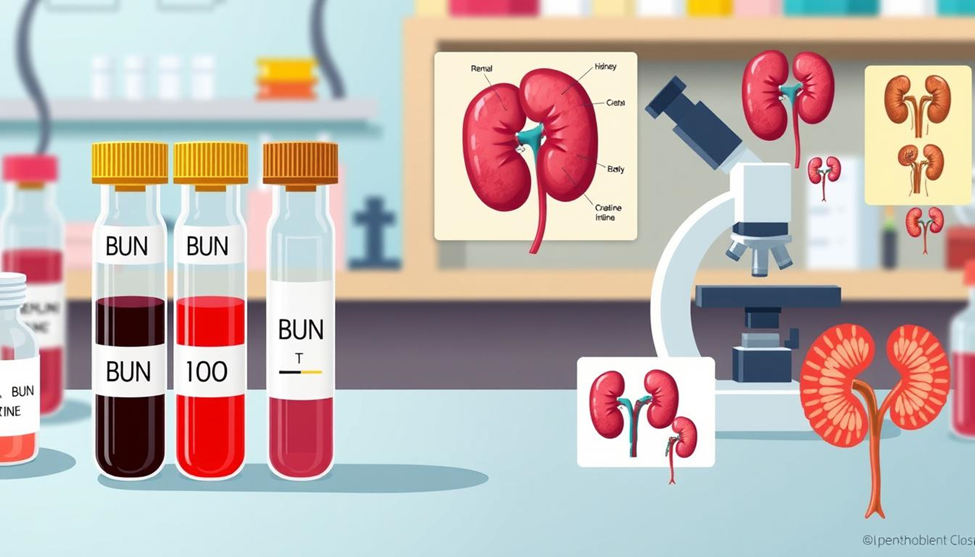
What is BUN/Creatinine Ratio? Blood Test Explained
Key Takeaways
- BUN/creatinine ratio is crucial for assessing kidney health.
- Normal values typically range from 10:1 to 20:1.
- High ratios may indicate kidney dysfunction or dehydration.
- Regular testing is essential for monitoring kidney function.
- Dietary and hydration factors significantly influence the results.
Understanding the Basics of BUN and Creatinine
Testing blood urea nitrogen (BUN) and creatinine is key to checking how well the kidneys work. These tests help spot health issues and figure out the bun creatinine ratio. This ratio is crucial for spotting kidney problems and overall health issues.
What is BUN?
BUN is a waste product made during protein metabolism in the liver. It then goes into the blood and heads to the kidneys. Healthy kidneys filter out BUN, but some might get reabsorbed.
The normal BUN levels in blood are between 5 to 20 mg/dl, which is the same as 1.8 to 7.1 mmol urea per liter<>. High BUN levels can mean kidney issues, liver problems, or dehydration.
What is Creatinine?
Creatinine comes from muscle metabolism, like BUN. It's filtered by the kidneys and then goes out in urine. For adult men, normal creatinine levels are 0.6 to 1.2 mg/dl, and for women, it's 0.5 to 1.1 mg/dl<>. Stable creatinine levels show the kidneys are working well.
How are BUN and Creatinine Related?
The bun creatinine ratio is important for understanding health. It tells if a rise in BUN is from kidney issues or other causes. The normal ratio is between 12:1 to 20:1<>.
A ratio near 20:1 might mean a problem before the kidneys, while a lower ratio could mean kidney damage<>. Things like upper GI bleeding can make the ratio go over 30:1<>. Knowing this helps doctors understand symptoms and choose the right treatment.
https://youtube.com/watch?v=qdqTbgRSHnc
|----------------------|------------------|-----------------------------------------------------------------------------------------| | Parameter | Normal Range | Significance of Abnormal Levels | | BUN | 5 to 20 mg/dl | Indicates potential kidney dysfunction, dehydration, or liver issues. | | Creatinine (Males) | 0.6 to 1.2 mg/dl | Reflects muscle metabolism and kidney filtering ability. | | Creatinine (Females) | 0.5 to 1.1 mg/dl | Similar significance as males, adjusted for muscle mass. | | BUN/Creatinine Ratio | 12:1 to 20:1 | Higher ratios can indicate prerenal conditions; lower ratios may suggest kidney damage. |
Knowing about BUN and creatinine is key for doctors. It helps them check kidney health and make treatment plans based on the bun creatinine ratio.
What is BUN/Creatinine Ratio?
The BUN/creatinine ratio is key in checking how well the kidneys are working. It's used to spot kidney problems early. This ratio is the amount of blood urea nitrogen (BUN) divided by creatinine levels. Knowing this helps doctors figure out why kidneys might not be working right.
Normal BUN levels are between 7-20 milligrams per deciliter. Creatinine levels for adults should be 0.6 to 1.2 mg/dl for men and 0.5 to 1.1 mg/dl for women<><>. This info is crucial for understanding kidney tests and spotting health issues.
Definition and Importance
Calculating the BUN to creatinine ratio is important in medical checks. A normal ratio is between 10-to-1 and 20-to-1. If this ratio is off, it could mean different health problems.
High BUN levels might mean dehydration or kidney issues. On the other hand, low levels could suggest liver disease or not eating enough<><>.
The Role of BUN/Creatinine Ratio in Kidney Health
The BUN/Creatinine ratio is key in keeping an eye on kidney health. A ratio over 20 often means you're not drinking enough water<>. If both BUN and creatinine go up together, it could mean kidney problems.
A low ratio can come from not eating enough protein or drinking too much water<>. Here's a table showing what the ratio means for kidney health:
|--------------------------|-------------------------------------------------| | BUN/Creatinine Ratio | Implications | | 10:1 - 20:1 | Normal range; indicates healthy kidney function | | Greater than 20:1 | Possible dehydration or pre-renal conditions | | Less than 10:1 | Possible liver disease or malnutrition |
BUN/Creatinine Ratio Normal Range and Interpretation
Knowing the normal range of the BUN/creatinine ratio is key to checking kidney health. This ratio should be between 10:1 and 20:1 for adults eating a normal diet<>. Factors like age, sex, and health can change these numbers. Kids and young adults usually fall within this range, but older people might have slightly higher levels<>.
Normal Ranges for Different Age Groups
For adults, normal creatinine levels are 0.6 to 1.2 mg/dL for women and 0.7 to 1.4 mg/dL for men<>. BUN levels should be between 7 to 20 mg/dL, but high levels could mean kidney issues<>. Diet, hydration, and medicines can affect these numbers.
What High and Low Ratios Indicate
A high BUN/creatinine ratio might mean kidney problems, dehydration, or acute kidney injury<>. A low ratio could point to liver disease, poor nutrition, or not enough protein<>. Understanding this ratio helps check kidney health and overall body function. It's important to look at both BUN and creatinine levels for a full picture of kidney health<><>.
How is the BUN/Creatinine Ratio Calculated?
The bun creatinine ratio is key to checking kidney health. It's found by dividing the blood urea nitrogen (BUN) by creatinine, both in mg/dL. For example, a BUN of 20 mg/dL and creatinine of 1 mg/dL gives a ratio of 20:1. This ratio tells doctors a lot about kidney function and possible health issues.
The Calculation Process
To find the bun creatinine ratio, doctors use a simple formula:
- BUN/Creatinine Ratio = BUN (mg/dL) / Creatinine (mg/dL)
The normal range for this ratio is 6 to 22 for everyone<>. Knowing this range helps doctors figure out kidney problems and what to do next.
Factors that Affect the BUN/Creatinine Ratio
Many things can change the meaning of the bun creatinine ratio:
- Renal perfusion: Changes in blood flow to the kidneys can change BUN and creatinine levels.
- Dehydration: Less fluid can make BUN levels go up, raising the ratio.
- Dietary Protein Intake: Eating a lot of protein can also increase BUN levels, affecting the ratio.
- Medical Conditions: Some health issues, like heart failure or liver disease, can change the ratio by affecting urine production or making more urea<>.
Doctors must think about these factors when looking at the results. This helps them understand kidney health better and spot problems early.
|------------------------|------------------------------------------------------------------------------| | Factor | Impact on BUN/Creatinine Ratio | | Renal Perfusion | May raise the ratio due to lower creatinine levels. | | Dehydration | Increases BUN, raising the ratio. | | Dietary Protein Intake | Higher protein intake raises BUN, impacting the ratio. | | Medical Conditions | Conditions like CHF can significantly alter the ratio based on urine output. |
Conclusion
The BUN/creatinine ratio is key to checking how well the kidneys are working. It helps us understand kidney health and the body's overall health. Knowing about this ratio helps patients and doctors manage kidney health better.
Regular tests that include this ratio can spot problems early. This can improve how well patients do in the long run.
Research shows how important the bun creatinine ratio is for treatment plans. For example, studies found big differences in death rates for patients with kidney injury based on their ratios<>. This shows how crucial the ratio is for diagnosing and treating kidney issues<>.
So, keeping an eye on kidney health by monitoring the BUN/creatinine ratio is vital. This way, people can handle their health better and get the right care on time. It highlights the importance of this key test.
FAQ
What is the BUN/Creatinine ratio?
The BUN/Creatinine ratio compares blood urea nitrogen (BUN) and creatinine levels. It helps check kidney function and spot potential problems.
Why is the BUN/Creatinine ratio important?
This ratio shows if kidney issues come from kidney damage or other factors like dehydration. It helps in diagnosing health conditions.
What are the normal ranges for the BUN/Creatinine ratio?
Normal ratios are between 10:1 and 20:1. These can change with age, sex, and health status.
How is the BUN/Creatinine ratio calculated?
To calculate it, divide the BUN level (in mg/dL) by the creatinine level (also in mg/dL).
What do high or low BUN/Creatinine ratios indicate?
High ratios might mean dehydration or kidney artery narrowing. Low ratios could point to kidney disease or poor nutrition.
How do BUN and creatinine relate to kidney function?
BUN and creatinine are waste products the kidneys filter out. If their levels are off, it shows kidney function issues.
What factors can affect the BUN/Creatinine ratio?
Dehydration, diet, medicines, and certain health conditions can change BUN and creatinine levels. This affects the ratio.
How can I use the BUN/Creatinine ratio to inform my health discussions?
Knowing your BUN/Creatinine ratio helps you talk better with your doctor about your kidney health. It guides you on lifestyle changes.
Are there any additional tests related to the BUN/Creatinine ratio?
Yes, doctors might suggest more tests like a urinalysis or kidney scans for a full check of kidney function.
Source Links
- BUN/Creatinine Ratio | Healthmatters.io - https://healthmatters.io/understand-blood-test-results/bun-creatinine-ratio
- What is a High BUN/Creatinine Ratio? Causes, Symptoms, Risks - https://www.medicinenet.com/what_causes_a_high_bun_creatinine_ratio/article.htm
- BUN/Creatinine Ratio: A Key Marker in Kidney Function - https://cura4u.com/blog/understanding-bun-to-creatinine-ratio
- Urea-to-creatinine ratio - https://en.wikipedia.org/wiki/Urea-to-creatinine_ratio
- High BUN Creatinine Ratio: Causes, Symptoms, and Treatment - https://www.rupahealth.com/post/high-bun-creatinine-ratio-causes-symptoms-and-treatment
- What Is a Blood Urea Nitrogen Test? - https://www.webmd.com/a-to-z-guides/blood-urea-nitrogen-test
- BUN and Creatinine - Clinical Methods - https://www.ncbi.nlm.nih.gov/books/NBK305/
- The Bun to Creatinine Ratio | Biomarker of Hydration or Kidney Function. - https://www.mealpro.net/blog/bun-creatinine-ratio-biomarkers-hydration-renal-function/
- BUN/Creatinine Ratio | Rupa Health - https://www.rupahealth.com/biomarkers/bun-creatinine-ratio
- Blood Urea Nitrogen - Health Encyclopedia - https://www.urmc.rochester.edu/encyclopedia/content.aspx?contenttypeid=167&contentid=urea_nitrogen_serum
- What is the Difference Between sCr, eGFR, ACR, and BUN? - https://www.kidney.org/news-stories/what-difference-between-scr-egfr-acr-and-bun
- BUN/Creatinine Ratio - Cleveland HeartLab, Inc. - https://www.clevelandheartlab.com/tests/bun-creatinine-ratio/
- BUN / Creatinine Ratio | Time of Care - https://www.timeofcare.com/bun-creatinine-ratio/
- The meaning of the blood urea nitrogen/creatinine ratio in acute kidney injury - https://www.ncbi.nlm.nih.gov/pmc/articles/PMC5783213/
- Blood urea nitrogen to creatinine ratio and long-term survival in patients with chronic heart failure - European Journal of Medical Research - https://eurjmedres.biomedcentral.com/articles/10.1186/s40001-023-01066-x